Police-State Powers Are Our Biggest Threat
by Martin Garbus for the New York Observer
Wednesday, December 28, 2005
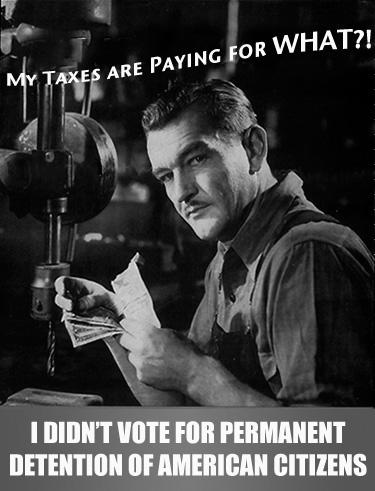
What has happened in this country? The Pentagon has a secret court created by the Foreign Intelligence Services Act (FISA). The courtroom is in a windowless room on the top floor of the Department of Justice. There are seven rotating judges. The court meets in secret, with no published opinions or public records. No one, except the FISA judge involved and the Department of Justice, knows what is done. No one, except the government and the FISA judge, knows at whom the warrants are aimed. There is no review by anyone. Over 12,000 search warrants permitting eavesdropping, surveillance and break-ins have been sought by the government. Only once has the FISA court denied a warrant.
The FISA court has issued more warrants than the more than 1,000 district judges in the federal system. The Pentagon has already expanded its domestic-surveillance activity beyond any previous time in history. It breaks into homes, wiretaps and eavesdrops at will, and builds secret dossiers on citizens while arguing that there can be no judicial review of its activities. President George W. Bush argues that there can be no judicial review of any decision he makes when he decides whether an alien or an American citizen is or is not an enemy combatant. Congress supports this; so does the judiciary. The expansion of Presidential powers and the expansion of police powers is the single most important issue facing this country. It is safe to say the new Supreme Court and a majority of Congress (both Democrats and Republicans) are prepared to give Mr. Bush a blank check. On Nov. 15, Carl Levin, the liberal Democratic Senator from Michigan and an outspoken opponent of the war in Iraq, joined his Republican counterpart from South Carolina, Lindsey Graham, in supporting legislation validating the President’s Alice-in-Wonderland legal system and the expansion of his police powers. The Senate vote was 79 to 16 in favor.
What’s more, the Patriot Act had been extended. For the last three years, the President has justified torture, and Congress will soon give him legal permission to use it. If or when there’s another terrorist attack, the government will seek more powers, claiming that it shows current laws are inadequate. We will certainly see, as we recently saw in Britain, the head of government ask for 90-day detentions of terror suspects without access to court. The attempt to end habeas corpus started at Guantánamo; it is now spreading to the rest of America. Five years after we opened the Guantánamo prison, not one person in that prison has been found guilty of anything. The legal system to treat the new prisoners of the war on terror, created out of thin air, disgraces us. No one ever before suggested such a legal system—not during the Civil War, not during World War I or World War II, and not during the Cold War.
We are better than military commissions, Abu Ghraib, Guantánamo, the Patriot Act and “rendition”—the sending of prisoners overseas to be tortured at C.I.A.-controlled prisons. This country is approaching a dangerous turning point. There has long been a desire and a political movement in America for restrictions on democratic rights, for an authoritarian government propelled by a combination of religious and nationalistic fervor. The helplessness caused by the events of Sept. 11 and the domestic and international war against Muslim “terrorists” deepened this desire. Never before was there such a possibility of such long-term constitutional violations, because there has never before been such an open-ended war. In Weimar Germany, a feeling of helplessness led to Hitler’s rise and the creation of the ultimate police state. There are similarities—and, of course, very significant differences—between America in the 21st century and Germany in the 1920’s.
Mr. Bush has suggested that he was chosen by God to lead the United States in the aftermath of the 9/11 attacks. The Nazi government, against religion, saw the salvation of the German people in messianic terms. Many liberals and conservatives are concerned where all of this might lead. Professor Fritz Stern, a professor of German studies at Columbia University, pointed out that Hitler saw himself as “the instrument of providence” who fused his “racial dogma with Germanic Christianity.” Paul Craig Roberts, a senior fellow at the Hoover Institution and a former Wall Street Journal editor, writes of the “brownshirting” of American conservatism—he says the hype about terrorism serves little or “no purpose other than to build a police state that is far more dangerous to Americans than terrorists.” The pressure for fascism comes not just from the top. Without the people’s support, the Weimar government would not have been overthrown. The change here is incremental and harder to see. How we conduct the “war on terror” tells the American people who we are and what this country stands for. America has the oldest and most dynamic democracy in the world. It can right itself if the people want it bad enough to fight harder.
About Me

- CyberKitten
- I have a burning need to know stuff and I love asking awkward questions.
Thursday, June 01, 2006

Wednesday, May 31, 2006
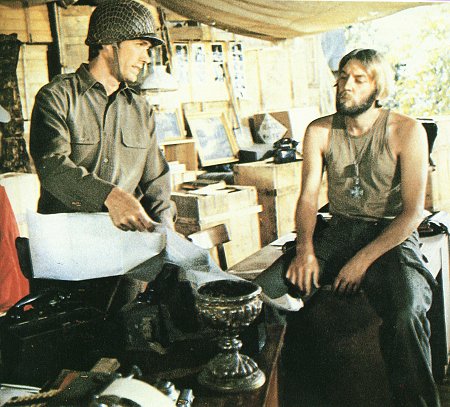 My Favourite Movies: Kelly’s Heroes.
Yes, I know, I know. It’s another old war film with Clint Eastwood - but what a film! You can’t help but like it, well, OK… I can’t help but like it.
Just think about it for a moment or two. Here we have a Second World War film made in 1970 – and made in such a way that it felt just like 1970 during the whole movie. They certainly had the tanks and the guns of the period but the music, the attitudes, the speech patterns and the entire feel of the movie was contemporary. It’s just such a great clash of times and cultures – which makes the whole thing doubly funny.
I mean, just look at the plot. Its post D-Day and the Allied forces are slowly making their way towards Germany when Kelly (played superbly by Eastwood) stumbles upon the location of a bank full of German gold. Putting together a plan and a team to acquire the gold accidentally results in a breakout from Allied lines into occupied territory exploited by American forces to shorten the war.
The movie is chock full of wonderful moments not least of which is the performance by Donald Sutherland as the tank commander ‘Oddball’. I just loved the idea of a mobile hippy commune in the middle of a battle zone and the idea of filling shells full of paint because the explosions look cool is just… well… cool!
A seriously funny and upbeat film. Recommended.
Tuesday, May 30, 2006
Why do Skeptics doubt the existence of God?
From: Why I Am a Skeptic about Religious Claims
By Paul Kurtz
First, because the skeptical inquirer does not find the traditional concept of God as "transcendent," "omnipotent," "omnipresent," or "omnibeneficent" to be coherent, intelligible, or meaningful. To postulate a transcendent being who is incomprehensible to the human mind (as theologians maintain) does not explain the world that we encounter. How can we say that such an indefinable being exists, if we do not know in what sense that being is said to exist? How are we to understand a God that exists outside space and time and that transcends our capacity to comprehend his essence? Theists have postulated an unknowable "X." But if his content is unfathomable, then he is little more than an empty, speculative abstraction. Thus, the skeptic in religion presents semantic objections to God language, charging that it is unintelligible and lacks any clear referent.A popular argument adduced for the existence of this unknowable entity is that he is the first cause, but we can ask of anyone who postulates this, "What is the cause of this first cause?" To say that he is uncaused only pushes our ignorance back one step. To step outside the physical universe is to assume an answer by a leap of faith.
Nor does the claim that the universe manifests Intelligent Design (ID) explain the facts of conflict, the struggle for survival, and the inescapable tragedy, evil, pain, and suffering that is encountered in the world of sentient beings. Regularities and chaos do not necessarily indicate design. The argument from design is reminiscent of Aristotle's teleological argument that there are purposes or ends in nature. But we can find no evidence for purpose in nature. Even if we were to find what appears to be design in the universe, this does not imply a designer for whose existence there is insufficient evidence. The evolutionary hypothesis provides a more parsimonious explanation of the origins of species. The changes in species through time are better accounted for by chance mutations, differential reproduction, natural selection, and adaptation, rather than by design. Moreover, vestigial features such as the human appendix, tailbone, and male breasts and nipples hardly suggest adequate design; the same is true for vestigial organs in other species. Thus, the doctrine of creation is hardly supported in empirical terms. Another version of the Intelligent Design argument is the so-called fine-tuning argument. Its proponents maintain that there is a unique combination of "physical constants" in the universe that possess the only values capable of sustaining life, especially sentient organic systems. This they attribute to a designer God. But this, too, is inadequate. First because millions of species are extinct; the alleged "fine-tuning" did nothing to ensure their survival. Second, great numbers of human beings have been extinguished by natural causes such as diseases and disasters. The Indian Ocean tsunami of 2004 that suddenly killed over two hundred thousand innocent men, women, and children was due to a shift in tectonic plates. This hardly indicates fine tuning-after all, this tragedy could have been avoided had a supposed fine tuner troubled to correct defects in the surface strata of the planet. A close variant of the fine-tuning argument is the so-called anthropic principle, which is simply a form of anthropomorphism; that is, it reads into nature the fondest hopes and wishes of believers, which are then imposed upon the universe. But if we are to do this, should we not also attribute the errors and mistakes encountered in nature to the designer?
Related to this, of course, is the classical problem of evil. If an omnipotent, omnipresent, and omnibeneficent God is responsible for the world as we know it, then how to explain evil? Surely, humans cannot be held responsible for a massive flood or plague, for example; we can explain such calamities only by inferring that God is malevolent, because he knew of, yet permitted, terrible destructive events to occur-or by suggesting that God is impotent to prevent evil. This would also suggest an unintelligent, deficient, or faulty designer.
Part II soon.
From: Why I Am a Skeptic about Religious Claims
By Paul Kurtz
First, because the skeptical inquirer does not find the traditional concept of God as "transcendent," "omnipotent," "omnipresent," or "omnibeneficent" to be coherent, intelligible, or meaningful. To postulate a transcendent being who is incomprehensible to the human mind (as theologians maintain) does not explain the world that we encounter. How can we say that such an indefinable being exists, if we do not know in what sense that being is said to exist? How are we to understand a God that exists outside space and time and that transcends our capacity to comprehend his essence? Theists have postulated an unknowable "X." But if his content is unfathomable, then he is little more than an empty, speculative abstraction. Thus, the skeptic in religion presents semantic objections to God language, charging that it is unintelligible and lacks any clear referent.A popular argument adduced for the existence of this unknowable entity is that he is the first cause, but we can ask of anyone who postulates this, "What is the cause of this first cause?" To say that he is uncaused only pushes our ignorance back one step. To step outside the physical universe is to assume an answer by a leap of faith.
Nor does the claim that the universe manifests Intelligent Design (ID) explain the facts of conflict, the struggle for survival, and the inescapable tragedy, evil, pain, and suffering that is encountered in the world of sentient beings. Regularities and chaos do not necessarily indicate design. The argument from design is reminiscent of Aristotle's teleological argument that there are purposes or ends in nature. But we can find no evidence for purpose in nature. Even if we were to find what appears to be design in the universe, this does not imply a designer for whose existence there is insufficient evidence. The evolutionary hypothesis provides a more parsimonious explanation of the origins of species. The changes in species through time are better accounted for by chance mutations, differential reproduction, natural selection, and adaptation, rather than by design. Moreover, vestigial features such as the human appendix, tailbone, and male breasts and nipples hardly suggest adequate design; the same is true for vestigial organs in other species. Thus, the doctrine of creation is hardly supported in empirical terms. Another version of the Intelligent Design argument is the so-called fine-tuning argument. Its proponents maintain that there is a unique combination of "physical constants" in the universe that possess the only values capable of sustaining life, especially sentient organic systems. This they attribute to a designer God. But this, too, is inadequate. First because millions of species are extinct; the alleged "fine-tuning" did nothing to ensure their survival. Second, great numbers of human beings have been extinguished by natural causes such as diseases and disasters. The Indian Ocean tsunami of 2004 that suddenly killed over two hundred thousand innocent men, women, and children was due to a shift in tectonic plates. This hardly indicates fine tuning-after all, this tragedy could have been avoided had a supposed fine tuner troubled to correct defects in the surface strata of the planet. A close variant of the fine-tuning argument is the so-called anthropic principle, which is simply a form of anthropomorphism; that is, it reads into nature the fondest hopes and wishes of believers, which are then imposed upon the universe. But if we are to do this, should we not also attribute the errors and mistakes encountered in nature to the designer?
Related to this, of course, is the classical problem of evil. If an omnipotent, omnipresent, and omnibeneficent God is responsible for the world as we know it, then how to explain evil? Surely, humans cannot be held responsible for a massive flood or plague, for example; we can explain such calamities only by inferring that God is malevolent, because he knew of, yet permitted, terrible destructive events to occur-or by suggesting that God is impotent to prevent evil. This would also suggest an unintelligent, deficient, or faulty designer.
Part II soon.
Monday, May 29, 2006
Why be shy about our radical past?
Tristram Hunt for The Observer
Sunday May 21, 2006
'I tell you, sir, you have no other way to deal with these men but to break them or they will break you.' True to his word, on 17 May 1649, Oliver Cromwell had the ringleaders of the Leveller revolt marched out of Burford church in Oxfordshire and executed. These disgruntled Civil War soldiers had demanded political as well as religious rights and Cromwell was having none of it. Yesterday, I joined Tony Benn and a large crowd in the Cotswolds to commemorate these martyrs to democracy. Organised by the Workers' Educational Association, the Levellers' Day festival remains one of the few living monuments to Britain's hidden heritage of democracy. But why does Burford hold such a lonely place in our history calendar? Why are we still so shy of our radical past?
Last week saw a welter of commentary on Education Minister Bill Rammell's call for teaching 'British values' in schools. The left took it as a cue for more historical self-flagellation; the right for cultural triumphalism. Yet, disappointingly, what Rammell had, in fact, urged was the anodyne incorporation of 'modern British cultural and social history into the citizenship curriculum'. What he should have demanded is a vigorous exploration of our democratic heritage in schools and communities alike. Democracy has many fathers, but in its modern, Western variety, the British contribution is marked. From the Magna Carta to the Levellers' 'Agreement of the People' to the Chartists and Pan-African Conference, the British experience went on to influence democracy around the world. The US Declaration of Independence was partly born from the democratic ideals of the English Civil War and the Glorious Revolution.
Yet the difference between us and them is that French and American officialdom nurtures its political heritage. Bastille Day, the Fourth of July holiday, even the veneration given to their written constitutions, point to a public culture which reveres and renews its democratic legacy. In Britain, we are close to amnesiac about the individuals who crafted our political freedoms. Most of our major cities are replete with statues to generals, dukes and royals, but not to our democratic heroes. Outside his home town of Thetford, the great democrat agitator Thomas Paine is barely remembered. Our democratic sites are equally neglected. The Houses of Parliament contains the most pitiful account of its role in the development of democracy. Shamefully, the Magna Carta site at Runnymede has had to be paid for with American funds.
This contempt for our democratic past cannot be excused by an unwritten constitution. For, as historian Linda Colley has rightly pointed out, constitutional documents, from the Treaty of Union to the Catholic emancipation acts right up to the devolution acts of 1998, all exist in the archives. The challenge is to get them out into the public sphere. And, with them, the stories of struggle, triumph and disappointment they contain: the untold lives of Chartists, suffragettes and anti-colonial campaigners. For the history of democracy is far more than just the story of the ballot; it is also about the growth of public reasoning, a free press and liberal tolerance. This is the legacy which should be highlighted in our schools and museums. It does not have to be a Whiggish narrative of ever- broadening freedom, nor yet a Marxist account of aristocratic and imperial intransigence. Rather, a complex, conflicting, yet ultimately progressive history of the ebb and flow of democracy and the people who made it happen. If we lose this cultural memory of democracy, if we turn Levellers' Day from a living history into a museum piece, then it will be no surprise if the trip to the polling booth becomes ever more unpopular.
Tristram Hunt for The Observer
Sunday May 21, 2006
'I tell you, sir, you have no other way to deal with these men but to break them or they will break you.' True to his word, on 17 May 1649, Oliver Cromwell had the ringleaders of the Leveller revolt marched out of Burford church in Oxfordshire and executed. These disgruntled Civil War soldiers had demanded political as well as religious rights and Cromwell was having none of it. Yesterday, I joined Tony Benn and a large crowd in the Cotswolds to commemorate these martyrs to democracy. Organised by the Workers' Educational Association, the Levellers' Day festival remains one of the few living monuments to Britain's hidden heritage of democracy. But why does Burford hold such a lonely place in our history calendar? Why are we still so shy of our radical past?
Last week saw a welter of commentary on Education Minister Bill Rammell's call for teaching 'British values' in schools. The left took it as a cue for more historical self-flagellation; the right for cultural triumphalism. Yet, disappointingly, what Rammell had, in fact, urged was the anodyne incorporation of 'modern British cultural and social history into the citizenship curriculum'. What he should have demanded is a vigorous exploration of our democratic heritage in schools and communities alike. Democracy has many fathers, but in its modern, Western variety, the British contribution is marked. From the Magna Carta to the Levellers' 'Agreement of the People' to the Chartists and Pan-African Conference, the British experience went on to influence democracy around the world. The US Declaration of Independence was partly born from the democratic ideals of the English Civil War and the Glorious Revolution.
Yet the difference between us and them is that French and American officialdom nurtures its political heritage. Bastille Day, the Fourth of July holiday, even the veneration given to their written constitutions, point to a public culture which reveres and renews its democratic legacy. In Britain, we are close to amnesiac about the individuals who crafted our political freedoms. Most of our major cities are replete with statues to generals, dukes and royals, but not to our democratic heroes. Outside his home town of Thetford, the great democrat agitator Thomas Paine is barely remembered. Our democratic sites are equally neglected. The Houses of Parliament contains the most pitiful account of its role in the development of democracy. Shamefully, the Magna Carta site at Runnymede has had to be paid for with American funds.
This contempt for our democratic past cannot be excused by an unwritten constitution. For, as historian Linda Colley has rightly pointed out, constitutional documents, from the Treaty of Union to the Catholic emancipation acts right up to the devolution acts of 1998, all exist in the archives. The challenge is to get them out into the public sphere. And, with them, the stories of struggle, triumph and disappointment they contain: the untold lives of Chartists, suffragettes and anti-colonial campaigners. For the history of democracy is far more than just the story of the ballot; it is also about the growth of public reasoning, a free press and liberal tolerance. This is the legacy which should be highlighted in our schools and museums. It does not have to be a Whiggish narrative of ever- broadening freedom, nor yet a Marxist account of aristocratic and imperial intransigence. Rather, a complex, conflicting, yet ultimately progressive history of the ebb and flow of democracy and the people who made it happen. If we lose this cultural memory of democracy, if we turn Levellers' Day from a living history into a museum piece, then it will be no surprise if the trip to the polling booth becomes ever more unpopular.
Sunday, May 28, 2006
 My Favourite Places: Salisbury Cathedral
Salisbury Cathedral is an Anglican cathedral located in Salisbury, United Kingdom. The cathedral boasts the tallest church spire in the UK, the largest cloister in England, and one of the four surviving original copies of the Magna Carta.
Building commenced when the bishopric was moved to Salisbury from Old Sarum in 1220 during the tenure of Richard Poore. Due to the high water table in the new location, the cathedral was built on only four feet of foundations, and by 1258 the nave, transepts and choir were complete. The west front was ready by 1265. The cloisters and chapter house were completed around 1280. Because the cathedral was built in only 38 years, Salisbury Cathedral has a single consistent architectural style, Early English Gothic.
The only major sections of the cathedral built later were the tower and spire, which at 404 feet (123 metres) dominated the skyline from 1320. While the spire is the cathedral's most impressive feature, it has also proved to be troublesome. Together with the tower, it added 6,397 tons (6,500 tonnes) to the weight of the building and but for the addition of buttresses, bracing arches and iron ties over the succeeding centuries, it would have suffered the fate of spires on other great ecclesiastical buildings (such as Malmesbury Abbey) and fallen down; instead, Salisbury is the tallest surviving pre-1400 spire in the world. To this day the large supporting pillars at the corners of the spire are seen to bend inwards under the strain. The addition of tie beams above the crossing led to a false ceiling being installed below the lantern stage of the tower.
Significant changes to the cathedral were made by the architect James Wyatt in 1790, including replacement of the original choir screen and demolition of the bell tower which stood about 320 feet (100 metres) north west of the main building. Salisbury is one of only three English cathedrals to lack a ring of bells, the others being Norwich Cathedral and Ely Cathedral.
[The above from Wikipedia].
This is a wonderful place and I recommend it to anyone visiting the area. It truly dominates the skyline and can be seen from miles away. It must have been truly awe inspiring when it was first completed. So far I’ve only vistied it twice (or maybe three times) but intend to revisit the place soon – now that it appears to have stopped raining for a while. It may come as a surprise to some of my readers that I like churches but most were built with the intention of making a deep impact on their visitors and I’m certainly not imune from that. In fact I make a point of visiting places of worship wherever I am.
War on Terror ‘Undermining Human Rights’
By Sarah Witt for the Financial Times
Tuesday, May 23, 2006
Governments and international institutions have turned a blind eye to massive human rights violations and “sacrificed principles in the name of the war on terror,” Amnesty International said on Tuesday. In its annual report, the London-based human rights watchdog said the security agenda of the powerful and privileged had diverted the world’s attention from serious human rights crises elsewhere.
Criticising western governments, Irene Khan, Amnesty’s secretary general, said: “When the UK remains muted on arbitrary detention and ill-treatment in Guantánamo, when the US ignores prohibition on torture, when European governments are mute about their record on renditions, racism or refugees, they undermine their own moral authority to champion human rights elsewhere in the world.“ While the report covers the past twelve months, the British government has recently called on the US to close the Guantánamo Bay detention centre, which Prime Minister Tony Blair branded an “anomaly”.
The United Nations also came in for censure. According to the report the UN had failed to monitor the human rights performance of China and Russia “allowing their political and economic interests to prevail over human rights concerns domestically or internationally. Those who bear the greatest responsibility for safeguarding global security in the Security Council proved in 2005 to be the most willing to paralyse the Council and prevent it from taking effective action on human rights,“ Ms Khan said. Amnesty said attacks by armed groups reached new levels of brutality and intensity in 2005 but insisted the perpetrators should be brought to justice through fair trial, not torture or secret detention. The “war on terror” was failing, the report claimed, and would continue to fail “unless human rights and human security are given precedence over narrow security interests.”
The 288-page document said torture and ill-treatment was reported in 104 of the 150 countries covered by the survey, despite the fact that 141 countries were party to the UN convention against torture and other ill-treatment. Highlighting the continuing conflict in Darfur, which she described as “staggering in scale”, Ms Khan said the UN and the African Union’s “feeble action” had fallen “pathetically short” of what was needed. There had been 13 Security Council resolutions on Darfur but the number of UN peacekeepers deployed there was zero. 2.2m people had been displaced by the conflict and an estimated 285,000 killed by starvation, disease and violence.
The report also scrutinised America’s continued use of Guantánamo Bay to hold detainees without trial. Amnesty said 759 people had been held at the camp in Cuba since January 2002, including at least two juveniles, yet none of the prisoners had been convicted of a criminal offence. In an otherwise damning overview of international human rights, Amnesty saw some signs of progress. It hailed the first-ever indictments from the International Criminal Court for crimes against humanity and war crimes in Uganda. It also welcomed the fact that in the past year powerful governments had been “called to account by their courts and public institutions.”
It cited the UK, where the High Court rejected the government’s plan to use evidence extracted under torture in other countries and investigations by the Council of Europe and the European parliament into European involvement in the US-led “renditions” - unlawful transfer of prisoners to countries where they would be at risk of torture. Other grounds for optimism were the falling number of overall global conflicts in places like Angola, Liberia and Sierra Leone; the crowds that turned out to urge the G8 to “Make poverty history” and the “outpouring of support” from ordinary people to the victims of natural disasters.
By Sarah Witt for the Financial Times
Tuesday, May 23, 2006
Governments and international institutions have turned a blind eye to massive human rights violations and “sacrificed principles in the name of the war on terror,” Amnesty International said on Tuesday. In its annual report, the London-based human rights watchdog said the security agenda of the powerful and privileged had diverted the world’s attention from serious human rights crises elsewhere.
Criticising western governments, Irene Khan, Amnesty’s secretary general, said: “When the UK remains muted on arbitrary detention and ill-treatment in Guantánamo, when the US ignores prohibition on torture, when European governments are mute about their record on renditions, racism or refugees, they undermine their own moral authority to champion human rights elsewhere in the world.“ While the report covers the past twelve months, the British government has recently called on the US to close the Guantánamo Bay detention centre, which Prime Minister Tony Blair branded an “anomaly”.
The United Nations also came in for censure. According to the report the UN had failed to monitor the human rights performance of China and Russia “allowing their political and economic interests to prevail over human rights concerns domestically or internationally. Those who bear the greatest responsibility for safeguarding global security in the Security Council proved in 2005 to be the most willing to paralyse the Council and prevent it from taking effective action on human rights,“ Ms Khan said. Amnesty said attacks by armed groups reached new levels of brutality and intensity in 2005 but insisted the perpetrators should be brought to justice through fair trial, not torture or secret detention. The “war on terror” was failing, the report claimed, and would continue to fail “unless human rights and human security are given precedence over narrow security interests.”
The 288-page document said torture and ill-treatment was reported in 104 of the 150 countries covered by the survey, despite the fact that 141 countries were party to the UN convention against torture and other ill-treatment. Highlighting the continuing conflict in Darfur, which she described as “staggering in scale”, Ms Khan said the UN and the African Union’s “feeble action” had fallen “pathetically short” of what was needed. There had been 13 Security Council resolutions on Darfur but the number of UN peacekeepers deployed there was zero. 2.2m people had been displaced by the conflict and an estimated 285,000 killed by starvation, disease and violence.
The report also scrutinised America’s continued use of Guantánamo Bay to hold detainees without trial. Amnesty said 759 people had been held at the camp in Cuba since January 2002, including at least two juveniles, yet none of the prisoners had been convicted of a criminal offence. In an otherwise damning overview of international human rights, Amnesty saw some signs of progress. It hailed the first-ever indictments from the International Criminal Court for crimes against humanity and war crimes in Uganda. It also welcomed the fact that in the past year powerful governments had been “called to account by their courts and public institutions.”
It cited the UK, where the High Court rejected the government’s plan to use evidence extracted under torture in other countries and investigations by the Council of Europe and the European parliament into European involvement in the US-led “renditions” - unlawful transfer of prisoners to countries where they would be at risk of torture. Other grounds for optimism were the falling number of overall global conflicts in places like Angola, Liberia and Sierra Leone; the crowds that turned out to urge the G8 to “Make poverty history” and the “outpouring of support” from ordinary people to the victims of natural disasters.
Saturday, May 27, 2006

 Da Vinci code nun 'not genuine'
By Ben Davies for the BBC.
Friday, 26 May 2006
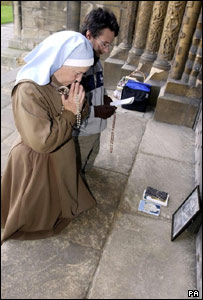
A woman who led protests against the Da Vinci Code dressed in a habit is not a real nun, says the Catholic Church. Sister Mary Michael appeared in the world's media denouncing the controversial book as "blasphemy". The Catholic Church says Sister Mary is not "canonically recognised" even if she does do "good works". She was connected to the Carmelites but left and is now a "maverick" and a "one-woman order", a spokesman told the BBC News website. Sister Mary Michael hit the headlines in August 2005 after she mounted a prayer vigil outside Lincoln Cathedral while the Da Vinci Code was filmed there. Though she had not read the book by Dan Brown at the time, she was pictured kneeling outside the Anglican Minster which was paid £100,000 to allow filming to take place.
The story revolves around the theory that Jesus married Mary Magdalene and their descendants survive today. The blockbuster has caused outrage among many Christian organisations, including senior officials at the Vatican. Having read the book and then "thrown it in the bin", Sister Mary Michael took her protest to Cannes earlier this month where the film was first shown. Asked about her status as a nun, Sister Mary Michael said: "I am attached to the Carmelites and that's it." But the spokesman for the Nottingham diocese in which she lives, Rev Philip McBrien, said: "Her connection with the Carmelites ended a long time ago. She has never been professed by our bishops and she doesn't belong to any recognised order. She has no official connection with any order or any of the parishes. She's a one-off, a maverick. She dresses more nun-like than any nuns I know." When these comments were put to Sister Mary Michael she acknowledged her life was "unusual" but insisted she is "still officially a nun".
"The bishop knows all about me, he knows why I wear my habit and so on. It is unusual, I can say no more. I can't even understand it myself but I've never done anything underhand - I can't with this personality. I am Our lady, sister of peace and mercy and I am attached to the Carmelites and you can just put it there and that's what I am."
After three and a half years in a closed Carmelite order Sister Mary Michael left, but decided to continue wearing a habit similar to what she had worn when a nun - albeit modified according to her own design. Nottingham diocese's Monsignor Thomas McGovern said: "It's very much a personal vocation as far as she's concerned. I would say even if not officially recognised she is doing a lot of good work." Sister Mary Michael, 61, says all she has been doing with her Da Vinci Code protests is standing up for the truth. "I am standing up for what every Catholic should believe in the true body, blood, soul and divinity of our lord."
Friday, May 26, 2006
Global faith gathering tackles religious roots of terror
From Ekklesia - 01/05/06
Faith leaders from across the globe met at Georgetown University in Washington DC last week – the first time the annual interfaith forum initiated 20 years ago by Pope John Paul II has been held in the United States. The aim of the two-day International Prayer for Peace was not to draft policies, but to foster greater ties and communication between the major religions in an increasingly globalized world. This year's panel discussions included a focus on the role of religion in combatting AIDS, poverty and genocide, and in resolving conflict.
Religiously motivated terrorism was also a central theme because of the 9/11 attacks, suicide bombings, the activities of militants and the so-called ‘war on terror’. The event featured 100 speakers from many different faith communities, including Catholics, Jews, Methodists, Muslims, Mennonites, Eastern Orthodox Christians and Shintoists _ as well as charity groups, academics, journalists and diplomats. Imam Warith D. Mohammed said those who perpetrate terror for religious purposes "have no light. They have no understanding, they can't see, so they are striking out in the dark."
Pope John Paul II, who frequently reached out to other faiths, held the first meeting in October 1986 when he gathered with leaders from the world religions in Assisi, Italy, to pray, fast and hold a "World Day of Prayer for Peace." Several warring states and insurgent groups in such places as Lebanon and Nicaragua heeded his call for a 24-hour truce that day. "He knew the more we could get on the same page, the same place, the same relation to a God that loves us all, the more powerful our prayers would be," said Washington Cardinal Theodore McCarrick as he welcomed the gathering of 500 persons to Georgetown.
Organized by the Community of Sant'Egidio, a lay Catholic group based in Rome, the meetings have traditionally been held in Italian and other European cities. Last year, the meeting was in Lyon, France. The Community is associated with the base Christian movement, but it has also attracted the attention and admiration of denominational leaders such as Archbishop of Canterbury Dr Rowan Williams, spiritual head of the world’s 77 million Anglicans. US undersecretary of state Karen Hughes also spoke at the interfaith peace meeting. She said that it was a misuse of religion to use it to justify terror and insurgency. But she had nothing to say about state violence or the legitimation of war as an instrument of policy by many of President Bush’s allies on the religious right.
From Ekklesia - 01/05/06
Faith leaders from across the globe met at Georgetown University in Washington DC last week – the first time the annual interfaith forum initiated 20 years ago by Pope John Paul II has been held in the United States. The aim of the two-day International Prayer for Peace was not to draft policies, but to foster greater ties and communication between the major religions in an increasingly globalized world. This year's panel discussions included a focus on the role of religion in combatting AIDS, poverty and genocide, and in resolving conflict.
Religiously motivated terrorism was also a central theme because of the 9/11 attacks, suicide bombings, the activities of militants and the so-called ‘war on terror’. The event featured 100 speakers from many different faith communities, including Catholics, Jews, Methodists, Muslims, Mennonites, Eastern Orthodox Christians and Shintoists _ as well as charity groups, academics, journalists and diplomats. Imam Warith D. Mohammed said those who perpetrate terror for religious purposes "have no light. They have no understanding, they can't see, so they are striking out in the dark."
Pope John Paul II, who frequently reached out to other faiths, held the first meeting in October 1986 when he gathered with leaders from the world religions in Assisi, Italy, to pray, fast and hold a "World Day of Prayer for Peace." Several warring states and insurgent groups in such places as Lebanon and Nicaragua heeded his call for a 24-hour truce that day. "He knew the more we could get on the same page, the same place, the same relation to a God that loves us all, the more powerful our prayers would be," said Washington Cardinal Theodore McCarrick as he welcomed the gathering of 500 persons to Georgetown.
Organized by the Community of Sant'Egidio, a lay Catholic group based in Rome, the meetings have traditionally been held in Italian and other European cities. Last year, the meeting was in Lyon, France. The Community is associated with the base Christian movement, but it has also attracted the attention and admiration of denominational leaders such as Archbishop of Canterbury Dr Rowan Williams, spiritual head of the world’s 77 million Anglicans. US undersecretary of state Karen Hughes also spoke at the interfaith peace meeting. She said that it was a misuse of religion to use it to justify terror and insurgency. But she had nothing to say about state violence or the legitimation of war as an instrument of policy by many of President Bush’s allies on the religious right.
 My Favourite Music: Argus by Wishbone Ash.
I first heard this album many, many years ago, probably not long after it was first released in April of 1972. I’m fairly confident that my school friend Robert Rowlands (you out there somewhere Rob?) played it – and others – during time spent at his house playing darts or cards or whatever pre-teens did in those days.
Anyway, this album always brings back memories of those days. I had recently moved to a new town (with my parents) and had started a new school. Everything was new, including the music I was listening to.
Maybe I’m getting old (and therefore nostalgic) because recently I’ve started collecting music from that by-gone era. This particular digitally remastered CD was a gift from my good friend CQ.
My favourite track? Track 3 – Blowin’ Free which is quite wonderful and very 1970’s.
Thursday, May 25, 2006
"Live Loudly and Fiercely ... Apathy Is Not a Choice"
May 19, 2006 - CommonDreams.org
Below is the address given by 'University Medalist' Lane Rettig at the Commencement Convocation at the University of California at Berkeley, May 10, 2006.
I would like to extend my own message of congratulations to all of my fellow graduates, with whom I have struggled, learned, and grown these past five years. When I arrived in Berkeley, the world was a different place. Three weeks into my first semester, everything changed. Early on that Tuesday morning in September 2001, I watched my home, the city where I was born and raised, come tumbling down before my eyes. It was a terrifying way to start college. A couple of years later, I had another terrifying experience when I visited Hiroshima, Japan, and witnessed firsthand the results of the terror and destruction wrought upon its people by my own country. I met a number of atomic bomb survivors, including an elderly couple who recounted to me the events of that day, August 6, 1945. When I told the man that I was an American, he smiled at me and told me he was glad that I had come to Hiroshima, to learn the truth of what had happened. He told me that it was my duty to make sure it never happened again.
This speech is dedicated to the people who lost their lives in Hiroshima, and, in the words of a former University Medalist, "to the 3,000 souls whose heinous deaths on September 11th were penetrating indications of an even more heinous foreign policy." This speech is dedicated to all of the people throughout history who have needlessly lost their lives as a result of ignorance, selfishness and greed on the part of their fellow man. Yasuraka ni nemutte kudasai. May your souls rest in peace. It is the duty of those of us who have been blessed with life to go on living, but not just to live quietly. It is our duty to live loudly and fiercely, to prevent the human events and decisions which caused Hiroshima, Cambodia, September 11th, and Iraq, and which continue to threaten millions of innocent souls around the world. It is equally our duty to recognize our failings in helping those who have so much less than we do. To graduate from a great university such as ours and fail to gain compassion for your fellow man would be a great failure indeed.
Getting an education is about gaining the tools we need to succeed in life. The greatest tool that I've gained from my time here is perspective, the desire to learn from people different from myself and to attempt to see the world through their eyes. The greatest lesson I've learned is that, in this democracy, apathy is not a choice. To choose to remain silent in the face of the atrocities being committed in the name of this country - in all of our names - is to condone those acts. Indifference kills more people than bombs do. If you don't believe me, ask the people of Rwanda.
Our time at Berkeley has given us the knowledge we need to change the world - not through violence, but intelligently, peacefully. When confronted by adversity, we have two options: we can choose to react out of ignorance, fear, and hate. Or we can choose the path of understanding and compassion. Understanding is clearly the more difficult choice, but the world of the 21st century will not be built through the war and destruction of the previous century. I ask of you always to choose the second path, to try to understand, even in the face of great adversity, this beautiful multicolored world. I ask of you to try to see things from the eyes of your fellow man, rather than through your television set. I ask of you to go out and see the world, not just on television and in magazines, not just from tourist hotels and fancy restaurants, but from the ground, through the eyes of the real people who lead real lives just like we do.
I know that I've asked a lot of you, but I have just one more request: for tolerance, generosity, and compassion. Have pride in our great country, but recognize that we're not alone in the world. I think one of my computer science professors, Brian Harvey, put it best when he said that loving your country "doesn't mean that you have to be contemptuous of the rest of the world. Don't think that terrorism is OK if it's committed by U.S. soldiers, that extremist Islam is any worse than extremist Christianity." And never forget that this great country was founded and built by immigrants. I've never forgotten what the man I met in Hiroshima told me: "It's your duty to make sure that it never happens again." I intend to do that. But I can't do it alone.
Thank you.
May 19, 2006 - CommonDreams.org
Below is the address given by 'University Medalist' Lane Rettig at the Commencement Convocation at the University of California at Berkeley, May 10, 2006.
I would like to extend my own message of congratulations to all of my fellow graduates, with whom I have struggled, learned, and grown these past five years. When I arrived in Berkeley, the world was a different place. Three weeks into my first semester, everything changed. Early on that Tuesday morning in September 2001, I watched my home, the city where I was born and raised, come tumbling down before my eyes. It was a terrifying way to start college. A couple of years later, I had another terrifying experience when I visited Hiroshima, Japan, and witnessed firsthand the results of the terror and destruction wrought upon its people by my own country. I met a number of atomic bomb survivors, including an elderly couple who recounted to me the events of that day, August 6, 1945. When I told the man that I was an American, he smiled at me and told me he was glad that I had come to Hiroshima, to learn the truth of what had happened. He told me that it was my duty to make sure it never happened again.
This speech is dedicated to the people who lost their lives in Hiroshima, and, in the words of a former University Medalist, "to the 3,000 souls whose heinous deaths on September 11th were penetrating indications of an even more heinous foreign policy." This speech is dedicated to all of the people throughout history who have needlessly lost their lives as a result of ignorance, selfishness and greed on the part of their fellow man. Yasuraka ni nemutte kudasai. May your souls rest in peace. It is the duty of those of us who have been blessed with life to go on living, but not just to live quietly. It is our duty to live loudly and fiercely, to prevent the human events and decisions which caused Hiroshima, Cambodia, September 11th, and Iraq, and which continue to threaten millions of innocent souls around the world. It is equally our duty to recognize our failings in helping those who have so much less than we do. To graduate from a great university such as ours and fail to gain compassion for your fellow man would be a great failure indeed.
Getting an education is about gaining the tools we need to succeed in life. The greatest tool that I've gained from my time here is perspective, the desire to learn from people different from myself and to attempt to see the world through their eyes. The greatest lesson I've learned is that, in this democracy, apathy is not a choice. To choose to remain silent in the face of the atrocities being committed in the name of this country - in all of our names - is to condone those acts. Indifference kills more people than bombs do. If you don't believe me, ask the people of Rwanda.
Our time at Berkeley has given us the knowledge we need to change the world - not through violence, but intelligently, peacefully. When confronted by adversity, we have two options: we can choose to react out of ignorance, fear, and hate. Or we can choose the path of understanding and compassion. Understanding is clearly the more difficult choice, but the world of the 21st century will not be built through the war and destruction of the previous century. I ask of you always to choose the second path, to try to understand, even in the face of great adversity, this beautiful multicolored world. I ask of you to try to see things from the eyes of your fellow man, rather than through your television set. I ask of you to go out and see the world, not just on television and in magazines, not just from tourist hotels and fancy restaurants, but from the ground, through the eyes of the real people who lead real lives just like we do.
I know that I've asked a lot of you, but I have just one more request: for tolerance, generosity, and compassion. Have pride in our great country, but recognize that we're not alone in the world. I think one of my computer science professors, Brian Harvey, put it best when he said that loving your country "doesn't mean that you have to be contemptuous of the rest of the world. Don't think that terrorism is OK if it's committed by U.S. soldiers, that extremist Islam is any worse than extremist Christianity." And never forget that this great country was founded and built by immigrants. I've never forgotten what the man I met in Hiroshima told me: "It's your duty to make sure that it never happens again." I intend to do that. But I can't do it alone.
Thank you.
Wednesday, May 24, 2006


Tuesday, May 23, 2006
Bush's Faith Worries Albright
From Reuters
Monday, May 22, 2006
LONDON - U.S. President George W. Bush has alienated Muslims around the world by using absolutist Christian rhetoric to discuss foreign policy issues, former Secretary of State Madeleine Albright says.
"I worked for two presidents who were men of faith, and they did not make their religious views part of American policy," she said, referring to Jimmy Carter and Bill Clinton, both Democrats and Christians. "President Bush's certitude about what he believes in, and the division between good and evil, is, I think, different," said Albright, who has just published a book on religion and world affairs. "The absolute truth is what makes Bush so worrying to some of us." Bush, a Republican, has openly acknowledged his Christian faith informs his decisions as president. He says, for example, that he prayed to God for guidance before invading Iraq.
Some Muslims have accused him of waging a crusade against Islam, comparable with those of the Middle Ages. The White House says it has nothing against Islam, but against those who commit terrorist atrocities in its name. But Albright says Bush's religious absolutism has made U.S. foreign policy "more rigid and more difficult for other countries to accept." In her book, "The Mighty and the Almighty," Albright recalls how Bush, while he was governor of Texas, told Christians he believed God wanted him to be president. She quotes from his speech to his party convention of 2004, when he told Republicans: "We have a calling from beyond the stars to stand for freedom. Some of his language is really quite over the top," Albright told Reuters on Sunday during a trip to London to promote her book. "When he says 'God is on our side', it's very different from (former U.S. President Abraham) Lincoln saying 'We have to be on God's side.'"
The 69-year-old, who worked for Carter in the late 1970s and was Clinton's secretary of state from 1997-2001, says the war in Iraq "may eventually rank among the worst foreign policy disasters in U.S. history." She describes it as arguably worse than the Vietnam War -- not in terms of the number of people killed but because the Middle East is a more volatile region than southeast Asia. She also bemoaned "the growing influence of Iran" in the region and warned sectarian violence between Shi'ite and Sunni Muslims could escalate into an all-out ‘Arab-Persian conflict.’ "We should not be contributing to what is a long historical struggle between the Sunni and Shia," she said.
Asked about her own beliefs, Albright said she had "a very confused religious background." Born and raised a Roman Catholic in Czechoslovakia, Britain and then the United States, she converted to Anglicanism when she married and only later in life discovered she had Jewish roots. It is this legacy which makes her wary of any religion which claims a monopoly on truth, she said. These days, she describes herself as "an Episcopalian (U.S. Anglican) with a Catholic background", recalling how she used to pray to the Virgin Mary as a child and still does. "I know I believe in God but I have doubts, and doubt is part of faith," she said.
From Reuters
Monday, May 22, 2006
LONDON - U.S. President George W. Bush has alienated Muslims around the world by using absolutist Christian rhetoric to discuss foreign policy issues, former Secretary of State Madeleine Albright says.
"I worked for two presidents who were men of faith, and they did not make their religious views part of American policy," she said, referring to Jimmy Carter and Bill Clinton, both Democrats and Christians. "President Bush's certitude about what he believes in, and the division between good and evil, is, I think, different," said Albright, who has just published a book on religion and world affairs. "The absolute truth is what makes Bush so worrying to some of us." Bush, a Republican, has openly acknowledged his Christian faith informs his decisions as president. He says, for example, that he prayed to God for guidance before invading Iraq.
Some Muslims have accused him of waging a crusade against Islam, comparable with those of the Middle Ages. The White House says it has nothing against Islam, but against those who commit terrorist atrocities in its name. But Albright says Bush's religious absolutism has made U.S. foreign policy "more rigid and more difficult for other countries to accept." In her book, "The Mighty and the Almighty," Albright recalls how Bush, while he was governor of Texas, told Christians he believed God wanted him to be president. She quotes from his speech to his party convention of 2004, when he told Republicans: "We have a calling from beyond the stars to stand for freedom. Some of his language is really quite over the top," Albright told Reuters on Sunday during a trip to London to promote her book. "When he says 'God is on our side', it's very different from (former U.S. President Abraham) Lincoln saying 'We have to be on God's side.'"
The 69-year-old, who worked for Carter in the late 1970s and was Clinton's secretary of state from 1997-2001, says the war in Iraq "may eventually rank among the worst foreign policy disasters in U.S. history." She describes it as arguably worse than the Vietnam War -- not in terms of the number of people killed but because the Middle East is a more volatile region than southeast Asia. She also bemoaned "the growing influence of Iran" in the region and warned sectarian violence between Shi'ite and Sunni Muslims could escalate into an all-out ‘Arab-Persian conflict.’ "We should not be contributing to what is a long historical struggle between the Sunni and Shia," she said.
Asked about her own beliefs, Albright said she had "a very confused religious background." Born and raised a Roman Catholic in Czechoslovakia, Britain and then the United States, she converted to Anglicanism when she married and only later in life discovered she had Jewish roots. It is this legacy which makes her wary of any religion which claims a monopoly on truth, she said. These days, she describes herself as "an Episcopalian (U.S. Anglican) with a Catholic background", recalling how she used to pray to the Virgin Mary as a child and still does. "I know I believe in God but I have doubts, and doubt is part of faith," she said.
Monday, May 22, 2006
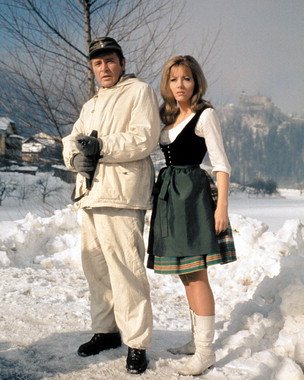 My favourite Movies: Where Eagles Dare.
I LOVE this movie. I know it’s cheesy but I seriously love it. I can remember seeing it with my Dad back in 1968. The opening sequence stayed with me for years afterwards – the soft drumming getting louder and louder until the Junkers JU-52 transport plane fills the screen and we are catapulted straight into the middle of the story. We quickly learn the nature of the mission ahead for the disparate group of Allied heroes yet it soon becomes apparent that all is not what it seems. Classic wartime drama with more twists and turns than a spiral staircase!
As a big fan of both Clint Eastwood and Richard Burton I was not disappointed with their roles and acting. Burton was superb as the weather beaten Major in charge of the team and Eastwood played the American outsider to the hilt. I particularly liked Eastwood’s scene on the stairwell where he waits patiently for the German soldiers before casually gunning them down. Then of course there is the wonderful bus chase and the cable car fight to name but two more adrenaline pumping scenes.
Sure the plot has some glaring historical inaccuracies – most notably the use of a Bell 47 helicopter a year before the first prototype flew – but I could care less. It was just such a fun and exciting film. I was overawed by it as a child and it still has a special place in my heart decades later.
I keep meaning to read the book so I could compare notes. If its still in print I’ll just have to do that.
Sunday, May 21, 2006
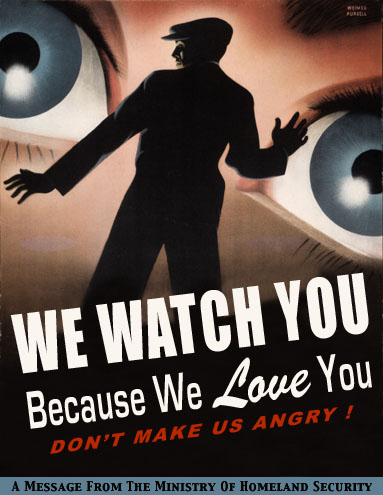 The Perpetual Surveillance Society
By George Monbiot for AlterNet.
February 23, 2006.
It received just a few column inches in a couple of papers, but the story I read last week looks to me like a glimpse of the future. A company in Ohio called CityWatcher has implanted radio transmitters into the arms of two of its workers. The implants ensure that only they can enter the strongroom. Apparently it is "the first known case in which U.S. workers have been tagged electronically as a way of identifying them." The transmitters are tiny (about the size of a grain of rice), cheap ($150 and falling fast), safe and stable. Without being maintained or replaced, they can identify someone for many years. They are injected, with a local anesthetic, into the upper arm. They require no power source, as they become active only when scanned. There are no technical barriers to their wider deployment. The company that makes these "radio frequency identification tags," the VeriChip Corp., says they "combine access control with the location and protection of individuals." The chips can also be implanted in hospital patients, especially children and people who are mentally incapacitated. When doctors want to know who they are and what their medical history is, they simply scan them in. This, apparently, is "an empowering option to affected individuals." For a while a school in California toyed with the idea of implanting the chips in all its pupils.
A tag like this has a maximum range of a few meters. But another implantable device emits a signal that allows someone to be found or tracked by satellite. The patent notice says it can be used to locate the victims of kidnapping, or people lost in the wilderness. There are, in other words, plenty of legitimate uses for implanted chips. This is why they bother me. A technology whose widespread deployment, if attempted now, would be greeted with horror, will gradually become unremarkable. As this happens, its purpose will begin to creep.
At first the tags will be more widely used for workers with special security clearance. No one will be forced to wear one; no one will object. Then hospitals -- and a few in the United States are already doing this -- will start scanning their unconscious or incoherent patients to see whether or not they have a tag. Insurance companies might start to demand that vulnerable people are chipped. The armed forces will discover that they are more useful than dog tags for identifying injured soldiers or for tracking troops who are lost or have been captured by the enemy. Prisons will soon come to the same conclusion. Then sweatshops in developing countries will begin to catch on. Already the overseers seek to control their workers to the second, determining when they clock in, when they visit the toilet, even the number of hand movements they perform. A chip makes all this easier. The workers will not be forced to have them, any more than they are forced to have sex with their bosses, but if they don't accept the conditions, they don't get the job. After that, it surely won't be long before asylum seekers are confronted with a similar choice: You don't have to accept an implant, but if you refuse, you can't stay in the country.
I think it will probably stop there. I don't believe that you or I, or most comfortable, mentally competent people will be forced to wear a tag. But it will become an increasingly acceptable means of tracking and identifying people who could be a danger to themselves, or who could be at risk of sudden illness or disappearance, or who are otherwise hard for companies or governments to control. They will, on the whole, be people whose political voice is muted. As it is with all such intrusions on our privacy, it won't be easy to put your finger on exactly what's wrong with this technology. It won't really amount to a new form of control, as all the people who accept the implants will already be subject to monitoring or tracking of one kind or another. It will always be voluntary, at least to the extent that anything the state or our employers want us to do is voluntary. But there is something utterly revolting about it. It is another means by which the barriers between ourselves and the state, ourselves and the corporation, ourselves and the machine are broken down. In that tiny capsule we find the paradox of 21st century capitalism: A political system that celebrates choice, autonomy and individualism above all other virtues demands that choice, autonomy and individualism are perpetually suppressed.
While implanted chips will not lead to the mass scanning of the population, another use of the same technology quite possibly will. At the end of last month, a leaked letter from Andy Burnham, Britain's Home Office minister, revealed that the identity cards for which we will involuntarily volunteer will contain radio frequency identification chips. This will allow the authorities to read the cards with a scanner. I propose that as the technology improves, the police will be able to scan a crowd and (assuming everyone is carrying his voluntary-compulsory ID card) produce a list of people in it. I further propose that it will take only a year or two for this to seem reasonable. Already we have become used to the police filming demonstrations for the same purpose. When they started doing it, about 10 years ago, it caused outrage. It gave us the impression that by protesting we became suspects. But now we don't even notice them, not even to the extent of waving and shouting, "Hello, Mum." Like every other intrusion on our privacy, they have become normal.
I also propose that the mass scanning these identification chips will allow will be assisted by another kind of surveillance technology. Last week, campaigners in west Wales obtained a letter sent by the Welsh Development Agency to Ceredigion County Council. It revealed that the agency, with the help of the European Union, is setting up an industrial estate outside Aberystwyth. Its purpose is the "market acceleration" of unmanned aerial vehicles (UAVs). With the help of companies such as Bae Systems, Rolls Royce and our new friend Qinetiq, the agency hopes to find the best way of encouraging the "routine operation of UAV systems UK-wide." Ceredigion council's website lists various functions of the UAVs, of which the first is "law enforcement."
So the police won't even have to be there. Someone sitting in a control room could fly a tiny drone (some of them are just a few inches across) equipped with a receiver over the heads of a crowd and, with the help of our new identity cards, determine who's there. It sounds quite mad, just as the idea of biometric identity cards in the United Kingdom once did. All these new technologies somehow contrive to seem both wildly implausible and entirely likely. There will be no dramatic developments. We will not step out of our homes one morning to discover that the state, or our boss, or our insurance company, knows everything about us. But, if the muted response to the ID card is anything to go by, we will gradually submit, in the name of our own protection, to the demands of the machine. And it will not then require a tyrannical new government to deprive us of our freedom. Step by voluntary step, we will have given it up already.
Saturday, May 20, 2006
Monkeys 'string words together'
From the BBC.
Thursday, 18 May 2006
The first evidence monkeys can string "words" together to communicate in a similar way to humans, has been found. Putty-nosed monkeys in West Africa share the human ability to combine different sounds to mean different things, according to researchers. Scientists from St Andrews University found the creatures, in Nigeria's Gashaka Gumti National Park, used two main call types to warn of predators. But a particular sequence of calls also appeared to mean something else. The scientists identified two call types - "pyows" and "hacks" - to alert each other of danger - but found a string of pyows warned of a loitering leopard, while a burst of hacks indicated a hovering eagle.
A sentence made up of several pyows, followed by a few hacks, told the group to move to safer ground. Dr Kate Arnold, a primate psychologist, discovered the phenomena by playing variations of the calls back to the monkeys to see how they behaved. It showed they could encode fresh information by combining two existing calls, rather than creating a new sound, she said. "These calls were not produced randomly and a number of distinct patterns emerged," she said.
"The pyow-hack sequence means something like 'let's go' whereas the pyows by themselves have multiple functions and the hacks are generally used as alarm calls. This is the first good example of animal calls being combined in meaningful ways. The implications of this research are that primates, at least, may be able to ignore the usual relationship between an individual call and any meaning that it might convey under certain circumstances." The research has been carried out over the past three years, and is being published in the scientific journal Nature.
From the BBC.
Thursday, 18 May 2006
The first evidence monkeys can string "words" together to communicate in a similar way to humans, has been found. Putty-nosed monkeys in West Africa share the human ability to combine different sounds to mean different things, according to researchers. Scientists from St Andrews University found the creatures, in Nigeria's Gashaka Gumti National Park, used two main call types to warn of predators. But a particular sequence of calls also appeared to mean something else. The scientists identified two call types - "pyows" and "hacks" - to alert each other of danger - but found a string of pyows warned of a loitering leopard, while a burst of hacks indicated a hovering eagle.
A sentence made up of several pyows, followed by a few hacks, told the group to move to safer ground. Dr Kate Arnold, a primate psychologist, discovered the phenomena by playing variations of the calls back to the monkeys to see how they behaved. It showed they could encode fresh information by combining two existing calls, rather than creating a new sound, she said. "These calls were not produced randomly and a number of distinct patterns emerged," she said.
"The pyow-hack sequence means something like 'let's go' whereas the pyows by themselves have multiple functions and the hacks are generally used as alarm calls. This is the first good example of animal calls being combined in meaningful ways. The implications of this research are that primates, at least, may be able to ignore the usual relationship between an individual call and any meaning that it might convey under certain circumstances." The research has been carried out over the past three years, and is being published in the scientific journal Nature.
Subscribe to:
Posts (Atom)