About Me

My photo
I have a burning need to know stuff and I love asking awkward questions.
Showing posts with label Warfare. Show all posts

Monday, July 27, 2026


Just Finished Reading: The Last of the Ebb – The Battle of the Aisne, 1918 by Sidney Rogerson (FP: 1937) [169pp]

After being savaged in both of the German offensives on the Western Front in 1918, the author and his division is finally taken out of the line to rest and await replacements. They are, to a man, exhausted and in dire need of some time to recover. Thankfully they have been assigned a quiet sector in the French line. So quite indeed that some of the trenches have become filled with rubbish and the rest are in a poor state of repair. What is worse, seen through the authors keen eyed experience of such things, is that their artillery support unit hasn't moved in months. If the enemy DID launch an attack those guns would be the first thing to go... Within days though everyone started feeling 'antsy'. For one thing the random odd artillery shells from enemy guns had stopped. No patrolling enemy aircraft could be seen in the skies, and no enemy troops were seen in No Man's Land attempting to repair their wire. It wasn't just quiet; it was FAR too quiet. Even the Front's location was worrying. Not only did it cover the most direct route to Paris (THE objective for the German forces since 1914) but the river Aisne was BEHIND them. If any kind of attack developed, they would be forced to cross that river (or be destroyed) whilst under fire – not the kind of operation anyone would wish to undertake. 

Days later the rumours started to spread. Circumstantial evidence seemed to point to an attack coming their way. Whispers of troop build-ups, secondary explosions from random Allied artillery shots and a few prisoners warned that something was brewing. Then, in the very early hours of the morning all HELL was let loose on them. As everyone expected their artillery 'support' was annihilated in the first barrage and within minutes the first enemy stormtroopers appeared in their lines. Shortly a general withdrawal was ordered. Three days later they were still pulling back... 

But if the author and his division were more exhausted than they thought possible so, it appeared, were the enemy. After days of constant attacks, the pauses between assaults started to lengthen. The British even had time to catch a few hours' sleep before falling back again but this time they were falling back into more prepared positions and into the waiting embrace of reinforcements – something the Germans could only dream about. By the 3rd or 4th day the Germans had achieved all of their ambitious objectives and they started digging in, awaiting the inevitable counterattack. Impressed by their progress the German senior staff decided to press on – without artillery support, without reinforcements, without much resupply – against dug in troops at least partially rested who, with growing numbers and growing confidence believed that the enemy had shot his bolt and had nothing further in his arsenal. They were right. It was indeed the last of the ebb. From here on the enemy would only move one way – East and home. 

I've read a bit about the German advances on the Western Front in 1918 post-Russian Revolution. Although the Allies were expected such an eventuality they, and indeed the world, were still shocked at its effectiveness. But and it is a BIG but, the attacks ultimately failed and (quite possibly) might never have had a real possibility of success. Although the nature of the attacks bordered on genius at times still the German forces did not have the deep resources they needed to overcome the combined might of France and Britain (plus the increasing strength of American forces) in 1918. It was a great (and desperate) throw of the dice. It MIGHT have worked and, in the best-case scenario, separated the Allies in the West but I don't really think that Britain would have sued for a separate peace at that point and I doubt very much if the French would have ever done so. 

What was most interesting about this short book is seeing those events from the ground rather than 40,000 feet and with a century+ of hindsight. What was even more interesting was the final section where a German account was given of the same event – and not just from any officer but from the officer who PLANNED the whole thing. His assessment of the attack and of his British opponents was well worth a read and complimented the author's story brilliantly. If you have any interest in the fighting on the Western Front – and especially late in the war – this is definitely worth a read. More to come (soon-ish) on these events and the inevitable follow-up. Recommended.

Thursday, May 14, 2026


Just Finished Reading: Russia’s Road to War with Ukraine – Invasion Amidst the Ashes of Empires by Samir Puri (FP: 2022) [265pp] 

Whenever something significant or important happens in the world my first thought is always to look for books on the subject so I can understand it. The war in Ukraine is certainly no exception to this, and I’ve been accumulating a small(ish) stack of books since the conflict started. I had hoped to be reading them AFTER the fighting had stopped but FOUR YEARS later here we are. 

So, finally I’ve bitten the bullet (so to speak) and dived into the Ukraine War pile. This seemed to be a good place to start as it covered the recent history of how we got here – from the collapse of the Soviet Union, the declaration of independence, the various either pro or anti-Russian governments, the revolution, fighting in the Donbass, the Crimean takeover, discussions of Ukraine joining either the EU, NATO or both and, naturally, the subsequent invasion by Russia in February 2022. As this book was published not long after the invasion itself this receives little coverage in the text apart from the brief fighting and failed attempt to decapitate the Zelenskyy government in the ‘special military operation’ scheduled to last a few weeks at worst. If we needed a recent concrete example of a plan failing on contact with the enemy, we need look no further. 

Interestingly the author was ‘on the ground’ in the years running up to the 2022 invasion as an election observer. This certainly gave things an added spice to things. Although he wasn’t exactly ‘in the room’ for a lot of things he often found himself ‘on the street’ talking to locals and experiencing the tensions and the triumphs of the political process as Ukraine moved from a pro-Russian to pro-EU/NATO stance over a decade or so. Despite being clearly (and unapologetically) pro-Ukraine, he had some criticism for the EU, NATO, the US and Ukraine itself in how the situation prior to the invasion was handled. Specifically, the way the Russian demands (and fears) were effectively ignored and as NATO continued its expansion Eastwards. However, as this is an important point, he did not agree that Russia should have had any kind of veto in the matter of where Ukraine decides to place its political or economic interests. That is, and always has been, Ukraine’s decision to make as a sovereign nation. 

If you haven’t been fully keeping up with world events or wanted to know more about the recent foundations of the Russo-Ukrainian War this is definitely the book for you. It doesn’t go into too much detail, nor does it dwell too much on the actual fighting (for those not interesting in military affairs). It does give a very solid foundation to help understand HOW the war happened. Much more to come on the deeper history of Ukraine and on the last four years of fighting. 

[Oh, my 'intention' is to swing between books on Ukraine, Iran, Cuba and Taiwan in the coming months. If any other 'trouble spots' - Greenland? - come up I'll add those too...] 

Thursday, March 26, 2026


Interesting!


Just Finished Reading: Israel’s Forever War – Israel, Palestine and the Last Hopes for Peace by Paul Moorcraft (FP: 2024) [204pp] 

All eyes seem to be on the Middle East and Israel in particular at the moment and rightly so. With the Straight of Hormuz effectively closed and oil prices rising towards the stratosphere it's hard not to take notice. But why did this war actually happen? Whist not directly about the present adventure in the zone this interesting short book does look at some of the recent background to current events primarily inside Israel/Palestine as well as in the region generally. 

Primarily looking at events after the Hamas attack on 7th October 2023 and the following 12 months of Israel's response, the author attempts throughout to be as even handed and as unemotional as possible – quite possibly to the detriment of the narrative. He looks at the Camp David Accords in 1978, the Oslo Accords in 1993 as well as various summits, conferences and initiatives attempting the solve the ‘Palestinian Problem’ and the repeated attempts to achieve a ‘Two State Solution’ which, at least in my opinion, has been a pipe dream, a fantasy, from the earliest days. The author acknowledges the perception/reality of Gaza being an open-air prison as well as Israeli war-crimes perpetrated against the Palestinian people but, from memory, doesn’t use the word Genocide at any point. Maybe he didn’t agree with the definition or maybe he thought it too emotive, I’m not sure. 

He did point out some of the history of the Palestinian Authority, the Palestinian Liberation Organisation (PLO) and Hamas and how the Israeli government actually encouraged the existence and growth of Hamas as a counterweight to other Palestinian groups – essentially a way to divide and weaken all sides and prevent a unified front against Israeli occupation. Ironically this worked far better than anyone no doubt imagined. 

This is a very difficult topic to look at rationally. Emotions are VERY high on both sides and compromise seems (indeed probably is) impossible. History dies hard especially when SO much blood has been spilt over such a long timescale. Personally, I am not confident at all that anything can be resolved inside the existing Israeli borders. One particular thing that did jump out at me was a brief discussion about Israeli incursions into Southern Lebanon (happening yet again as I write this). The world was very surprised by how well Hezbollah forces did against the IDF (Israeli Defence Forces) in 2006 effectively fighting them to a standstill. Hezbollah where trained and equipped by Iran. If US forces go into Iran in the coming days/weeks it probably won’t go as well as expected considering the guys who trained the group that held the IDF at bay will be facing them.  

Overall, I thought this a reasonable if rather short account of recent events in and around Israel. There are some irritating repetitions (I wondered if this was a somewhat rushed publication derived from a number of articles mushed together and not completely edited as it should have been) but it certainly wasn’t a poor/bad attempt at describing things. Its thinness (and proximity to events) did limit proper analysis but that wasn’t what the author was going for I suspect. If you just want a fairly brief and mostly high-level view of current events this could be what you’re looking for. Reasonable.  

[Side note: I do feel guilty about not reading about the Ukraine war yet (its coming). Along with reading up about Israel I guess I’ll also have to shoehorn a book or two about Iran and, probably, Cuba at some point. Wars not only teach Americans geography, but they also add to my TBR and generally I don’t need much help in that department.]  

Monday, February 16, 2026


Just Finished Reading: Chickenhawk by Robert Mason (FP: 1983) [399pp] 

Robert Mason wanted to fly for as long as he could remember. Gaining his civilian pilot's licence as soon as he could he still wasn’t satisfied. He wanted to fly helicopters but the only way he could afford that was to be trained by the Army, so he joined up. Despite the worsening situation in SE Asia, he never expected to be sent to Vietnam. That, among other things, just showed his lack of understanding about the world. Within weeks of getting his helicopter pilot's licence he was on his way overseas with a new type of combat unit – the 1st Air Cavalry. For the next 12 months, from August 1965 to July 1966, he would fly over 1,000 combat missions delivering troops into hot LZs (Landing Zones), returning later to pick up the survivors, the wounded and the dead, he would deliver ammunition, food and other supplies to artillery units on lonely hilltops, and he would fly top brass and reporters across the jungle to ‘assess how things were going’. Apart from being an effective member of his squadron and not letting the guys down he had only one driving ambition – to survive his tour (despite everything) and return home to his wife and child. He did (no spoiler here as he wrote this book!) but as a changed man plagued by nightmares and increasing addicted to alcohol and drugs. 

This was a mistake. I had thought, going in, that this was a novel so I could add another Vietnam entry into my fictional world tour. The book turned out to be, however, a personal account of the authors experiences as part of an experimental tactical unit expected to win the war in Vietnam in a matter of months. This was, in many ways, an impressive work. Not only did the author (not a professional writer in any way) convey the reality of modern warfare – the chaos and incompetence at all levels was honestly shocking – but did so in such a way that you could almost imagine sitting in that helicopter with him throughout the narrative. No doubt he pulled his punches from time to time to reduce the grimness of the tale, but what he did end up conveying was bad enough.  

The new ‘Air Cav’ system was expected to be a true war winner. Afterall, the most powerful military in the world was fighting (if you could use that word) a bunch of guys in sandals carried AK-47s, right? How could they possibly lose? Yet much to the surprise of the top brass (although quickly understood by the men on point) not only did the Vietcong not quickly go down to defeat and despondency they not only fought back but fought back effectively – and the US military had little response except more and more troops and more and more firepower. Looking at it with 60 years of hindsight it's easier to see why they failed. Firstly, it was all (effectively) new to the Americans despite their experiences in WW2. On top of that they were trying out, with great hopes, their new lethal toys against a supposedly primitive enemy. Their (actually warranted) arrogance wouldn’t allow them to see problems before they arose or solutions once the problems morphed into an intractable mire. The author related a simple but significant fact – before flying into his first combat zone he, and other pilots and gunners, were promised body armour. This finally arrived SEVEN months into a twelve-month deployment. Apart from logistical incompetence the reason I think this happened was because no one believed that they’d still be involved in the war for 6 months, never mind in excess of 16 YEARS. This level of over confidence (or arrogance) resulted in a lot of unnecessary deaths on all sides.  

I’d read a bit about this war before, watched movies and documentaries and actually remember watching it on the nightly news growing up, but this account was a real eye-opener to the reality on the ground. If you want to be exposed to how things where ‘in country’ from a first-hand perspective this is a very good place to start. Definitely recommended and more from this combat zone to come. 

[Highest page count of the year so far: 399pp][+17pp]

Thursday, January 29, 2026


Just Finished Reading: 1941 – The Year Germany Lost the War by Andrew Nagorski (FP: 2019) [305pp] 

I have long argued that Germany made three significant mistakes in 1941 which essentially lost them the war, so it was good to find an author (another journalist rather than a historian) that agreed with me. But although we were definitely on the same page the author of this excellent history was rather more nuanced than I was.  

The first, arguably less vital mistake, was not finishing off the British on their left flank after losing the Battle of Britain and indefinitely ‘postponing’ the invasion known as Operation Sealion. Hitler was, apparently, sure that Britain posed a low threat as she was under constant air attack and the vital Atlantic convoys were under constant pressure. Hitler assumed that she would eventually have to ask for an armistice before widespread starvation set in. He wasn’t completely off base but failed to take into account Churchill’s ‘bulldog’ spirit and Roosevelt's growing assistance in Britain's war effort. 

Oddly, Germany’s (or actually Hitler’s) second mistake was at least in part supposed to address his first. The planned invasion of the Soviet Union was supposed to take out a future potential ally of Britain (thereby making Britain's situation hopeless) and also discourage further American involvement in the European war. After the lightening victories in the West even the sceptical German army commanders started to believe that they could defeat Russia in a matter of 2-3 months. This was despite, or maybe because of, the lack of any adequate intelligence of Soviet capabilities or even decent maps of the region. The initial attack – aided immensely by the fact that Stalin had refused to believe that such an attack was coming despite mountains of evidence to support it – was a huge (indeed unexpected) success and seemed to validate Hitler’s belief that a simple door kick would be enough. Here’s were the authors nuance comes in... In the earliest days, as German forces advanced into Poland and the Ukraine, at least some of the locals saw the Wehrmacht as liberators rather than invaders (which is rather difficult to wrap your head around knowing what was coming). But this opportunity was very quickly thrown away as the advancing German forces were told to neither stop nor take prisoners. It wasn’t long before the ‘liberated’ became partisans – another fatal mistake. 

Belief trumped reality when, after months of conflict, frontline commanders sent back requests for winter clothing. As the Russians, who had been dying or surrendering in their millions at this point, were expected to collapse at any minute now such frivolous (indeed almost treasonous) requests were denied. Indeed, despite being within sight of the outskirts of Moscow itself, Wehrmacht commanders were ordered to swing south to finish off Ukraine before returning to take the Soviet capital and communication hub as the first snowflakes began to fall. Interestingly, as civilians and government officials began to leave Moscow, Stalin was just about to board his armoured train for the ride East when he suddenly changed his mind and returned to the Kremlin. From that moment anyone seen leaving or looting was shot on sight. By the time the Germans returned the cities defences had been enhanced and fresh units from the Far East had begun to arrive. 

Hitler was eager for his Far East Axis partner Japan to attack Russia in 1941, but Japan had other ideas. Not only was it committed to operations in China, but it was just about to launch its fateful attack in the Pacific. Spies inside the German embassy in Tokyo knew that no attack against Russia was forthcoming and Stalin, eventually, believed them and repositioned hardened winter trained troops west to defend Moscow. Three days after the Japanese attack on Pearl Harbor Hitler made probably his biggest mistake of the war. With little advantage to himself he declared war on the USA in support of the Japanese attacks. His military commanders were appalled but Hitler believed that the Japanese would draw the majority of American forces against them – and hold them – and that the American economy couldn’t transform from peace to a war footing in time to prevent an Axis victory. He was, as we now know, wrong. 

This was a MUCH better read than my previous book on this fateful year. Part of that I think was the author's primary focus on Europe (especially Germany & Russia) although there was much too on American moves and attitudes to the war itself and the situation in China. Another thing which helped the narrative move along was the fact that the author didn’t need to repeatedly ‘change gears’ from a high to low level focus on the personalities involved. Here we (mostly) stayed at the policy/command level rather than literally in the trenches – though there was some of that sprinkled throughout. This was a very well written detailed account of a pivotal year in WW2 and goes a long way to explain exactly why Germany lost it. I’m looking forward to reading more by this author who certainly seems to know his stuff. Highly recommended.  

Just one more 1940’s focused history to come next before leaping to the 1960’s...  

Thursday, January 15, 2026


Just Finished Reading: 1941 – Armageddon by Richard Collier (FP: 1981) [316pp] 

1941 was a bad year for the Allies. Despite success in the Battle of Britain, England was still being regularly bombed. In North Africa Rommel was recovering land given up by the Italians and gaining more by the day. Allied forces had been ejected from Greece and Crete (which was the graveyard of the German airborne forces) that couldn’t help but be compared to Dunkirk. In America President Roosevelt still struggled against isolationist forces in his desire to become the arsenal of Democracy. Meanwhile, in the East, the Japanese began moving against the European outposts taking one after another with apparent ease. There was, briefly, some good news – or at least good mixed in with the bad. Despite losing HMS Hood the Royal Navy had struck both a tactical and propaganda victory with the sinking of Germany’s flagship Bismarck. It was little enough to celebrate but it was something in those dark times. In the summer of that year things changed. In June of 1941 Germany attacked Russia in Operation Barbarossa. It was a HUGE gamble which turned out to be a huge mistake (actually Axis forces made at least 3 fundamental errors in 1941 which would, ultimately, loose them the war – but more on that later). Despite a constant stream of warnings, the Russians were taken completely by surprise and thrown back in disarray. It would take them months to recover. Finally, as the year approached its end, the Japanese navy launched its sneak attack on the US navy base at Pearl Harbor (again despite significant warnings that it was about to happen - more later on that too). America was now fully in the conflict. 

I found this to be somewhat better that the authors previous work on 1940. Partially it might be that I had become used to his ‘style’ but I think he did actually improve his writing in the intervening years. There was a great deal of doom & gloom here and rightly so. It was THE bad year for the Allies and it's easy to imagine, as many did, that the Axis powers were going to be triumphant. Only in hindsight could many see the seeds of Axis defeat (Churchill was one of them who was delighted in the German attack on Russia and equally convinced that the war was now effectively won – by the Allies – once the US was fully committed to the cause). But 1942 was the year when the dynamic changed and the Axis lost the initiative and never regained it after the battles of Midway (4–7 June 1942), El Alamein (23 October – 11 November 1942) and Stalingrad (17 July 1942 – 2 February 1943). 

This was a reasonable overview of a very difficult and deadly year. As before we had the rather annoying and honestly clunky change of gears from big events to small ones. Again, I can see why he chose to do this, but I don’t think it was handled particularly well. I’m certain that there are better books out there on this year (one coming up actually!) so if you have limited time or limited interest, I might suggest that you pass on this one.  

Thursday, January 08, 2026


Just Finished Reading: 1940 – The World in Flames by Richard Collier (FP: 1979) [323pp] 

Covering the first full year of the Second World War is quite the challenge and the author makes quite a good go at it. From the Phony War, the Norway Campaign, the Fall of France, Dunkirk, the Battle of Britain, the invasion fears, the Blitz and so much more we are presented with a world, with a way of life, being ripped apart. Apart from the actual battles we are also presented with the political aspects of the great conflict – from Vichy France, the arguments and upheavals in the UK parliament and often heated debates in the US between isolationists and those who wanted to get more involved (directly or indirectly) in the conflict. 

Unfortunately, despite covering the ground well, I’m going to spend the rest of this review criticising the book in ways large and small. I’ll start with the small to get it out of the way. Now, I’m not generally a stickler for footnotes. If something needs to be said, then say it in the main text. There are times when footnotes are useful, but I don’t generally demand them. Here, however, their lack irked me many times. The problem was when the author was quoting people – especially those who disagreed with each other – without sufficient (or any!) context. What would have been useful would to know exactly when and where the people involved said such things – in letters to others or in dairies written soon after the event? Or in minutes of meetings? Or in autobiographies written years (or decades) later complete with faulty memory? It’s IMPORTANT.  

Then we have the generally laudable idea of contrasting the world events and political decisions made in lofty smoke-filled rooms in the world’s capitals besides the experiences of the men and women on the ground. So far so good. Unfortunately, I found that the authors use of this ‘plot device’ kept slowing the narrative down resulting in a jerky overall feel to things. The micro-narratives where also generally too long and contained too many irrelevant details. I was tempted more than once to skim read those bits! 

My final (and most major) problem I had with the text was the general tone of things. I think anyone with even a cursory knowledge of the war understands that the Allies at the start of things were unprepared for the conflict to say the least! Of course, the Axis Powers were also unprepared for a LONG war, but that’s a whole other issue. The author, much to my annoyance, constantly harped on about the lack of modern Allied equipment, hidebound leaders, poor communications, and so on. Yet, the British still managed to save around 400,000 troops at Dunkirk, prevent any possible invasion of the UK and roundly beat the Luftwaffe over the South of England. Whilst it's true that the British took around 2 years (admittedly MUCH longer than it should have) to finally figure out exactly how to beat the Germans on land, both the Royal Navy and the RAF already had their measure very early on.  

The iconic Battle of Britain is a case in point. Both the Spitfire and Hurricane were comparable to the standard German fighters of the time and, gradually, in the next 4-5 years became much better than their German rivals. The reason the Luftwaffe failed to win air superiority over Southern England are numerous, but it is largely due to the fact that they had never encountered a modern integrated air defence system before – because such a thing had not existed before the British invented it during WW1 and perfected it in WW2. Such innovations cannot simply be dismissed with the usual ‘last minute’ and ‘thrown together’ platitudes as it was anything but. The truth of the matter is that the RAF actually INCREASED in size during the battle. Each day the RAF received or recovered more fighters than they lost. There was NEVER a shortage of airframes only the worry of a shortage of qualified pilots. The reason for the nighttime bombing raids during the Blitz was that it was FAR too dangerous for the Luftwaffe to attack in the daylight! 

Likewise talk of invasion. Op Sealion (of which more later!) was unlikely to go ahead and even more unlikely to succeed. Although it couldn’t really be dismissed out of hand and was certainly a concern at the time any careful analysis of the idea would’ve shown just how unlikely it was. The RAF was never really in danger of being swept from the skies in 1940 and without that the proposed invasion – with tugs pulling flat bottomed barges for God’s sake! - would have been a massacre. Likewise, without much of a navy of their own, the German forces attempting a crossing would have been cut to pieces by the Royal Navy. If you compare the proposed German invasion force in 1940 to the actual Allied invasion force in 1944 it's really obvious that the German operation would have failed spectacularly. The supposed incompetence and inadequacies of the British forces, even at this early stage of a STEEP learning curve, were all too often overplayed by the author which really didn’t help my enjoyment of the book. 

Anyway, I’ll get off my soapbox now and take a DEEP breath. Generally, this wasn’t a bad book (or at least not a terrible one). It’s readily apparent that the author was a journalist rather than a historian which explains a great deal. The ground he covered – factually at least – was competently done and has prompted me to investigate some areas further (which is good). But it was the tone of the writing more than anything else which soured me to this work. Reasonable. 

Thursday, December 11, 2025


Just Finished Reading: 1914 – Fight the Good Fight: Britain, the Army & the Coming of the First World War by Allan Mallinson (FP: 2014) [551pp] 

Britain was unprepared for war in 1914. Despite rising tensions on the Continent since the assassination of the Austrian Archduke (and actually long before that) Britain was, as always, focused on the Empire. Despite the Entente Cordiale signed with the French in 1904, Britain had no intention of getting entangled in another European conflict. For more than a hundred years the British policy in regard to Europe was simply to prevent one power becoming all dominant and, therefore, becoming a threat to British and Imperial interests. Also, being primarily a maritime power, the British army was tiny in comparison to its European counterparts. Indeed, the German Kaiser himself called it contemptible and quipped that if it entered German territory, he would have the local police arrest them. 

Just how unprepared the British were was made clear in this excellent book. The Germans had a very detailed plan (flawed but VERY detailed) as to how precisely they were to remove the French threat prior to engaging the large, but slow, Russian one. With France and Russia being allies the LAST thing the Germans wanted was the dreaded “war on two fronts”. So, knock out the French with the majority of their army and then entrain everyone for a swift redeployment in the East. Simple. Except that they should have remembered that NO plan survives contact with the enemy. Unfortunately for Germany (and to be honest the whole of Europe) the Schlieffen Plan had no flexibility built in. NONE. The French plans were almost as detailed. They even had several plans to work from. Unfortunately for France their plan(s) was based on two assumptions – never of which were true – that the Germans would hold back their reserves and leave more divisions in the East than was actually the case and that they would behave exactly as the French expected them to. Meanwhile the British... well, THEIR plan (such as it was) was to deploy their entire available force – minus some divisions kept back for home defence until the possibility of invasion had passed – on the left of the French line... and that was IT. At least it had the advantage of simplicity. 

Despite aerial reconnaissance by both sides (although still VERY much in its infancy at this point) the British managed to blunder into the main German thrust where they found themselves outnumbered by roughly 8 to 1. Despite everything the British actually managed their ‘first contact’ surprisingly well being both highly trained and highly professional with the painful experience of the Boer War still very much present. Struggling to disengage during their subsequent retreat (strategic withdrawal?) they finally managed to do so and continued the retreat until finally they managed to reform and reinforce. In coordination with the French, they launched a significant counterattack and knocked the Germans on their heels. The Schlieffen Plan had failed, and a long war of attrition was about to begin. 

This quite outstanding book is focused very much on the beginning of things and only really covered the first few months of the conflict. Much of the book was focused on background – primarily from the British point of view obviously – and to give you an idea of just how much background we’re talking about here the first shots exchanged between British and German forces happened around page 380. Although, inevitably, some of the reasons behind the outbreak of the war were discussed that wasn’t the focus of the book. This was about how the British responded to the emergency and exactly why they behaved as they did. It was more than a little shocking to realise that the Cabinet only began discussing options AFTER the German army crossed the Belgian border! There was even debate over whether Britain should intervene AT ALL despite its undertaking to guarantee Belgium integrity. The reluctance to get involved and the political smokescreen deployed to cover this confused everyone. The French, for example, were convinced that Britain would be at their side every step of the way – regardless of the Belgian issue – and planned accordingly. The Germans, however, convinced themselves that Britain was staying out... and planned accordingly. 

One of the things I really liked about the author, who isn’t a professional historian but clearly knows his ‘stuff’ being an ex-cavalry brigadier, was his reluctance to speculate about what the main players were thinking (or not) beyond the evidence available. Equally I enjoyed a whole chapter of speculation of ‘what might have been’ if the British had thought things through more carefully. An earlier report on Belgian fighting capabilities fully expected that they would either put up a token face-saving fight and quickly capitulate with honour intact or be swept away by German might. What was completely unexpected was both how well and how aggressively the Belgians DID fight which, incidentally, completely threw off the German timetable. IF the British had been more aware of this fact before they deployed to France, they could have had an agreement with the Belgian king to quickly come to their aid in case of invasion (the Belgians were adamant that NO army would be crossing their border without permission). They could have been based at nearby railheads and, once the Germans crossed the border, been shoulder to shoulder with the Belgian forces in a matter of hours and could (possibly) have stopped the German advance DEAD in its tracks. When Russia invaded East Prussia on 7th August 1914 the Germans would’ve been faced with a nightmare scenario. It's entirely possible that they could have quickly sued for peace. So, no Great War, possibly no Russian Revolution, certainly no Second World War... Oh, the possibilities. 

As you can tell I was DEEPLY impressed by this book. I’ll definitely be looking out for more of his military history works as well as diving into his novel series in the New Year. So, MUCH more to come! Very Highly recommended to anyone interested in the start of the Great War and a definitely highlight of the year.  

[This is the first of a bunch of 20th Century history books I've been meaning to schedule for a while now. It'll run from 1914-1983. So, stay tuned!]

Thursday, November 27, 2025


Just Finished Reading: The Spanish Armada by Robert Hutchinson (FP: 2013) [254pp] 

It was, without doubt, a turning point heralding both the rise of England to global power status and the long slow decline of the Spanish Empire into eventual obscurity. The Great Enterprise of the Spanish Armada was supposed to ring the death knell of Elizabeth’s Protestant England. Not only did it fail in rather spectacular fashion it set in motion a chain of events that would change Europe and the world forever. 

The launch of the Armada in 1588 came as no great surprise to anyone. Not only was Spain an avowed enemy of England after the accension of Elizabeth to the throne in late 1558 but Phillip II (ex-husband of Mary I of England) had publicly vowed to expunge the heretical monarch by fire and invasion if necessary. As the Anglo-Spanish War (1585-1604) dragged on plans were drawn and ships began to cluster in various ports ready to destroy the English navy [I had to constantly correct myself thinking of England’s forces as “British” or thinking of England as either Britain/Great Britain or the UK as such entities had yet to come into existence] and facilitate a full invasion from the Spanish held Netherlands. Such a fleet took an inordinate amount of time to bring together. So long indeed that the early stores brought aboard began in rot in their casks. The fleet itself was a motley collection of newly commissioned ships, barges, older warships and even oar powered/assisted galleons. In all the fleet consisted of 141 ships and took two days just to leave port. Moving at the speed of the slowest ship it progressed towards England at a pace of 4MPH.  

From the ‘off’ things did not go well. Bad weather forced several ships back into port almost immediately and later storms forced several ships to leave for repairs. Finally reaching the English Channel it began to face increasing attacks from English warships which although smaller than many of their Spanish counterparts where much nimbler, better crewed and better armed. The failings of the Armada began to become obvious to all concerned. Barely half of the actual Armada were warships whilst most of the English ships could be described as such. Although the English did have a number of armed merchantmen the majority were very much men-o-war manned by experienced and hardened combat veterans. Retiring to Calais to await the invasion force from the Netherlands, the Spanish fleet were set upon by 8 English fireships causing only slight damage overall but scattering the remainder and beaching several ships. Interestingly, these 8 ships were the only English losses attributed to the fighting.  

Scattered, harried and with contrary winds – to say nothing of the dead and dying from various encounters including the Battle of Gravelines – the Armada pushed into the North Sea with the idea of circumnavigating the British Isles and returning to Spain. This is where things got really bad for the fleet. A mixture of unseasonably stormy weather, lack of charts, death, disease and fast running out supplies meant that the remaining 110 ships suffered greatly on their journey home. Finally, months after they sailed certain of their victory, only 35 ships made it back many containing hundreds of dead and dying. It was a disaster of epic proportions. Spain would never fully recover. 

Naturally the tale of the Spanish Armada is taught with pride (or at least it was in my time) in British schools – despite the fact that most of the damage was done by our notoriously fickle weather. Although its arguable if the Armada could ever have been successful even without the storms it's equally arguable that a successful invasion (if possible) would have ended Elizabeth’s reign reasonably easily. But I think a LOT would have had to have been different for this counter-factual to have much credence. Evidence at the time as well as later evidence from the many wrecks around the coast shows just how unprepared the Spanish had been relying as they did on God and the justice of their cause rather than solid logistics, a well thought out plan and seaworthy ships.  

As an aside, after receiving the rather odd update on my ancestry – that my DNA is apparently 2% Spanish – I paid particular attention to the crews of Spanish ships that washed up on the Irish coast on their way home. It seems that the vast majority either drowned (the idea I understand that it was ‘bad luck’ for a sailor to know how to swim) or were killed on the shoreline (as either invaders or, rather strangely, because of an idea that if you saved someone from the sea then it would be ‘compensated’ by the drowning of a local). Some of the richer survivors did manage to pay their way home (as always) but there is some evidence that a handful of survivors did settle in Ireland in various capacities. It's possible (just) that one of these Spaniards was an ancestor of mine – although I doubt very much if I’m going to find any documentation of a Pedro Gonzales married to Bridget Doyle in 1589.  

Overall, this was a very good examination of why the Armada happened and why it ultimately failed. Even if you have a reasonable familiarity with the events this can still highlight much that you might have missed from your school, movies or casual reading. Definitely worth a read.

Monday, October 27, 2025


Just Finished Reading: Red Moon Rising – Sputnik and the Rivalries that Ignited the Space Age by Matthew Brzezinski (FP: 2007) [278pp] 

I have long thought that the launch of the Soviet satellite Sputnik (which just means satellite in Russian) was a carefully planned event to both embarrass the United States and prove that the Soviet Union was light-years ahead in an emerging technology. There is some truth to that but, as I learnt in this fascinating book, there was much, much more going on here. 

After the war in Europe came to an end in 1945 both the Soviets and the West (both the Brits and the Americans) grabbed as many German scientists & technicians as possible to speed up their own missile programmes. Oddly both sides of the Iron Curtain failed to invest either the time or the money to make this a quick reality. The US was more interested in the closing the non-existent ‘bomber gap’ and the Soviets just didn’t have the resources to maintain their enormous military, race ahead with nuclear weapon development AND build a functioning rocket force. With knowledge of the ever-expanding US bomber force in the shape of the SAC (Strategic Air Command) the Russians knew that it would be impossible to out-build them for decades. Their embryonic rockets however where barely functional and would crash or blow up just as often as they would fly a few hundred miles down range (the American’s were having similar issues some of which were VERY public). It was Khruschev who decided, much to the annoyance and protests of his generals, that the ONLY way that the Soviets could possibly compete was better and, more importantly, bigger rockets. The pressure was on to build a rocket big enough and reliable enough to launch the (comparatively) huge nuclear weapons at intercontinental distances.  

After much work and MANY failures, the Russians finally managed to launch two consecutive missiles that landed roughly where they were aimed. But there was a problem – the heatshield responsible for protecting the warhead on re-entry repeatedly failed to work. The missile was essentially useless. But what if, the Chief Engineer mused, the ‘warhead’ didn’t need to come back down? This is the idea he sold to Khruschev – show the Americans what they COULD do without actually having the ability to DO it. On October 4th 1957 they did exactly that and the Space Age blazed a trail across the night sky. 

This was, to be honest, a fascinating and gripping read of the early Cold War. I did have SOME idea of the story going in but had no idea that the circumstances on both sides of the Iron Curtain were so complicated and so messy – almost random in nature. The political situations in both the Soviet and American establishments came as something of a shock to me as I had imagined that both sides had at least SOME stability and plan for forging ahead (with their technology or economy). The in-fighting – often quite vicious – on BOTH sides was quite the revelation. But I think the thing that really stuck out for me was the historical context. What I wasn’t aware of – or at least hadn’t made the connection – was the fact that during this time we had the Suez Crisis where France, Britain and Israel tried to take control of the Suez Canal from Egypt MUCH to the annoyance of the US, we had the Hungarian Uprising and the subsequent violent suppression by Soviet tanks (it was only reading this book where I realised that the political upheavals of the time inside the Soviet Union where related to Khruschev’s “Secret Speech” where he denounced Stalin much to the shock of just about everyone else), and in the US we had the fallout of Brown Vs The Board of Education and the military enforcing desegregation – much to the political capital of the Soviets. It was a BUSY time! 

I’m not going to go through everything here, but needless to say I found it both very interesting indeed and highly educational. Split roughly 50-50 between the Soviets and the US this really embedded the very early Space Race in its historical and political context. It also opened several new lines of enquiry that I’ll be following up – eventually! Definitely recommended for anyone interested in the Cold War, space technology, the 1950’s or just looking for a damned good read. Another highlight of the year.  

Monday, September 29, 2025


Just Finished Reading: How Churchill Waged War – The Most Challenging Decisions of the Second World War by Allen Packwood (FP: 2018) [264pp] 

You really can’t discuss (or arguably understand) the Second World War without reference to Winston Churchill. Although he wasn’t British Prime Minister at its outbreak, indeed he was still very much in the political wilderness at that point, it wasn’t long before he assumed that position on the resignation of Neville Chamberlain. But what made him such an effective leader and how did he cope (and indeed keep his job) when things went badly wrong? 

This honestly fascinating analysis of Churchill’s strategic and political thinking during WW2 not only increased my appreciation of the man himself but really enhanced my understanding of the North Africa campaign in particular. Previously I had looked on the fighting there in a simple one-dimensional fashion – it was to protect the Suez Canal and the MUCH shorter route to India and the rest of the British Empire. This is indeed true – but barely tells half of the story. Of course, the loss of Egypt and the Canal would have been devastating and maybe could have knocked Britain out of the war (or at the very least lengthened the conflict significantly) but its simple retention would have merely enabled the existing status quo. The significance of the North African campaign was far larger than that. Firstly, it would show the Russians that Britain was still in the fight and was drawing away troops from the Russian Front. This, hopefully, would bolster Russian resistance and prevent them from making a separate peace with Germany. Continuing the fighting in the North African desert also showed the Americans that we were not beaten and that it was worth their time and expense to keep sending us weapons and other goods to continue a (potentially) winnable war – despite what Roosevelt’s ambassador to Britain was feeding him. The ongoing conflict in Africa also (probably) had an effect on both Spain and Turkey preventing them from joining the Axis Powers (although I don’t think that Spain seriously contemplated this so soon after their Civil War). Finally, despite the victory in the Battle of Britain (as well as the ongoing slog in the Battle of the Atlantic) the British Army had yet to develop the fighting skills to beat the Germans in particular (the Italian Army was CRUSHED in the early North Africa battles) at their own game. Once the right General was in place and the right weapons in his arsenal the Afrika Corps was sent packing, and the strategic initiative started to swing in favour of the Allies. The rest, as they say, is History. 

As the author is the Director of the Churchill Archives Centre it should come as no surprise that this is a deeply researched work. Covering the initial decision to assume the role as Prime Minister, to the type of Government he created on the assumption of that role (being both PM and the first Minister of Defence), to the competing demands of fighting in France and then coping with her defeat, his approach to both the USSR and the USA as allies or potential allies, to coping with (and politically surviving) the Fall of Singapore (something I MUST read far more about) to, finally, Churchill’s decision to fight the 1945 General Election on his war record – and LOSE! I learnt a LOT from this book, and it has become one of the best Churchill books I’ve read so far. Highly recommended to anyone who wants to understand British warfighting policy in WW2 and those who want a deeper insight into how Winston thought and fought. 

Thursday, September 18, 2025


Just Finished Reading: By Tank into Normandy by Stuart Hills (FP: 2002) [244pp] 

War, especially combat, is a young person's game and the author of this fascinating account is no exception. Just 20 years old when he graduated from the Royal Military Academy Sandhurst, he was given command of not only a Sherman tank but a troupe of 3! Even more astounding (from my perspective) was his first ever mission – to land on Gold beach on 6th June 1944: D-Day! It was, in many ways, quite the baptism... 

Second Lieutenant Stuart Hills of the Nottinghamshire Sherwood Rangers Yeomanry had been assigned a DD (Dual Drive) tank – one of Hobart's ‘funnies’ that was expected to ‘swim’ ashore to assist the first men on the beach. So, as dawn was starting on 6th June the landing ramp of the LTC his crew was on lowered and, about 600-700 yards from the beach he ordered is tank forward into the channel. Almost immediately water started pouring in. The pumps helped but it was soon apparent that the tank wasn’t going to make it. Just minutes into his first deployment he ordered the tank abandoned and watched as it slipped under the waves and sank. Everyone got out – the Sherman had a crew of 5 – but they had lost everything. Picked up by another landing craft they spent D-Day watching other people storm the beach from a distance. Only on the 7th (with the beach still under fire) did they land and make their way to their unit in order to pick up a brand-new tank. Welcome to France! 

[Side note: 32 DD tanks were deployed to support Omaha beach but started over 6 THOUSAND yards out. Because of a strong tide and still very choppy seas from a passing storm only 5 made it to shore.]  

The author goes on to relate his varied experiences from that day until the German surrender in May 1945. Fighting through the highly dangerous French ‘bocage’ country, through the Low Countries and finally into Germany itself finishing, just after his 21st birthday(!), in Hanover. Several instances along his journey in particular jumped out at me – apart from his tank sinking! Although thankfully rare, there were several early encounters with early model Tiger tanks. On one occasion the Tiger was hit multiple times by several Sherman’s without a single penetration. Only a lucky shot that caused white-hot splinters to enter through a vision port and start a small fire inside the tank caused the crew to bail out. In another encounter the author was in the lead tank stuck at the edge of a minefield awaiting engineer support. The Tiger opened fire and destroyed the last tank out of 12. Stuck, the other tanks fired smoke shells to obscure the Tigers vision and the author called up Close Air Support (CAS). Moments later 4 Typhoon ground attack planes arrived. When the smoke and dust had settled the Tiger was on its side – minus a turret. Finally, and most tense I felt, was when the authors tank was hit and disabled while fighting in a small town. The driver and front machine gunner were killed instantly but the other 3 crew were trapped because they were constantly being ‘pinged’ by a German machine-gun. The problem was that the building the tank was next to was on fire. If they stayed in the tank, they’d be slowly roasted alive but if they tried to leave, they’d be shot by the machine-gun. Luckily another tank had seen their tracer fire and dropped a High-explosive shell on the machine-gun nest allowing the crew to evacuate! 

Except in the closing weeks of the European war (when the author was in charge of a Recon Unit), most of his tenure was supporting infantry units – both British and American – in their advances across enemy territory. As the tanks supported the ‘poor bloody infantry’ the infantry themselves helped protect the tanks against the new and deadly threat of hand-held anti-tank weapons, especially the highly dangerous Panzerfaust. ‘Buttoned down’ inside a tank the crew's vision was greatly restricted so, without anyone outside the tank looking out for them, it was comparatively ‘easy’ (if incredibly brave) to pop-up 20 feet away and fire your weapon often hitting and disabling the tank it was aimed at. The author's tank was hit twice in this way. Once (luckily) causing no damage and once causing the crew to bail out.  

As you can probably tell this was a totally immersive and gripping read. I’m not surprised at all that it was the winner of the ‘Distinguished Book Award’ from the Society for Military History for Best Military Memoir in 2003. It also comes as no surprise that the author was awarded the Military Cross. Definitely recommended for anyone interested in WW2 and most especially for anyone interested in tank warfare.

Monday, September 08, 2025


Just Finished Reading: The Future of Geography – How Power and Politics in Space Will Change Our World by Tim Marshall (FP: 2023) [298pp] 

Space is indeed the Final Frontier (unless we invent Time Travel at some point). Space is, effectively, endless even if the boundary of exactly where it begins (either 80 or 100 Kilometres up depending on who you agree with). But this is where things get interesting, human, political. Although a few treaties have been proposed, even signed up to by some nations, the politics of space is... messy, sparse, complicated. So? Why does that matter? Surely space is big enough for everyone, right? Unfortunately, no. 

Part of the problem is what countries use space for. There’s the good stuff like GPS (even with its primary military application) and weather satellites to say nothing of satellites which enable global phone coverage, Internet and TV. Then there’s spy satellites and (probably) a whole host of other military kit up there that ‘they’ don’t want you to know about. Is that OK to be up there? Is it OK for a country to shoot (or even attempt to shoot) ‘enemy’ satellites down in a conflict – or as a pre-emptive strike knowing that the resultant debris could damage other non-combative satellites or space stations? Is it OK to have nukes in space? Who decides? Who monitors and enforces any agreements about this? What about countries that don’t sign up? 

Then there’s the Moon. An old agreement said that countries can, and cannot, do certain things – including basing weapons on Luna. Because of the age of these treaties no one expected that private companies could have interests in mining or other activities on the Moon. So, do the treaties apply to them? Even with the best will in the world who exactly enforces this? A Space Police? Funded by who? Manned by which countries? Based on what authority? Complicated, isn’t it? Mining of asteroids is all very well – indeed is a brilliant idea that could really kick-start the ongoing effort to push out into our Solar System, but can a company own as asteroid and mine it exclusively? What if it accidently pushed it into an orbit that could put it in danger of hitting the Moon, Mars or even Earth? How would things like that be ensured against? 

Although we are still at the VERY early stages of such things, these are subjects that need to be thought about and, as much as possible, solved BEFORE someone pulls a modified AK-74 to defend their bit of the Moon or their space rock from someone else and BEFORE someone blows up a satellite and collaterally brings down a space station. In a nutshell that’s the context of this fascinating continuation of the authors series of Geopolitical books which move ever outward and ever into our (possible) future. This certainly provided me which much to think about and added much information/knowledge to think with. The next 100 years are going to be quite something in Earth orbit, on the Moon and even on Mars if we get there in any numbers. Exactly HOW we deal with things in space will define what benefits we derive from this expansion of the human domain and who exactly gets access to them. Interesting times indeed and most definitely an interesting read. Recommended.  

Monday, August 04, 2025


Just Finished Reading: A Brief History of The Hundred Years War – The English in France, 1337-1453 by Desmond Seward (FP: 1978) [265pp] 

Any war that lasts 100 years, or in this case 116, is going to be complex. Over that people, and especially during that age, leaders change – from Kings to warband captains – alliances shift, marriages and deaths change political dynamics, technologies change and mature (here the introduction and early use of gunpowder firearms) and outside events such as Crusades and Plague have impacts on who is available to fight. In fact, the use of ‘complex’ in reference to this was barely covers it. 

Of course, one of the (many) things that stick out in a jarring sort of way is that this wasn’t really a conflict between England and France at all. Although England was, by and large, a unified state at the point when the war started (essentially over who would sit on the French throne) the nation of France was nothing of the sort. ‘France’ was more of an idea than a reality, more of an aspiration – at least for some. ‘France’ was actually a loose confederation of regional powers with different histories and even different languages. Parts of what we now call ‘France’ had been owned and managed by the English for several hundred years and had no intention of changing that. So, when war broke out, the regions picked sides – or stayed neutral (or at least tried to). If that wasn’t complex enough, we have other actors involved. We have Holland and the Low Countries fighting for their independence offering their allegiance to anyone who could help them. We have the Holy Roman Emperor attempting to influence things and we had, for at least part of the war, the issue of rival Popes in Avignon and Rome excommunicating each other's followers.  

One thing that raised an eyebrow (or at least mine) was the authors ‘take’ on Joan d’Arc. I guess that I’ve grown up with the more Hollywood version of Joan that we know and admire [side note: I actually lit a candle for her in, I think, Sacré-CÅ“ur, Paris during my brief visit there] so, naturally, though of her as a ‘big deal’ during the war. Although not completely dismissive the author, despite dedicating an entire chapter to the events surrounding her, put her impact at close to zero. Although the Dauphin was more than willing to use Joan (or indeed anything or anyone he could get) he made no effort to recover her injured from the battlefield and made no attempt to rescue her after she was captured by the Burgundians (French allies of England – complicated indeed) and handed over to the English for trial and execution. Apparently, it was only MUCH later that Joan became a patron saint of France. I have a few books on Joan (3 I think) so more RESEARCH to be done here, I think! 

Going into this book I thought that I had a reasonable, if rather top-level, knowledge of this pivotal conflict. I was wrong. My ‘knowledge’ it turns out was, if anything, rather superficial. So, I’ll see what I can do about rectifying that rather large gap in my knowledge. There’s certainly MUCH to explore here about both countries and the larger European context. The whole TWO POPES thing, which I was aware of previously, would be interesting to dig into further as would the whole shifting alliances that played such a large part in the process. One last thing that amused me somewhat was that Normandy was occupied by the English for around 30 years and was taxed heavily to pay for the war. I couldn’t help but wonder what it felt like with the shoe being on the other foot... 

As you can probably tell, I really enjoyed this brief history. I learnt a lot, I was pointed in other directions to learn more, and it (at least temporarily) changed my opinions on a few things. At the very least it’ll prompt me to finally read at least ONE of my Joan d’Arc books before too long. More to come from the author and the period. Definitely recommended.  

Thursday, June 12, 2025


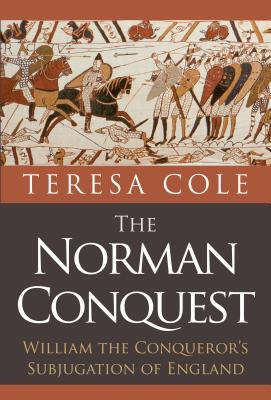
Just Finished Reading: The Norman Conquest – William the Conqueror’s Subjugation of England by Teresa Cole (FP: 2016) [260pp] 

Most books on this pivotal moment in English and European history start a few years before the main event in 1066. They point out that Edward the Confessor had failed to produce an heir and that Harold Godwinson was elected to follow in his footsteps. There is often much debate as to exactly how Harold managed to be in a position to gain the throne of England – especially as it was supposed to have been promised to William, Duke of Normandy – but that’s usually the background given followed by invasion (in both the North and South), battle, defeat (or victory depending on how you look at it) and take-over. 

Interestingly, and highly informatively, this author starts by looking MUCH further back starting with Edward gaining the English throne in 1003 giving us a 60+ year run up to the cataclysm that befell the Anglo-Saxons at Hastings. This allows for a much better, much deeper, understanding as to how England ended up in the position of facing two invasions only days apart and why exactly Harold’s position was challenged so early in his reign. To be quite honest, even with my belief that I’m reasonably familiar with the era and the events covered here, not only did I learn quite a bit, but my UNDERSTANDING of things is so much better now. What made things even better, if that’s possible, was that the authors writing style and her obvious grasp of the subject was outstanding. The six-decade run-up to Hastings and the requirement of the conquering army to constantly reassert its dominance over a fractious people seemed straight out of Game of Thrones (but very much in a good way) with political manoeuvring, rather useful ‘accidents’ (it's amazing how many important people died “falling from a horse” or soon after a hearty meal/drinking session much to the immediate advantage of one group or another) [Side note: is ‘falling from a horse’ the periods equivalent of ‘falling out of a window’ or ‘shot whilst trying to escape’ that we’re more familiar with these days?] 

But let me put any false impressions in their place – this is gripping without being sensationalist. The author examines what happened, what was said to have happened (and the reasons why it happened) with a sceptical eye – after all, as we know, history tends to be written by the victors (in this case the Normans) and any pronouncements by them need to be taken with that in mind. She looks at each story, legacy or legend in turn – from the ‘arrow in the eye’ to Harold’s pledge of fealty prior to Edwards death – and critically examines each in turn, looks at the evidence (if ANY) and either decides – all too often on the balance of probabilities – which is more likely to be true. With the passing of 960 years its understandably difficult to be almost any definitive statements about the events discussed between these pages but, I think, the author makes an excellent stab at it. She didn’t let any speculation go too far but she also didn’t leave too much hanging in the air as inexplicable either. Any speculations she did make she backed up with a knowledge of how things worked – differently in Norman and Anglo-Saxon societies – plus a heavy dose of rationally informed scepticism. 

1066 and the surrounding events constantly fascinate me for understandable reasons. The Battle of Hastings that year changed the direction and fate of a whole nation. Was it for the ‘better’? That’s arguable but it would be interesting to know, rather than idly speculate, how an Anglo-Saxon nation, rather than an Anglo-Norman one, would have made its way in the world and how the present might have been different because of that. As you might be able to tell, I really enjoyed this book and will be looking forward to reading more by its author. There’s more coming on 1066 too. Very much recommended and a highlight of the year so far.   

Thursday, March 27, 2025


Just Finished Reading: To Win a War – 1918 The Year of Victory by John Terraine (FP: 1978) [259pp] 

1917 was a hard year for the Allied Powers. Not only had their offensives failed to achieve victory, but their attempts had almost destroyed their army's ability to fight. The French front-line commands had been wracked with mutiny and some of their politicians were calling for peace at *any* price. The British meanwhile where struggling to fill their basic manpower needs and where being forced to downsize the units in France. What made things worse was that Russia had dropped out of the war with the inevitable influx of German units moving west for a renewed offensive.  

Despite prior knowledge, and a limited amount of preparation, the Allies where still taken by surprise when the hammer fell in the spring of 1918. Despite warnings the Allies still packed their front trenches with men and whole units were destroyed by massive artillery bombardments. Once overrun and with the survivors in headlong retreat, the German infantry poured through the gaps and moved deep into France. But, despite their numbers, despite their planning and despite new tactics (including elite Stormtrooper units) the Allied Front was never breached. Broken sure, bent out of shape certainly, but after weeks of attacks and thousands of casualties the line held. Completely exhausted, low on supplies and distracted by the opportunity of looting Allied supplies abandoned in haste, the German assault ground to a halt. Hit first by outbreaks of Spanish Flu they were hit time and time again by the French, British and increasingly by American counter attacks. Slowly withdrawal became retreat and retreat become a general fallback from ground bloodily taken and retaken over the past four years. The 100 days of defeat had begun, and the end of the Great War was finally in sight. 

After reading about the German spring offensive (or rather offensives) of 1918 I was reasonably familiar with the events discussed in the first half of this book. What I was much less familiar with, and which I found very interesting, was the political manoeuvring behind the scenes to end the war and why, for instance, the Allies seemed to be satisfied by an Armistice rather than the full and unconditional surrender they demanded in 1945. Despite planning for campaign in 1919 (and indeed with some thinking that the war would still be raging in 1920!) both the British and most especially the French were spent, or close to being so, in the latter half of 1918. It was just conceivable that the final push could take place in 1919 but any continuation of the war beyond the spring of that year was unthinkable even with the growing manpower of the US Army. 

Despite having some notable axes to grind – the author *really* didn’t like the UK PM David Lloyd George! – this was an interesting and informative read. Getting some insights into the thinking of the Allied and German commanders certainly added to my understanding of why the war took so long to end even after it was obvious to just about everyone that Germany had lost the fight. Recommended if you can source a copy. More up to date works on this important period to come. 

Thursday, March 13, 2025


Just Finished Reading: A Brief History of The Crusades – Islam and Christianity in the Struggle for World Supremacy by Geoffrey Hindley (FP: 2003) [260pp] 

The continuing occupation of the Holyland was a stain on Christendom and could not be allowed to stand. But how to end it, who would fight and how would they be paid? The questions almost answered themselves – it would end in fire and storm; it would be fought by holy warriors of European kings and it would be paid for by taxation and the promise of washed away sins. So, the First Crusade to liberate Palestine and most especially Jerusalem was proclaimed in 1095 by Pope Urban II and, to almost everyone’s surprise, captured Jerusalem on 15th July 1099 after a number of ‘miraculous’ victories over the forces of Islam. But the idea, the thrust, of Crusade was far from over. Enemies of God – the Christian God that is – were everywhere and had to be opposed everywhere, and what better way to do so than by crusade? 

Naturally things are never that easy. Not only was Christianity itself split between Roman Catholic and Orthodox but each kingdom and principality responsible for providing the force to man the crusades where all too often divided amongst themselves, not only on who should lead the expedition but everything else. Things inevitably came to a head in October of 1187 when Jerusalem fell (again) to Saladin and Pope Gregory VIII proclaimed the Third Crusade (the Second Crusade followed the fall of Christian city of Edessa in modern day Turkey). We tend to think of crusades and crusaders operating exclusively or at least mostly in what we now call the Middle East, but that’s far from actual reality. Crusading happened against Muslim forces in Spain during the Reconquista, against Cathar heretics in Southern France, so-called ‘heathens’ in what would become Prussia and on – essentially anywhere that the Catholic church saw itself under threat. Indeed, the Catholics declared crusade on each other when the church split for a time between Rome and Avignon. One of the things that impressed me about this book was that the author managed to form the wide and twisting history into an understandable narrative that even I could follow! 

Of course, the ultimate irony wasn’t lost on me that, during the lengthy Muslim occupation of Jerusalem and other holy sites, both Jews and Christians had, by and large, easy access to their particular areas of interest. Whilst the Roman Catholics controlled the zone access by other faiths, even other Christian faiths, was often problematic or denied. Generally Islamic authorities, both in the Holyland and in Muslim Spain, cared little for people's personal faith as long as they behaved themselves and didn’t try to convert every passing Muslim. The Catholics, in contrast, abhorred the ‘schismatic’ Orthodox Christians and, when it suited them, taxed, exploited, forcibly ‘converted’, expelled or simply slaughtered their Jewish populations. 

Not being religious myself in any way, shape or form this sort of thing does confound me. As far as I can tell, the Crusades were a massive waste of time, gold and lives for no real point (except ‘control’ over areas considered to be of religious significance) and no real result except death, destruction and misery which continues to this very day. The only two ‘good’ things that eventually came from crusading activity was the fatal undermining of the Catholic church (and a by-product of the sale of indulgences) and the spread of ideas due to looted texts and other items from Muslim cities. I think that both could’ve been achieved with considerably less bloodshed.  

This was an interesting read especially if you’ve ever wondered about the Crusades but didn’t really know where to start. Not only will it give you a good understanding about why they happened (and why they almost all failed – some rather spectacularly!) but will also give you some idea of why the present Middle East is the mess it is today. Recommended. More Brief (and Short) histories to come.  

Thursday, February 27, 2025


Just Finished Reading: The Peenemunde Raid – The Night of 17-18 August 1943 by Martin Middlebrook (FP: 1982) [233pp] 

The first reports were dismissed as fantastical, simple propaganda. It didn’t help that the reports referenced two different weapons – a gliding bomb and a large rocket. Only much later did it seem that there was something to it. One thing that was certain was a name that came up time and again: Peenemunde. This was a small coastal community on the Baltic coast of north-eastern Germany. It was isolated and seemed to be quite unremarkable. Photo-reconnaissance of the area proved otherwise. Something very strange was going on there, something that concentrated minds, something that needed to be stopped. 

When the bomber crews were briefed on their mission the first thought was that no one had ever heard of Peenemunde. Their second thought was that at least it wasn’t Berlin. At the end of the briefing, they learnt something about the place though – it was important although no one would tell them why for security reasons. The words ‘maximum effort’ meant that every available aircraft would be involved even if they had to put together ‘scratch’ crews to man them. But the thing that really focused their attention and made a shiver down many a back was what they were told next. If the target wasn’t destroyed or at least significantly damaged they would be sent back again – and again – until the chiefs of Bomber Command were satisfied. Of course, every return visit would be met with increased resistance from the Luftwaffe and increased casualties among the RAF. It was a strong incentive, the strongest, to get the job done right the first time. 

I’d read about this raid in other, broader, historical narratives so it was good to see it in more detail. The surprising thing about the whole V-weapons story is how little it was believed (despite copious evidence to support it) until it was almost too late. But, in their defence, once the idea of these weapons was accepted the British authorities did pretty much everything they could to stop them or at the very least slow down their operational deployment. Apparently, almost everyone agrees, the Peenemunde raid by the RAF (it was attacked again later by the USAAF) delayed the V-2 by around 2 months. This doesn’t sound much but it meant that the missile wasn’t available until after D-Day. Even with questionable accuracy it can be imagined what hundreds of unstoppable missile strikes could have done to the build-up of forces prior to the Invasion. 

Although a little dry in places and a little too over detailed in others, this was a very creditable account of a very important bombing raid. One thing I particularly liked was the scattering of personal accounts from the RAF bomber crews, their opposing German night fighter pilots as well as the personnel and families based at Peenemunde who were on the receiving end of the bombing. Collectively they made it feel very real and very immediate. Recommended if you can source a copy. 

Thursday, January 23, 2025


Just Finished Reading: Guns Off Cape Ann by Kenneth Poolman (FP: 1961) [154pp] 

After years of having their ships harassed and their crews ‘pressed’ into service American patience finally gave way and war was declared. Already deep into its own war with Napoleon, Great Britain was dismissive of this latest act of an upstart nation and with good reason. The Royal Navy, who would be taking the first actions of the conflict, had over a thousand vessels it could call upon whilst the newly formed United States Navy had SIXTEEN. The ‘war’ was going to cause barely a ripple.  

The shock of the first ship to ship fight can be imagined. When the two frigates faced off the outcome was confidently expected – an easy and clear victory for the British. Unfortunately for the pundits at the Admiralty in London it was quite the reverse with the British ship being comprehensively defeated. Tricks, it was proposed, or bad luck! Yet when the navies met again, and again, each time the British ship was roundly defeated. Disbelief was followed by panic. Could the minute American navy really represent a credible threat? More ships were sent across the Atlantic to bolster the overwhelming force already present but it wasn’t a matter of numbers, not at all. It was a matter of neglect, pride and complacency. Something needed to be done to regain the pride and place of the senior service and the British had just the man to do it. 

Captain Philip Broke of the British frigate Shannon was a man who knew his ship and his crew very well indeed. They had sailed together and trained together for years and the ship was renowned for its skill in gunnery. Facing him, presently in Boston harbour, was his opposite number Captain James Lawrence of the American frigate Chesapeake. He was new to the ship (only taking command a matter of days previously) and had hardly begun to know the officers or crew who manned her. Without the benefit of a shakedown cruise or a much-needed refit, Lawrence was determined to make his mark and his name by continuing Britain’s humiliation. Sailing out of harbour he was determined that he would use no tricks, no finesse, no clever tactics but would face his British adversary broadside to broadside. That would be a fatal mistake. 

A mere 13 minutes after the sound of the first cannon shot had faded both ships were wrecked and over a hundred men lay dead or dying. But the Chesapeake took by far the most damage. Barely able to keep afloat and with all of its officers either dead, dying or injured (including its captain who was mortally wounded), boarded and with its ensign struck it was eventually towed to Halifax, Nova Scotia as a prize. Honour had been restored at a great cost to all involved and many lessons had been learned – at least for the British. 

The War of 1812 seems to have been largely forgotten by the world and by historians. Naturally it was overshadowed by the much larger and much more significant Napoleonic Wars but still it does seem somewhat more than an oversight. I can’t help wondering if both sides aren’t more than a little embarrassed about it all. The notable absence (or at least rarity) of books on the subject seems to point that way. I came across this old, slim and out of print volume almost by accident and have only managed to acquire two more books – one almost as old – on the subject. It was an interesting little scrap for a number of reasons and I’m interested to find out more about it. This book filled in a very small part of the story but I need something a bit more expansive. I hope that will be covered by my next book on the subject. A recommended read, especially for all Age of Sail enthusiasts, if you can source a copy.