Hypocrisy is A Weapon US Doesn't Need in Arsenal
by DeWayne Wickham for USA Today
May 23, 2006
Simply put, the Bush administration wants to keep Iran and North Korea from obtaining nuclear weapons. The two nations are the remaining legs — Iraq under Saddam Hussein was the other — of what President Bush famously labeled the "axis of evil." But when it comes to nuclear non-proliferation, the effort to keep these and other nations from possessing such weapons is complicated by a U.S. penchant for applying malleable principles.
Last week, on the same day that The New York Times reported the Bush administration is considering negotiating a peace treaty with North Korea in return for that country dismantling its nuclear program, Reuters said the White House scotched the idea of offering Iran a non-aggression pact in return for it getting rid of its nuclear program. "I think it reflects the advancement of the program in North Korea," Joanna Spear, director of the U.S. Foreign Policy Institute at The George Washington University, said of the different approaches. "The stick is just not an option with North Korea" because it is already believed to have nuclear weapons.
Iran, on the other hand, is at most 10 years away from having a nuclear weapon, many experts conclude. That's assuming it presses ahead with a program to build one. But the Islamic regime in Tehran only wants to use nuclear power to generate electricity, its president, Mahmoud Ahmadinejad, has insistently told the world, despite widespread skepticism. The Bush administration and its European allies are pressing Iran to forgo its nuclear program and to end its support of groups that the United States has branded terrorist organizations. "When Iran is prepared to give that (nuclear program) up, it can have a different relationship with us as the government of Libya has proven, and as we have proven reciprocally just in the past few days," John Bolton, the U.S. ambassador to the United Nations, said last week. The United States recently restored diplomatic relations with Libya after it ended its nuclear program and renounced its support of terrorist groups.
Even so, this nation's treatment of countries that launch nuclear programs — and seek to possess nuclear bombs over its objection — is far from balanced. In 1969, when Israel was discovered to have a nuclear weapons program, the Nixon administration decided against trying to stop it. Instead, Nixon cut a secret deal that allowed Israel to possess such weapons as long as it didn't tell the world it had them. "Israel would be committed to maintaining full secrecy over its nuclear activities, keeping their status ambiguous and uncertain," Avner Cohen and William Burr write in the current issue of the Bulletin of the Atomic Scientists, a publication on global security.
In March, the Bush administration reached a deal with India that required no such subterfuge. If approved by Congress, it would let India acquire civilian nuclear technology from the USA. This agreement comes more than three decades after India launched a nuclear weapons program despite international condemnation. The agreement doesn't demand that India kowtow to U.S. demands, as Bolton does of Iran. Perhaps that's a concession to the advanced state of India's nuclear program and the growing economic ties between the world's largest democracy, India, and its most powerful one, the United States. Such preferential treatment on the world stage doesn't go unnoticed. Though certainly the United States will use its economic, political and even military leverage to protect its interests worldwide, such actions can carry a strong scent of hypocrisy. Israel gets one set of rules, while Iraq — and now Iran — must live by another.
If the United States dealt with countries as equals, rather than playing favorites — especially in the Middle East — we'd have more credibility in negotiating our way out of these crises. Or just maybe we'd find ourselves with fewer fires to put out in the first place.
About Me

- CyberKitten
- I have a burning need to know stuff and I love asking awkward questions.
Thursday, July 27, 2006

Wednesday, July 26, 2006

Tuesday, July 25, 2006
Real Christians Fight Intolerance
By Rev. Jim Rigby for AlterNet.
July 14, 2006
Progressive Christians tend to be non-judgemental and to feel that challenging the intolerance of others is itself intolerant. For that reason we often sit by silently when Fundamentalist Christians criticize homosexual persons. We tend to think of this as being open minded. Not that long ago, it was considered consistent to be a Christian, and yet, hold slaves. The day came when slavery was understood as an affront to the gospel itself. I want to suggest that the day has come when Christians must declare that gay bashing is an attack on the gospel and that real Christians do not participate in any form of discrimination. Several years ago, I was asked to do the funeral of a gay man who had been beaten to death in a hate crime. At that time, I had never thought deeply about the danger many gay, lesbian, bisexual and transgender people face in this culture. That week as I worked on the service, I kept hearing a local "Christian" radio station blaming gay and lesbian people for everything wrong in America. By the end of the week I understood the link between religious hate speech and the funeral I was performing.
I know that critics of homosexuality do not consider themselves to be hateful. They would say they "love the sinner but hate the sin." If the shoe were on the other foot, however, and someone were attacking their families, trying to take their children away, and constantly working to pass legislation to deprive them of basic civil rights, at some point they would understand that "homophobia" is too mild a word for such harassment. "Hatred" is the only proper term. I was raised in Dallas, Texas and had classmates who were in the Klan. I remember that they did not consider themselves to be attacking other people. They perceived themselves to be defenders of Christian America. Their "religion" consisted of an unrelenting attack on people who were black, Jewish or homosexual. If anyone challenged these views, these Klan members considered themselves under attack and believed that their right to free exercise of religion was being threatened. In other words, they felt that harassing other people was a protected expression of their own religious faith.
In the Gospel, biblical literalists and judgmental people were the negative example in many of the stories. The point of those stories was to teach us the hypocrisy of judgmental religion. When a woman was caught in adultery, the Biblical literalists lined up to protect family values. They pointed out that the Bible literally says that adulterers are to be stoned. If Jesus took the Bible seriously, they claimed, he would have to participate in the mandated biblical punishment of an adulteress. Instead of following scripture, Jesus tells the woman to get her life together and tells everyone else to drop their stones of judgment. The only way to take this story seriously is to conclude that real Christians don't use the bible to condemn other people.
It violates the teaching of Christ to say that God will get angry if America does not confront homosexuality as a sin. Jesus did not mention homosexuality and it is a lie to say he did. Furthermore, Jesus said "Judge not or you will be judged." These false prophets are saying "Judge or else you will be judged." Jesus was kind and understanding, but he was not silent about those who abused the vulnerable. He called them "wolves in sheep's clothing." Christians must follow the example of Jesus and confront those vicious predators who use the Christian religion as a camouflage for bullying. We must be as understanding and kind as we can be, but to be tolerant of the oppression of others is not true tolerance. I believe the time has come to say that genuine followers of Jesus Christ do not participate in discrimination against gay and lesbian persons. Is it intolerant to challenge intolerance? Are we doing the same thing as those we are challenging?
Gay bashing is not just an opinion, it is an assault. Just as the Klan did, religious fundamentalists have a right to believe that homosexuality is a sin. They even have a right to preach a message of hate. But when they harass people in public, it is time for Christians to rise to challenge their intolerance. We have an obligation to protect our neighbors from harassment and slander, especially when it is done in our name. It is time to say that gay bashing is not only wrong, it is unchristian. If Christianity is grace, then judgment is the ultimate apostasy. If Christianity is love, then cruelty is the ultimate heresy.
By Rev. Jim Rigby for AlterNet.
July 14, 2006
Progressive Christians tend to be non-judgemental and to feel that challenging the intolerance of others is itself intolerant. For that reason we often sit by silently when Fundamentalist Christians criticize homosexual persons. We tend to think of this as being open minded. Not that long ago, it was considered consistent to be a Christian, and yet, hold slaves. The day came when slavery was understood as an affront to the gospel itself. I want to suggest that the day has come when Christians must declare that gay bashing is an attack on the gospel and that real Christians do not participate in any form of discrimination. Several years ago, I was asked to do the funeral of a gay man who had been beaten to death in a hate crime. At that time, I had never thought deeply about the danger many gay, lesbian, bisexual and transgender people face in this culture. That week as I worked on the service, I kept hearing a local "Christian" radio station blaming gay and lesbian people for everything wrong in America. By the end of the week I understood the link between religious hate speech and the funeral I was performing.
I know that critics of homosexuality do not consider themselves to be hateful. They would say they "love the sinner but hate the sin." If the shoe were on the other foot, however, and someone were attacking their families, trying to take their children away, and constantly working to pass legislation to deprive them of basic civil rights, at some point they would understand that "homophobia" is too mild a word for such harassment. "Hatred" is the only proper term. I was raised in Dallas, Texas and had classmates who were in the Klan. I remember that they did not consider themselves to be attacking other people. They perceived themselves to be defenders of Christian America. Their "religion" consisted of an unrelenting attack on people who were black, Jewish or homosexual. If anyone challenged these views, these Klan members considered themselves under attack and believed that their right to free exercise of religion was being threatened. In other words, they felt that harassing other people was a protected expression of their own religious faith.
In the Gospel, biblical literalists and judgmental people were the negative example in many of the stories. The point of those stories was to teach us the hypocrisy of judgmental religion. When a woman was caught in adultery, the Biblical literalists lined up to protect family values. They pointed out that the Bible literally says that adulterers are to be stoned. If Jesus took the Bible seriously, they claimed, he would have to participate in the mandated biblical punishment of an adulteress. Instead of following scripture, Jesus tells the woman to get her life together and tells everyone else to drop their stones of judgment. The only way to take this story seriously is to conclude that real Christians don't use the bible to condemn other people.
It violates the teaching of Christ to say that God will get angry if America does not confront homosexuality as a sin. Jesus did not mention homosexuality and it is a lie to say he did. Furthermore, Jesus said "Judge not or you will be judged." These false prophets are saying "Judge or else you will be judged." Jesus was kind and understanding, but he was not silent about those who abused the vulnerable. He called them "wolves in sheep's clothing." Christians must follow the example of Jesus and confront those vicious predators who use the Christian religion as a camouflage for bullying. We must be as understanding and kind as we can be, but to be tolerant of the oppression of others is not true tolerance. I believe the time has come to say that genuine followers of Jesus Christ do not participate in discrimination against gay and lesbian persons. Is it intolerant to challenge intolerance? Are we doing the same thing as those we are challenging?
Gay bashing is not just an opinion, it is an assault. Just as the Klan did, religious fundamentalists have a right to believe that homosexuality is a sin. They even have a right to preach a message of hate. But when they harass people in public, it is time for Christians to rise to challenge their intolerance. We have an obligation to protect our neighbors from harassment and slander, especially when it is done in our name. It is time to say that gay bashing is not only wrong, it is unchristian. If Christianity is grace, then judgment is the ultimate apostasy. If Christianity is love, then cruelty is the ultimate heresy.
Monday, July 24, 2006
Sunshade to look for distant life
From the BBC.
Wednesday, 5 July 2006
A huge sunshade a million miles from Earth could help astronomers search for signs of life on planets orbiting distant stars, a study says. The daisy-shaped "occulter", as it is known, would use a powerful telescope trailing thousands of miles behind. The shade, described in the journal Nature, would stop light from the planet's star swamping the telescope. The concept by Professor Webster Cash of the University of Colorado has already received funding from Nasa. He believes an occulter could be in space within seven years "stalking" Hubble's successor, the James Webb Space Telescope, scheduled for launch in 2013. "We have proposed to build a star shade to launch a couple of months later and follow it out to its orbit," he said. "We believe this the fastest way to get operational."
Scientists are already searching for planets orbiting stars other than the Sun. Researchers hunt for these extra-solar planets, or exoplanets, using a number of techniques. More than 170 have so far been discovered. However, all the discoveries have relied on indirect methods of detection. For example, astronomers look for the dimming of light as planets pass in front of their parent stars. Indirect techniques like this mean that only relatively large planets tend to get identified. Astrobiologists, though, are really interested in finding smaller, Earth-like planets which could, in theory, have the right conditions for supporting life. To do this, astronomers need a method of directly imaging the dim planets. Numerous proposals have been put forward, including massive optical telescopes on Earth, or flotillas of space-based telescopes such as the Europe's Darwin mission or Nasa's Terrestrial Planet Finder. All these schemes are still in development.
Dubbed the New World's Observer, Professor Cash's design would use a giant 45m (148ft) daisy-shaped, plastic shield in tandem with a powerful telescope, trailing 15,000km (9,300 miles) behind. The pair would orbit about a million miles (1.6 million km) from the Earth at a position known as a Lagrange point. Here, gravitational effects create a stable orbit with the same period of rotation around the Sun as our planet, effectively allowing the pair to track the movements of Earth. To search for a planet, astronomers would pick a target star and move the shield in front of the telescope, using thrusters. When the two align, the position of the shade ensures that excess light from the star is blocked, giving astronomers the maximum chance of spotting any small orbiting planet. "It's like a cricketer holding up his hand to block out the sunlight as he tracks a ball in the air," said Professor Cash. The pair would be held in position to give scientists time to image the planet and analyse its atmosphere for the chemical signatures of life. It could also be used to map entire planetary systems trillions of miles away.
The idea has already been given a huge boost by Nasa. The US space agency's Institute for Advanced Concepts gave the proposal $400,000 (£220,000). Professor Cash and his team have also submitted a proposal to build a shade for the infra-red and visible James Webb Space Telescope. However, some researchers believe that the Professor Cash and his team may still have some way to go before a star shade blasts into space. "It's an interesting alternative idea but I suspect that there are enormous technical challenges," said Professor Timothy Naylor, an astrophysicist at Exeter University, UK. Potential obstacles include carrying enough fuel for the thrusters and developing a method for keeping the shade and telescope in alignment. "If you are trying to collect the light from a planet then you are going to have to stare at it for a relatively long period of time to do anything really useful," he said.
From the BBC.
Wednesday, 5 July 2006
A huge sunshade a million miles from Earth could help astronomers search for signs of life on planets orbiting distant stars, a study says. The daisy-shaped "occulter", as it is known, would use a powerful telescope trailing thousands of miles behind. The shade, described in the journal Nature, would stop light from the planet's star swamping the telescope. The concept by Professor Webster Cash of the University of Colorado has already received funding from Nasa. He believes an occulter could be in space within seven years "stalking" Hubble's successor, the James Webb Space Telescope, scheduled for launch in 2013. "We have proposed to build a star shade to launch a couple of months later and follow it out to its orbit," he said. "We believe this the fastest way to get operational."
Scientists are already searching for planets orbiting stars other than the Sun. Researchers hunt for these extra-solar planets, or exoplanets, using a number of techniques. More than 170 have so far been discovered. However, all the discoveries have relied on indirect methods of detection. For example, astronomers look for the dimming of light as planets pass in front of their parent stars. Indirect techniques like this mean that only relatively large planets tend to get identified. Astrobiologists, though, are really interested in finding smaller, Earth-like planets which could, in theory, have the right conditions for supporting life. To do this, astronomers need a method of directly imaging the dim planets. Numerous proposals have been put forward, including massive optical telescopes on Earth, or flotillas of space-based telescopes such as the Europe's Darwin mission or Nasa's Terrestrial Planet Finder. All these schemes are still in development.
Dubbed the New World's Observer, Professor Cash's design would use a giant 45m (148ft) daisy-shaped, plastic shield in tandem with a powerful telescope, trailing 15,000km (9,300 miles) behind. The pair would orbit about a million miles (1.6 million km) from the Earth at a position known as a Lagrange point. Here, gravitational effects create a stable orbit with the same period of rotation around the Sun as our planet, effectively allowing the pair to track the movements of Earth. To search for a planet, astronomers would pick a target star and move the shield in front of the telescope, using thrusters. When the two align, the position of the shade ensures that excess light from the star is blocked, giving astronomers the maximum chance of spotting any small orbiting planet. "It's like a cricketer holding up his hand to block out the sunlight as he tracks a ball in the air," said Professor Cash. The pair would be held in position to give scientists time to image the planet and analyse its atmosphere for the chemical signatures of life. It could also be used to map entire planetary systems trillions of miles away.
The idea has already been given a huge boost by Nasa. The US space agency's Institute for Advanced Concepts gave the proposal $400,000 (£220,000). Professor Cash and his team have also submitted a proposal to build a shade for the infra-red and visible James Webb Space Telescope. However, some researchers believe that the Professor Cash and his team may still have some way to go before a star shade blasts into space. "It's an interesting alternative idea but I suspect that there are enormous technical challenges," said Professor Timothy Naylor, an astrophysicist at Exeter University, UK. Potential obstacles include carrying enough fuel for the thrusters and developing a method for keeping the shade and telescope in alignment. "If you are trying to collect the light from a planet then you are going to have to stare at it for a relatively long period of time to do anything really useful," he said.
Sunday, July 23, 2006
EU governments challenged over double standards on blasphemy.
From Ekklesia -13/03/06
Conservative Christians in the UK may soon have another fight on their hands, following suggestions that European Union governments should alter their blasphemy laws to protect Islam and not just Christianity.
During the recent violence following cartoons featuring caricatures of the prophet Muhammad, Muslim commentators pointed to what they saw as 'double standards' in the European Union, which gave the Christian religion special legal protections. In the UK, groups such as the Evangelical Alliance, whilst resisting the recent Racial and Religious Hatred Bill designed to protect Muslims, have simultaneously fought to maintain the blasphemy law that protects only the Christian faith whilst resisting its extension to other faiths. Although some commentators say the blasphemy law is obsolete, the pressure group Christian Voice recently threatened to use it to bring a private prosecution against Jerry Springer: The Opera. The threat has been credited with the decision by a third of regional theatres not to put on the production.
But some Christians have urged that the anomaly be addressed. The religious thinktank Ekklesia has suggested that faith communities should enjoy the same protections and rights as others in civil society – "no less, but no more". Muslim scholars recently gathered for an emergency meeting in the UK and called for changes in the law to stop images of the Prophet Muhammad being published. Now Abdullah Gul, the Turkish foreign minister, has sparked disagreement among his EU counterparts at a weekend meeting in Austria, by calling for European nations to review existing laws, to ensure they outlawed the "defamation" of all religions.
Mr Gul told a meeting of EU and Balkan foreign ministers in Salzburg that many Muslims believed that European laws amounted to a double-standard, protecting established Christian religions, and banning anti-Semitism and Holocaust denial, while doing nothing to defend Muslims who felt offended. He said several European nations already maintained laws against religious defamation. "However, these restraints sometimes only apply to the established religions of the concerned countries. I would like to call on you here to start a process of re-examination of your legislations to ensure that these restraints apply to all religions equally."
[All very good points I’m sure. But there is another way. Rather than adding the innumerable other religions to blasphemy legislation – which will undoubtedly be difficult – why not simply remove the special position of Christianity in European legislation by getting rid of blasphemy laws in their entirety? That would be simple, effective and no one could point to any religion having special treatment. Sorted.]
From Ekklesia -13/03/06
Conservative Christians in the UK may soon have another fight on their hands, following suggestions that European Union governments should alter their blasphemy laws to protect Islam and not just Christianity.
During the recent violence following cartoons featuring caricatures of the prophet Muhammad, Muslim commentators pointed to what they saw as 'double standards' in the European Union, which gave the Christian religion special legal protections. In the UK, groups such as the Evangelical Alliance, whilst resisting the recent Racial and Religious Hatred Bill designed to protect Muslims, have simultaneously fought to maintain the blasphemy law that protects only the Christian faith whilst resisting its extension to other faiths. Although some commentators say the blasphemy law is obsolete, the pressure group Christian Voice recently threatened to use it to bring a private prosecution against Jerry Springer: The Opera. The threat has been credited with the decision by a third of regional theatres not to put on the production.
But some Christians have urged that the anomaly be addressed. The religious thinktank Ekklesia has suggested that faith communities should enjoy the same protections and rights as others in civil society – "no less, but no more". Muslim scholars recently gathered for an emergency meeting in the UK and called for changes in the law to stop images of the Prophet Muhammad being published. Now Abdullah Gul, the Turkish foreign minister, has sparked disagreement among his EU counterparts at a weekend meeting in Austria, by calling for European nations to review existing laws, to ensure they outlawed the "defamation" of all religions.
Mr Gul told a meeting of EU and Balkan foreign ministers in Salzburg that many Muslims believed that European laws amounted to a double-standard, protecting established Christian religions, and banning anti-Semitism and Holocaust denial, while doing nothing to defend Muslims who felt offended. He said several European nations already maintained laws against religious defamation. "However, these restraints sometimes only apply to the established religions of the concerned countries. I would like to call on you here to start a process of re-examination of your legislations to ensure that these restraints apply to all religions equally."
[All very good points I’m sure. But there is another way. Rather than adding the innumerable other religions to blasphemy legislation – which will undoubtedly be difficult – why not simply remove the special position of Christianity in European legislation by getting rid of blasphemy laws in their entirety? That would be simple, effective and no one could point to any religion having special treatment. Sorted.]
 Just Finished Reading: The Dracula Tape by Fred Saberhagen
This was quite an entertaining (if sometimes tedious) retelling of the Dracula story by Bram Stoker. What makes it different is the view point of the narrative – that of Count Dracula himself. Added to this interesting shift of perspective is that Dracula is portrayed as the ‘good guy’ hunted for no other reason that he is ‘different’ and therefore ‘misunderstood’ by the dangerously fanatical Professor Van Helsing.
As I said – an interesting idea which is fairly well executed. It is, however, too well known a story to produce must dramatic tension or surprise. The main characters are already known to us. We know before hand who lives and who dies and this restricts the liberties that Saberhagen can take with the story.
Certainly readable and of some interest to vampire fiction fans but hardly “the novel of the century” announced on the front cover.
Saturday, July 22, 2006
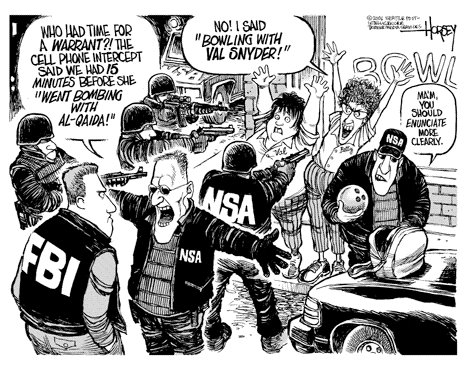
If You Liked the Iraq War, You'll Love the Iran War
by Cenk Uygur for the Huffington Post
Friday, April 14, 2006
If you liked gas at three dollars a gallon, you'll love it at five dollars or more. If you liked fighting 26 million people in Iraq, you'll love fighting 68 million in Iran. If you liked turning Sunni Muslims against us, you'll love turning Sunni and Shiite Muslims against us. If you liked war in the Persian Gulf, you'll love war all over the Middle East. If you thought things were bad now, wait till Iran retaliates against our air strikes by bombing Israel. When Israel strikes back, the whole Middle East will have to get sucked into the war. And then the fun really starts.
Do any of you have any confidence that George W. Bush knows what he's doing when he contemplates starting a war with Iran? Do any of you believe he has carefully thought out all the possibilities and has a plan for every contingency? I don't care how Republican you are, that is an inconceivable thought. No one could believe that's true. The man who lost New Orleans and accidentally started a civil war in Iraq is going to have a sound strategy for Iran? Besides which, there is a very real reason why they actively don't plan for these wars. They don't want word of the worst case scenarios (or even realistic scenarios) leaking out and providing a disincentive to go to war. They think if they can convince people it will be easy, everyone will go along.
If there is a discussion of realistic contingencies, it will be harder to drive people into war. That is why they so fastidiously avoided making plans for "post-war" Iraq (I love that term, did anyone let the Iraqis know we're in the "post-war" stage?). If people realized how hard it would be to occupy Iraq and build that nation from scratch, do you think they would have been as eager to go in the first place? The Rumsfeld strategy is to start a war with no planning and then complain that you have the war you have, not the one you wish you had. It's ironic because they do no planning specifically because they want the war they wish to have. Why do you think every retired general is screaming at the top of their lungs to fire Rumsfeld? The generals have seen the mess we made in Iraq up close and it isn't pretty. They realize these guys in the administration have no idea what they're doing.
Right now, they're just getting a volunteer army and tens of thousands of Iraqis killed, but if we have to fight the whole Middle East, it's all of us who are going to be dying for their arrogant, foolhardy mistakes. By the way, is there anything more vile than a Republican telling you that the kids who signed up for our volunteer army knew what they were getting into, so they have no compunction about sending them into war? Yeah, I guess they had it coming. Bush is a proven liar. Whether he's lying about biological weapons labs, leaks from his administration or warrantless spying, one thing is for sure, he cannot be trusted. He has no shame in continually and aggressively lying to the American people. No one could have anticipated the breach of the levees? Please. Remember he said that after he sat through a long and extensive warning about how the levees might be breached. The man has no shame.
Would you trust George Bush to baby-sit your kids? How sure are you that he wouldn't fall asleep, or accidentally drop them on their head or forget to feed them? How sure are you that when he screwed something up he wouldn't lie to you about it afterward? I wouldn't let him within a three state perimeter of my kids (and I don't even have any). And this is the guy we are going to trust to orchestrate a war against a much bigger, savvier, more organized enemy?
What I find really laughable is that in his own head, George Bush thinks he is chosen by God to lead America in perilous times, to bring freedom to the world and to "save" Iran. He reminds me of a kid who is convinced he is Superman. He makes a cape out of napkins and jumps off the couch thinking he can fly. He crashes and cuts his head open. But little Georgy is so dense he doesn't get the memo. The next day, he's ready to jump again. He's sure it'll work this time. Bush is the amalgamation of all the hideous and sad parts of the Republican Party. He is a Republican Frankenstein. He has the temperament of Barry Goldwater, the integrity of Richard Nixon, and the brains of Dan Quayle. And we trust this guy with his finger on the button? God help us all if he bombs Iran. And if you think he's not that stupid, you haven't been paying attention.
He says the idea of bombing Iran is "wild speculation." He also said we weren't wiretapping anybody without a court order. He says we're trying diplomacy first. That's exactly what he said about Iraq when we found out he was planning for the war all along. He says Iran is a gathering threat ... Now, who do you trust more -- George Bush or General Anthony Zinni? General Zinni is the former head of US Central Command. He said he saw no evidence of Iraqi WMD before the war. He thought we didn't have enough troops to get the job done right. And now he thinks going into Iran is an even worse idea. Is there a single American who really believes George Bush knows better than General Zinni? George Bush is the kid who was born on third and thinks he kicked a field goal. The slow kid on the short bus wants to drive us into Iran. Do you really want to go for that ride?
by Cenk Uygur for the Huffington Post
Friday, April 14, 2006
If you liked gas at three dollars a gallon, you'll love it at five dollars or more. If you liked fighting 26 million people in Iraq, you'll love fighting 68 million in Iran. If you liked turning Sunni Muslims against us, you'll love turning Sunni and Shiite Muslims against us. If you liked war in the Persian Gulf, you'll love war all over the Middle East. If you thought things were bad now, wait till Iran retaliates against our air strikes by bombing Israel. When Israel strikes back, the whole Middle East will have to get sucked into the war. And then the fun really starts.
Do any of you have any confidence that George W. Bush knows what he's doing when he contemplates starting a war with Iran? Do any of you believe he has carefully thought out all the possibilities and has a plan for every contingency? I don't care how Republican you are, that is an inconceivable thought. No one could believe that's true. The man who lost New Orleans and accidentally started a civil war in Iraq is going to have a sound strategy for Iran? Besides which, there is a very real reason why they actively don't plan for these wars. They don't want word of the worst case scenarios (or even realistic scenarios) leaking out and providing a disincentive to go to war. They think if they can convince people it will be easy, everyone will go along.
If there is a discussion of realistic contingencies, it will be harder to drive people into war. That is why they so fastidiously avoided making plans for "post-war" Iraq (I love that term, did anyone let the Iraqis know we're in the "post-war" stage?). If people realized how hard it would be to occupy Iraq and build that nation from scratch, do you think they would have been as eager to go in the first place? The Rumsfeld strategy is to start a war with no planning and then complain that you have the war you have, not the one you wish you had. It's ironic because they do no planning specifically because they want the war they wish to have. Why do you think every retired general is screaming at the top of their lungs to fire Rumsfeld? The generals have seen the mess we made in Iraq up close and it isn't pretty. They realize these guys in the administration have no idea what they're doing.
Right now, they're just getting a volunteer army and tens of thousands of Iraqis killed, but if we have to fight the whole Middle East, it's all of us who are going to be dying for their arrogant, foolhardy mistakes. By the way, is there anything more vile than a Republican telling you that the kids who signed up for our volunteer army knew what they were getting into, so they have no compunction about sending them into war? Yeah, I guess they had it coming. Bush is a proven liar. Whether he's lying about biological weapons labs, leaks from his administration or warrantless spying, one thing is for sure, he cannot be trusted. He has no shame in continually and aggressively lying to the American people. No one could have anticipated the breach of the levees? Please. Remember he said that after he sat through a long and extensive warning about how the levees might be breached. The man has no shame.
Would you trust George Bush to baby-sit your kids? How sure are you that he wouldn't fall asleep, or accidentally drop them on their head or forget to feed them? How sure are you that when he screwed something up he wouldn't lie to you about it afterward? I wouldn't let him within a three state perimeter of my kids (and I don't even have any). And this is the guy we are going to trust to orchestrate a war against a much bigger, savvier, more organized enemy?
What I find really laughable is that in his own head, George Bush thinks he is chosen by God to lead America in perilous times, to bring freedom to the world and to "save" Iran. He reminds me of a kid who is convinced he is Superman. He makes a cape out of napkins and jumps off the couch thinking he can fly. He crashes and cuts his head open. But little Georgy is so dense he doesn't get the memo. The next day, he's ready to jump again. He's sure it'll work this time. Bush is the amalgamation of all the hideous and sad parts of the Republican Party. He is a Republican Frankenstein. He has the temperament of Barry Goldwater, the integrity of Richard Nixon, and the brains of Dan Quayle. And we trust this guy with his finger on the button? God help us all if he bombs Iran. And if you think he's not that stupid, you haven't been paying attention.
He says the idea of bombing Iran is "wild speculation." He also said we weren't wiretapping anybody without a court order. He says we're trying diplomacy first. That's exactly what he said about Iraq when we found out he was planning for the war all along. He says Iran is a gathering threat ... Now, who do you trust more -- George Bush or General Anthony Zinni? General Zinni is the former head of US Central Command. He said he saw no evidence of Iraqi WMD before the war. He thought we didn't have enough troops to get the job done right. And now he thinks going into Iran is an even worse idea. Is there a single American who really believes George Bush knows better than General Zinni? George Bush is the kid who was born on third and thinks he kicked a field goal. The slow kid on the short bus wants to drive us into Iran. Do you really want to go for that ride?
Friday, July 21, 2006
World Scientists Unite to Attack Creationism
by Sarah Cassidy for the Independent
June 22, 2006
The world's scientific community united yesterday to launch one of the strongest attacks yet on creationism, warning that the origins of life were being "concealed, denied or confused". The national science academies of 67 countries warned parents and teachers to ensure that they did not undermine the teaching of evolution or allow children to be taught that the world was created in six days.
Some schools in the US hold that evolution is merely a theory while the Bible represents the literal truth. There have also been fears that these views are creeping into British schools. The statement, which the Royal Society signed on behalf of Britain's scientists, said: "We urge decision-makers, teachers and parents to educate all children about the methods and discoveries of science and foster an understanding of the science of nature. Knowledge of the natural world in which they live empowers people to meet human needs and protect the planet. Within science courses taught in certain public systems of education, scientific evidence, data, and testable theories about the origins and evolution of life on Earth are being concealed, denied, or confused with theories not testable by science."
The statement followed a long-running row over claims that some of Tony Blair's flagship city academies teach creationism in science lessons. Schools in the North-east backed by one academy sponsor, Sir Peter Vardy, have been accused of promoting creationism alongside evolution. The schools have denied the claims and insisted they abide by the national curriculum. Academics in the US have voiced concern over similar theories being taught in American schools. Scientists also fear the spread of a theory known as "intelligent design". This suggests that species are too complex to have evolved through natural selection and must therefore be the product of a "designer".
Martin Rees, president of the Royal Society, said: "There is controversy in some parts of the world about the teaching of evolution to pupils and students, so this is a timely statement that makes clear the views of the scientific community. I hope this statement will help those who are attempting to uphold the rights of young people to have access to accurate scientific knowledge about the origins and evolution of life on Earth." It has been revealed that creationism is being included in the science curricula of a growing number of UK universities. Leeds University plans to incorporate one or two compulsory lectures on creationism and intelligent design into its second-year course for zoology and genetics undergraduates next Christmas, according to The Times Higher Education Supplement. At Leicester University, academics discuss creationism and intelligent design with third-year genetics undergraduates for about 20 minutes in lectures.
In both cases, lecturers argue that the controversial theories will presented as fallacies irreconcilable with scientific evidence. But the fact that these "alternatives" to evolution have been proposed for formal discussion in lectures at all has sparked concern among British scientists. A THES investigation has also discovered there are at least 14 academics in science departments who consider themselves creationists. They believe all kinds of life were designed rather than evolved. Several others are proponents of intelligent design, which rejects evolution.
by Sarah Cassidy for the Independent
June 22, 2006
The world's scientific community united yesterday to launch one of the strongest attacks yet on creationism, warning that the origins of life were being "concealed, denied or confused". The national science academies of 67 countries warned parents and teachers to ensure that they did not undermine the teaching of evolution or allow children to be taught that the world was created in six days.
Some schools in the US hold that evolution is merely a theory while the Bible represents the literal truth. There have also been fears that these views are creeping into British schools. The statement, which the Royal Society signed on behalf of Britain's scientists, said: "We urge decision-makers, teachers and parents to educate all children about the methods and discoveries of science and foster an understanding of the science of nature. Knowledge of the natural world in which they live empowers people to meet human needs and protect the planet. Within science courses taught in certain public systems of education, scientific evidence, data, and testable theories about the origins and evolution of life on Earth are being concealed, denied, or confused with theories not testable by science."
The statement followed a long-running row over claims that some of Tony Blair's flagship city academies teach creationism in science lessons. Schools in the North-east backed by one academy sponsor, Sir Peter Vardy, have been accused of promoting creationism alongside evolution. The schools have denied the claims and insisted they abide by the national curriculum. Academics in the US have voiced concern over similar theories being taught in American schools. Scientists also fear the spread of a theory known as "intelligent design". This suggests that species are too complex to have evolved through natural selection and must therefore be the product of a "designer".
Martin Rees, president of the Royal Society, said: "There is controversy in some parts of the world about the teaching of evolution to pupils and students, so this is a timely statement that makes clear the views of the scientific community. I hope this statement will help those who are attempting to uphold the rights of young people to have access to accurate scientific knowledge about the origins and evolution of life on Earth." It has been revealed that creationism is being included in the science curricula of a growing number of UK universities. Leeds University plans to incorporate one or two compulsory lectures on creationism and intelligent design into its second-year course for zoology and genetics undergraduates next Christmas, according to The Times Higher Education Supplement. At Leicester University, academics discuss creationism and intelligent design with third-year genetics undergraduates for about 20 minutes in lectures.
In both cases, lecturers argue that the controversial theories will presented as fallacies irreconcilable with scientific evidence. But the fact that these "alternatives" to evolution have been proposed for formal discussion in lectures at all has sparked concern among British scientists. A THES investigation has also discovered there are at least 14 academics in science departments who consider themselves creationists. They believe all kinds of life were designed rather than evolved. Several others are proponents of intelligent design, which rejects evolution.
Thursday, July 20, 2006
Early web-spinner found in amber
From the BBC.
14 June 2006
Spiral orb webs, which to many people typify spiders, were catching insects in their sticky silk while the dinosaurs still walked the Earth. True orb weaving spiders found trapped in amber from 121-115 million years ago are the oldest of their type yet found. The spiral webs have proven an extremely successful strategy for catching prey - evidenced by the great diversity of orb weavers present today. Two specimens are described in the UK Royal Society journal Biology Letters. The fossil spiders were found embedded in amber from Alava in northern Spain. They date to the Lower Cretaceous.
Amber is a form of protective resin extruded from trees that has hardened over millions of years. It is very useful to scientists studying the history of past life because ancient animals and plants are often preserved in the gem-like material. David Penney of the University of Manchester, UK, and Vicente Ortuno of the University of Alcala, Spain, assign the arachnids to a new species: Mesozygiella dunlopi. Typical orb webs consist of outer frame lines to which radial (spoke-like) lines are attached, providing support for the characteristic spiral sticky line that occupies most of the web's surface. By using two different types of silk - one strong and rigid, the other weaker but stretchy - the orb weaver creates a web with the required strength and flexibility to cope with the impact of fast-flying insects - and the struggling which occurs once the prey is captured in the sticky trap.
The evolutionary success of this design can be seen in the high diversity of true orb weavers, which currently number 2,847 living species. This astonishing diversity also owes much to the way in which the basic design can be easily modified. "One modification to the web is quite fantastic," Dr Penney told the BBC News website. "Picture a normal, spiral orb web and picture running down from it a ladder-type structure which is also made from sticky silk. This has evolved to trap moths, which have scales that rub off. "When a moth flies into a normal orb web, it's the scales that stick and the moth tumbles out of it. But with the ladder structure, the moth tumbles down until all the scales come off and eventually it gets caught."
In Biology Letters, Penney and Ortuno write that spiders may have expanded in number and diversity during the Cretaceous. An explosion in the abundance of flowering plants begot an expansion of the insects which pollinated them. These in turn provided prey for the spiders, the authors suggest, which prospered as a result. There are fossil spiders that date from the Devonian (350-420 million years ago) - long before even the dinosaurs. In some of these mineral fossils, it is possible to see evidence of spinnerets, the organs spiders use to spin their web silk. But it is often unclear how fossil spiders used them; some species spin web silk to line their burrows and to protect egg sacs.
From the BBC.
14 June 2006
Spiral orb webs, which to many people typify spiders, were catching insects in their sticky silk while the dinosaurs still walked the Earth. True orb weaving spiders found trapped in amber from 121-115 million years ago are the oldest of their type yet found. The spiral webs have proven an extremely successful strategy for catching prey - evidenced by the great diversity of orb weavers present today. Two specimens are described in the UK Royal Society journal Biology Letters. The fossil spiders were found embedded in amber from Alava in northern Spain. They date to the Lower Cretaceous.
Amber is a form of protective resin extruded from trees that has hardened over millions of years. It is very useful to scientists studying the history of past life because ancient animals and plants are often preserved in the gem-like material. David Penney of the University of Manchester, UK, and Vicente Ortuno of the University of Alcala, Spain, assign the arachnids to a new species: Mesozygiella dunlopi. Typical orb webs consist of outer frame lines to which radial (spoke-like) lines are attached, providing support for the characteristic spiral sticky line that occupies most of the web's surface. By using two different types of silk - one strong and rigid, the other weaker but stretchy - the orb weaver creates a web with the required strength and flexibility to cope with the impact of fast-flying insects - and the struggling which occurs once the prey is captured in the sticky trap.
The evolutionary success of this design can be seen in the high diversity of true orb weavers, which currently number 2,847 living species. This astonishing diversity also owes much to the way in which the basic design can be easily modified. "One modification to the web is quite fantastic," Dr Penney told the BBC News website. "Picture a normal, spiral orb web and picture running down from it a ladder-type structure which is also made from sticky silk. This has evolved to trap moths, which have scales that rub off. "When a moth flies into a normal orb web, it's the scales that stick and the moth tumbles out of it. But with the ladder structure, the moth tumbles down until all the scales come off and eventually it gets caught."
In Biology Letters, Penney and Ortuno write that spiders may have expanded in number and diversity during the Cretaceous. An explosion in the abundance of flowering plants begot an expansion of the insects which pollinated them. These in turn provided prey for the spiders, the authors suggest, which prospered as a result. There are fossil spiders that date from the Devonian (350-420 million years ago) - long before even the dinosaurs. In some of these mineral fossils, it is possible to see evidence of spinnerets, the organs spiders use to spin their web silk. But it is often unclear how fossil spiders used them; some species spin web silk to line their burrows and to protect egg sacs.
Wednesday, July 19, 2006

US in Secret Gun Deal
by Ian Traynor for the Guardian
May 12, 2006
The Pentagon has secretly shipped tens of thousands of small arms from Bosnia to Iraq in the past two years, using a web of private companies, at least one of which is a noted arms smuggler blacklisted by Washington and the UN. According to a report by Amnesty International, which investigated the sales, the US government arranged for the delivery of at least 200,000 Kalashnikov machine guns from Bosnia to Iraq in 2004-05. But though the weaponry was said to be for arming the fledgling Iraqi military, there is no evidence of the guns reaching their recipient.
Senior western officials in the Balkans fear that some of the guns may have fallen into the wrong hands. A Nato official described the trade as the largest arms shipments from Bosnia since the second world war. The official told Amnesty: "Nato has no way of monitoring the shipments once they leave Bosnia. There is no tracking mechanism to ensure they do not fall into the wrong hands. There are concerns that some of the weapons may have been siphoned off." European administrators in Bosnia, as well as NGOs working to oversee the stockpiling and destruction of weapons from the Bosnian war of the 1990s, are furious that the Pentagon's covert arms-to-Iraq programme has undermined the disarmament project.
"It's difficult to persuade people to destroy weapons when they're all holding back and waiting for Uncle Sam to arrive with a fistful of dollars," said Adrian Wilkinson, a former British officer overseeing a UN disarmament programme in former Yugoslavia. The international administration running Bosnia repeatedly sought to impose an arms export moratorium, but under US pressure it was suspended several times to enable the arms shipments to go ahead. The British government is funding a programme to destroy 250,000 small arms, a legacy of the Bosnian war, but the project is faltering because people are reluctant to surrender weapons that might mean money. Nato and European officials confirm there is nothing illegal about the Bosnian government or the Pentagon taking arms to Iraq; the problem is one of transparency and the way the arms deals have been conducted.
"There are Swiss, US and UK companies involved. The deal was organised through the embassies [in Bosnia] and the military attaché offices were involved. The idea was to get the weapons out of Bosnia where they pose a threat and to Iraq where they are needed," the Nato official said. Mr Wilkinson said: "The problem is we haven't seen the end user." A complex web of private firms, arms brokers and freight firms, was behind the transfer of the guns, as well as millions of rounds of ammunition, to Iraq at "bargain basement prices", according to Hugh Griffiths, Amnesty's investigator. The Moldovan air firm which flew the cargo out of a US air base at Tuzla, north-east Bosnia, was flying without a licence. The firm, Aerocom, named in a 2003 UN investigation of the diamonds-for-guns trade in Liberia and Sierra Leone, is now defunct, but its assets and aircraft are registered with another Moldovan firm, Jet Line International. Some of the firms used in the Pentagon sponsored deals were also engaged in illegal arms shipments from Serbia and Bosnia to Liberia and to Saddam Hussein four years ago.
"The sale, purchase, transportation and storage of the [Bosnian] weapons has been handled entirely by a complex network of private arms brokers, freight forwarders and air cargo companies operating at times illegally and subject to little or no governmental regulation," says the report. The 120-page Amnesty report, focusing on the risks from the privatisation of state-sponsored arms sales worldwide, says arms traffickers have adapted swiftly to globalisation, their prowess aided by governments and defence establishments farming out contracts. The US shipments were made over a year, from July 2004, via the American Eagle base at Tuzla, and the Croatian port of Ploce by the Bosnian border.
Aerocom is said to have carried 99 tonnes of Bosnian weaponry, almost entirely Kalashnikov AK-47 assault rifles, in four flights from the Eagle base in August 2004, even though, under pressure from the EU, the firm had just been stripped of its operating licence by the Moldovan government because of "safety and security concerns". Amnesty said there was no available record of the guns reaching their destination. Mr Griffiths contacted the coalition authorities in Baghdad, who denied all knowledge of any weapons purchases from Bosnia. The contracts are said to have been arranged by the military attache of the time, at the US embassy in Sarajevo. Bosnian documentation named "coalition forces in Iraq" as the end users for five arms shipments. The Amnesty report says the command force in Iraq, the coalition group training Iraqi security forces, and the overseeing US general, had claimed "not to have ... received any weapons from Bosnia," the report says. Mr Wilkinson said: "What are the control mechanisms? How is it all verified?" The fate of the arms cargo appears to have been buried in the miasma of contracting and subcontracting that have characterised the deals.
The Pentagon commissioned the US security firms Taos and CACI - which is known for its involvement in the Abu Ghraib prison controversy in Iraq - to orchestrate the arms purchases and shipments. They, in turn, subcontracted to a welter of firms, brokers, and shippers, involving businesses based in Britain, Switzerland, Croatia, Moldova, and Bosnia. "The [Pentagon] and its principal US contractor, Taos, appear to have no effective systems to ensure that their contractors and subcontractors do not use firms that violate UN embargos and also do not use air cargo firms for arms deliveries that have no valid air operating certificates," Amnesty said.
by Ian Traynor for the Guardian
May 12, 2006
The Pentagon has secretly shipped tens of thousands of small arms from Bosnia to Iraq in the past two years, using a web of private companies, at least one of which is a noted arms smuggler blacklisted by Washington and the UN. According to a report by Amnesty International, which investigated the sales, the US government arranged for the delivery of at least 200,000 Kalashnikov machine guns from Bosnia to Iraq in 2004-05. But though the weaponry was said to be for arming the fledgling Iraqi military, there is no evidence of the guns reaching their recipient.
Senior western officials in the Balkans fear that some of the guns may have fallen into the wrong hands. A Nato official described the trade as the largest arms shipments from Bosnia since the second world war. The official told Amnesty: "Nato has no way of monitoring the shipments once they leave Bosnia. There is no tracking mechanism to ensure they do not fall into the wrong hands. There are concerns that some of the weapons may have been siphoned off." European administrators in Bosnia, as well as NGOs working to oversee the stockpiling and destruction of weapons from the Bosnian war of the 1990s, are furious that the Pentagon's covert arms-to-Iraq programme has undermined the disarmament project.
"It's difficult to persuade people to destroy weapons when they're all holding back and waiting for Uncle Sam to arrive with a fistful of dollars," said Adrian Wilkinson, a former British officer overseeing a UN disarmament programme in former Yugoslavia. The international administration running Bosnia repeatedly sought to impose an arms export moratorium, but under US pressure it was suspended several times to enable the arms shipments to go ahead. The British government is funding a programme to destroy 250,000 small arms, a legacy of the Bosnian war, but the project is faltering because people are reluctant to surrender weapons that might mean money. Nato and European officials confirm there is nothing illegal about the Bosnian government or the Pentagon taking arms to Iraq; the problem is one of transparency and the way the arms deals have been conducted.
"There are Swiss, US and UK companies involved. The deal was organised through the embassies [in Bosnia] and the military attaché offices were involved. The idea was to get the weapons out of Bosnia where they pose a threat and to Iraq where they are needed," the Nato official said. Mr Wilkinson said: "The problem is we haven't seen the end user." A complex web of private firms, arms brokers and freight firms, was behind the transfer of the guns, as well as millions of rounds of ammunition, to Iraq at "bargain basement prices", according to Hugh Griffiths, Amnesty's investigator. The Moldovan air firm which flew the cargo out of a US air base at Tuzla, north-east Bosnia, was flying without a licence. The firm, Aerocom, named in a 2003 UN investigation of the diamonds-for-guns trade in Liberia and Sierra Leone, is now defunct, but its assets and aircraft are registered with another Moldovan firm, Jet Line International. Some of the firms used in the Pentagon sponsored deals were also engaged in illegal arms shipments from Serbia and Bosnia to Liberia and to Saddam Hussein four years ago.
"The sale, purchase, transportation and storage of the [Bosnian] weapons has been handled entirely by a complex network of private arms brokers, freight forwarders and air cargo companies operating at times illegally and subject to little or no governmental regulation," says the report. The 120-page Amnesty report, focusing on the risks from the privatisation of state-sponsored arms sales worldwide, says arms traffickers have adapted swiftly to globalisation, their prowess aided by governments and defence establishments farming out contracts. The US shipments were made over a year, from July 2004, via the American Eagle base at Tuzla, and the Croatian port of Ploce by the Bosnian border.
Aerocom is said to have carried 99 tonnes of Bosnian weaponry, almost entirely Kalashnikov AK-47 assault rifles, in four flights from the Eagle base in August 2004, even though, under pressure from the EU, the firm had just been stripped of its operating licence by the Moldovan government because of "safety and security concerns". Amnesty said there was no available record of the guns reaching their destination. Mr Griffiths contacted the coalition authorities in Baghdad, who denied all knowledge of any weapons purchases from Bosnia. The contracts are said to have been arranged by the military attache of the time, at the US embassy in Sarajevo. Bosnian documentation named "coalition forces in Iraq" as the end users for five arms shipments. The Amnesty report says the command force in Iraq, the coalition group training Iraqi security forces, and the overseeing US general, had claimed "not to have ... received any weapons from Bosnia," the report says. Mr Wilkinson said: "What are the control mechanisms? How is it all verified?" The fate of the arms cargo appears to have been buried in the miasma of contracting and subcontracting that have characterised the deals.
The Pentagon commissioned the US security firms Taos and CACI - which is known for its involvement in the Abu Ghraib prison controversy in Iraq - to orchestrate the arms purchases and shipments. They, in turn, subcontracted to a welter of firms, brokers, and shippers, involving businesses based in Britain, Switzerland, Croatia, Moldova, and Bosnia. "The [Pentagon] and its principal US contractor, Taos, appear to have no effective systems to ensure that their contractors and subcontractors do not use firms that violate UN embargos and also do not use air cargo firms for arms deliveries that have no valid air operating certificates," Amnesty said.
Tuesday, July 18, 2006

Monday, July 17, 2006
Blair's new laws leave us at the mercy of future tyrants
Henry Porter for The Observer
Sunday February 19, 2006
Osama bin Laden's achievement was not to mastermind the flying of jets into the Twin Towers, not to franchise his brand of terrorism to a lot of savage young men, not even to inspire the invasion of Iraq. No, it was to spook the West and to fill our minds with fear so that we let security oppress liberty and turn us away from the abuse and torture occurring in Guantanamo and Abu Ghraib. When the Australian television programme Dateline broadcast photographs of Iraqis tortured by Americans, evidence, by the way, which has been seen by members of Congress but suppressed by the Bush administration as too inflammatory, the reaction was markedly less of shock than when we saw the first, less horrific, images from Abu Ghraib 18 months ago. At best, there was impotent rage; at worst, a shrug of the shoulders. We have got used to these things. We are evidently content to let men suffer in what the American military lightly calls 'Gitmo', isolated from justice as the inmates of the Soviet gulag were, abused for, as much as anything, religion and race.
We have failed to grasp that when we do not protest and demand an end to atrocities committed in our name, something trips in the deep-brain cynicism of the governing psyche, which takes heart from the passivity it finds and devises more ways to control and enforce its will. It is no coincidence that the abuse of rights on foreign fields has led now to the suspension of rights at home; no accident that our plausible Prime Minister spits out the words 'civil liberties' as he bristles with the high purpose of his protective mission. The genius of bin Laden was to strike at the West when its leaders were so callow, so unread, so lacking in wisdom, so unversed in the democracies they eagerly sought to lead, in the culture of rights and liberty which they so hastily dismiss. George W Bush and Tony Blair have the arrogance of the generation that grew up in the Sixties - and the ignorance. Nothing that happened before has impinged on their actions since 9/11. They have come to consider themselves as divinely empowered to take all necessary action. They have both deceived their peoples and are bent on stripping them of ancient and hard-fought-for liberties.
It is worth remembering that Tony Blair's mandate derives from just 35 per cent of the votes cast in the last election. This may indeed be the price we pay for having a careless and inexact parliamentary system, but no Prime Minister in the past 100 years has taken so much power for himself and with such an awesome sense of entitlement. The attempt to make it a crime to 'glorify terrorism' is quintessentially Tony Blair. It is first of all silly. Every act prosecutable under this new offence could have been dealt with by existing legislation. When a lot of hotheads called for beheadings and terrorist attacks during the Danish cartoons controversy, the police were entirely within the law to arrest those carrying the placards. If they didn't, it was to avoid inflaming the situation. They lacked the will, not the law. Blair's new law will contribute nothing in the fight against terrorism, but, crucially, it will limit what we can say. Should I wish to make the case for Basque separatism, or celebrate the 90th anniversary of the Easter Rising, or explain some distant liberation movement, I might expose myself to prosecution. One man's freedom fighter is another's terrorist. Blair says everyone knows what glorification is, but in a court, the definition would quickly disintegrate. He says it sends a signal to al-Qaeda and it is worth giving up this sliver of free speech to do so. Is he deluded? No terrorist or lunatic imam is going to take the slightest notice of this piffling but dangerous law.
Lord Carlile, the government's respected independent reviewer of terror laws, last week gave evidence to the Commons home affairs committee which devastatingly underlined the threat we face from radical imams; not enough had been done to track the history of these men or monitor the spread of their influence in prisons, mosques and colleges, he believed. By all means focus the outrage of the state on them. The security services and police have done a pretty good job in tracking terrorist groups. They have missed some but they do their best to defend us. But to compromise the freedoms of a society which has no bill of rights and no written constitution to protect it from the menace of future tyrants is irresponsible in the extreme. Laws have a habit of lying around and when Labour eventually loses an election, we must hope that the incoming government draws up a list of laws to remove immediately from the statute books. We must also hope that opposition parties find the will to give the British people an inviolable bill of rights. There is no reason why the work on this should not begin now. A public debate on the rights of Britons is long overdue and would serve to underline the erosion that has taken place under New Labour. Nothing would embarrass Tony Blair and Gordon Brown more than if the Tories and Liberal Democrats started working together on this.
Last week, Chris Huhne, a challenger for the Lib Dem leadership, gave a speech on freedom to the think-tank, Demos. He made the point that it is necessary to defend unpopular minorities - those accused of terrorist crimes, those seeking asylum, those seeking to avoid deportation - because we are all in a minority at some stage and need the protection of the rule of law. 'All of us could be wrongly accused of a crime,' he said. 'All of us could express views which the government does not like. We all of us sometimes do unpopular things or utter unpopular thoughts.' The point is well made. We are all connected in this business of liberty and rights. When men are abused in Guantanamo, Abu Ghraib or Belmarsh, it is an offence to all who value democracy the world over. When Lotfi Raissi is arrested and held without trial in Belmarsh on suspicion of involvement in 9/11, then released without apology to face a life and career in ruins, it affects us all because that is the nature of the democratic compact. As Churchill said when Britain was facing a far greater threat from Nazi Germany, detention without trial is 'in the highest degree odious'. There have been few weeks more disastrous for the cause of liberty in this country. Last Monday, the promised Labour rebellion on ID cards failed to materialise, although ministers freely concede that the ID card will not protect us from terrorists and it must be plain that any determined fraudster will be able to steal identity.
The Lords may offer some brief opposition, but it seems certain that Britons will be compulsorily required to hold an identity card and see 50 separate pieces of information, including biometric details, entered on a national database to which many arms of government, including MI5, will have access. The thought is chilling. People insist that we are not living in a police state but perhaps that is rather a 20th-century notion. What we are pioneering in Britain is a 21st-century version of the police state - the controlled state. I implore you to realise that the fight is on to save our society from this nightmare, to put your fears into perspective and to make every politician understand that this is something the people will not tolerate. There has not been a more important struggle in Britain in the past 50 years.
Henry Porter for The Observer
Sunday February 19, 2006
Osama bin Laden's achievement was not to mastermind the flying of jets into the Twin Towers, not to franchise his brand of terrorism to a lot of savage young men, not even to inspire the invasion of Iraq. No, it was to spook the West and to fill our minds with fear so that we let security oppress liberty and turn us away from the abuse and torture occurring in Guantanamo and Abu Ghraib. When the Australian television programme Dateline broadcast photographs of Iraqis tortured by Americans, evidence, by the way, which has been seen by members of Congress but suppressed by the Bush administration as too inflammatory, the reaction was markedly less of shock than when we saw the first, less horrific, images from Abu Ghraib 18 months ago. At best, there was impotent rage; at worst, a shrug of the shoulders. We have got used to these things. We are evidently content to let men suffer in what the American military lightly calls 'Gitmo', isolated from justice as the inmates of the Soviet gulag were, abused for, as much as anything, religion and race.
We have failed to grasp that when we do not protest and demand an end to atrocities committed in our name, something trips in the deep-brain cynicism of the governing psyche, which takes heart from the passivity it finds and devises more ways to control and enforce its will. It is no coincidence that the abuse of rights on foreign fields has led now to the suspension of rights at home; no accident that our plausible Prime Minister spits out the words 'civil liberties' as he bristles with the high purpose of his protective mission. The genius of bin Laden was to strike at the West when its leaders were so callow, so unread, so lacking in wisdom, so unversed in the democracies they eagerly sought to lead, in the culture of rights and liberty which they so hastily dismiss. George W Bush and Tony Blair have the arrogance of the generation that grew up in the Sixties - and the ignorance. Nothing that happened before has impinged on their actions since 9/11. They have come to consider themselves as divinely empowered to take all necessary action. They have both deceived their peoples and are bent on stripping them of ancient and hard-fought-for liberties.
It is worth remembering that Tony Blair's mandate derives from just 35 per cent of the votes cast in the last election. This may indeed be the price we pay for having a careless and inexact parliamentary system, but no Prime Minister in the past 100 years has taken so much power for himself and with such an awesome sense of entitlement. The attempt to make it a crime to 'glorify terrorism' is quintessentially Tony Blair. It is first of all silly. Every act prosecutable under this new offence could have been dealt with by existing legislation. When a lot of hotheads called for beheadings and terrorist attacks during the Danish cartoons controversy, the police were entirely within the law to arrest those carrying the placards. If they didn't, it was to avoid inflaming the situation. They lacked the will, not the law. Blair's new law will contribute nothing in the fight against terrorism, but, crucially, it will limit what we can say. Should I wish to make the case for Basque separatism, or celebrate the 90th anniversary of the Easter Rising, or explain some distant liberation movement, I might expose myself to prosecution. One man's freedom fighter is another's terrorist. Blair says everyone knows what glorification is, but in a court, the definition would quickly disintegrate. He says it sends a signal to al-Qaeda and it is worth giving up this sliver of free speech to do so. Is he deluded? No terrorist or lunatic imam is going to take the slightest notice of this piffling but dangerous law.
Lord Carlile, the government's respected independent reviewer of terror laws, last week gave evidence to the Commons home affairs committee which devastatingly underlined the threat we face from radical imams; not enough had been done to track the history of these men or monitor the spread of their influence in prisons, mosques and colleges, he believed. By all means focus the outrage of the state on them. The security services and police have done a pretty good job in tracking terrorist groups. They have missed some but they do their best to defend us. But to compromise the freedoms of a society which has no bill of rights and no written constitution to protect it from the menace of future tyrants is irresponsible in the extreme. Laws have a habit of lying around and when Labour eventually loses an election, we must hope that the incoming government draws up a list of laws to remove immediately from the statute books. We must also hope that opposition parties find the will to give the British people an inviolable bill of rights. There is no reason why the work on this should not begin now. A public debate on the rights of Britons is long overdue and would serve to underline the erosion that has taken place under New Labour. Nothing would embarrass Tony Blair and Gordon Brown more than if the Tories and Liberal Democrats started working together on this.
Last week, Chris Huhne, a challenger for the Lib Dem leadership, gave a speech on freedom to the think-tank, Demos. He made the point that it is necessary to defend unpopular minorities - those accused of terrorist crimes, those seeking asylum, those seeking to avoid deportation - because we are all in a minority at some stage and need the protection of the rule of law. 'All of us could be wrongly accused of a crime,' he said. 'All of us could express views which the government does not like. We all of us sometimes do unpopular things or utter unpopular thoughts.' The point is well made. We are all connected in this business of liberty and rights. When men are abused in Guantanamo, Abu Ghraib or Belmarsh, it is an offence to all who value democracy the world over. When Lotfi Raissi is arrested and held without trial in Belmarsh on suspicion of involvement in 9/11, then released without apology to face a life and career in ruins, it affects us all because that is the nature of the democratic compact. As Churchill said when Britain was facing a far greater threat from Nazi Germany, detention without trial is 'in the highest degree odious'. There have been few weeks more disastrous for the cause of liberty in this country. Last Monday, the promised Labour rebellion on ID cards failed to materialise, although ministers freely concede that the ID card will not protect us from terrorists and it must be plain that any determined fraudster will be able to steal identity.
The Lords may offer some brief opposition, but it seems certain that Britons will be compulsorily required to hold an identity card and see 50 separate pieces of information, including biometric details, entered on a national database to which many arms of government, including MI5, will have access. The thought is chilling. People insist that we are not living in a police state but perhaps that is rather a 20th-century notion. What we are pioneering in Britain is a 21st-century version of the police state - the controlled state. I implore you to realise that the fight is on to save our society from this nightmare, to put your fears into perspective and to make every politician understand that this is something the people will not tolerate. There has not been a more important struggle in Britain in the past 50 years.
Sunday, July 16, 2006
Church schools should end discrimination says Government adviser
From Ekklesia -14/01/06
Faith-based schools should be open to any parents willing to subscribe to their ethos, not just those who follow the religion or go to church regularly, a Government adviser has said. The current system, which allows some faith schools to set discriminatory admission criteria, has led to a two-tier system and social division, said Sir Peter Lampl, the chairman of the Sutton Trust, an education charity. Sir Peter, who was consulted by the Government over its White Paper proposals, said he supported the reforms to allow all schools to become self governing and take charge of their admissions. But he believed that it would further divide schools between those recruiting middle-class pupils and others serving disadvantaged areas unless accompanied by a much stronger national admissions code.
Research published by the trust yesterday claimed that schools allowed to decide their own criteria for admitting pupils, such as faith schools, were the most socially divisive. Comprehensive schools responsible for their admissions - foundation schools, faith schools and city technology colleges - were much more likely to feature in the top 200 for examination results than those under the local authority umbrella, according to the research. The schools, which make up 31 per cent of state secondaries, take 70 per cent of places in the top 200. But the proportion of pupils eligible for free school meals in the top schools allowed to set their admission criteria averaged 5.8 per cent compared with 13.7 per cent in their post code area. Schools such as the London Oratory, the Roman Catholic comprehensive where the Prime Minister sent his three eldest children, require families to prove that they are regular churchgoers, play an active part in their parishes and support their children's education.
Sir Peter had recently visited the London Oratory and Phoenix High School in Hammersmith, west London. "Both are comprehensives and right next to each other but they have a very different social mix," he said. Only 7.9 per cent of the 1,338 pupils at the Oratory are eligible for free school meals compared with 56 per cent at the Phoenix. Christian critics have also pointed to what many see as hypocrisy, with many parents attending churches simply to get their children into church schools. "As long as a parent is willing for their child to be educated according to the Catholic ethos and signs up to it then they should be eligible for a place. We are all aware of people who suddenly have a religious conversion when they have kids and there must be something funny going on when 10 per cent of faith schools are Catholic, which is higher than the Catholic population" Sir Peter said.
Schools in charge of their own admissions averaged 7.9 per cent of pupils with free school meals compared with 13.7 per cent in their local areas. Faith schools had the biggest gap - 5.6 per cent of poorer pupils compared with 14.6 per cent locally, followed by foundation schools (4.2 per cent compared with 8.7 per cent) and city technology colleges (12 per cent compared with 25.6 per cent). "The White Paper will be a recipe for social division if schools become trust schools in charge of their admissions without a strengthening of the code," he said.
Sir Peter wants over-subscribed schools to look at the possible use of ballots in order to allocate school places to be fair to people living further afield. He is also urging the introduction of "benchmarks" for the proportion of pupils from disadvantaged communities that each school should be expected to teach. The government has recently backed down over proposals in its Equality Bill which would have allowed faith schools to further discriminate.
From Ekklesia -14/01/06
Faith-based schools should be open to any parents willing to subscribe to their ethos, not just those who follow the religion or go to church regularly, a Government adviser has said. The current system, which allows some faith schools to set discriminatory admission criteria, has led to a two-tier system and social division, said Sir Peter Lampl, the chairman of the Sutton Trust, an education charity. Sir Peter, who was consulted by the Government over its White Paper proposals, said he supported the reforms to allow all schools to become self governing and take charge of their admissions. But he believed that it would further divide schools between those recruiting middle-class pupils and others serving disadvantaged areas unless accompanied by a much stronger national admissions code.
Research published by the trust yesterday claimed that schools allowed to decide their own criteria for admitting pupils, such as faith schools, were the most socially divisive. Comprehensive schools responsible for their admissions - foundation schools, faith schools and city technology colleges - were much more likely to feature in the top 200 for examination results than those under the local authority umbrella, according to the research. The schools, which make up 31 per cent of state secondaries, take 70 per cent of places in the top 200. But the proportion of pupils eligible for free school meals in the top schools allowed to set their admission criteria averaged 5.8 per cent compared with 13.7 per cent in their post code area. Schools such as the London Oratory, the Roman Catholic comprehensive where the Prime Minister sent his three eldest children, require families to prove that they are regular churchgoers, play an active part in their parishes and support their children's education.
Sir Peter had recently visited the London Oratory and Phoenix High School in Hammersmith, west London. "Both are comprehensives and right next to each other but they have a very different social mix," he said. Only 7.9 per cent of the 1,338 pupils at the Oratory are eligible for free school meals compared with 56 per cent at the Phoenix. Christian critics have also pointed to what many see as hypocrisy, with many parents attending churches simply to get their children into church schools. "As long as a parent is willing for their child to be educated according to the Catholic ethos and signs up to it then they should be eligible for a place. We are all aware of people who suddenly have a religious conversion when they have kids and there must be something funny going on when 10 per cent of faith schools are Catholic, which is higher than the Catholic population" Sir Peter said.
Schools in charge of their own admissions averaged 7.9 per cent of pupils with free school meals compared with 13.7 per cent in their local areas. Faith schools had the biggest gap - 5.6 per cent of poorer pupils compared with 14.6 per cent locally, followed by foundation schools (4.2 per cent compared with 8.7 per cent) and city technology colleges (12 per cent compared with 25.6 per cent). "The White Paper will be a recipe for social division if schools become trust schools in charge of their admissions without a strengthening of the code," he said.
Sir Peter wants over-subscribed schools to look at the possible use of ballots in order to allocate school places to be fair to people living further afield. He is also urging the introduction of "benchmarks" for the proportion of pupils from disadvantaged communities that each school should be expected to teach. The government has recently backed down over proposals in its Equality Bill which would have allowed faith schools to further discriminate.
 My Favourite Places: Avebury
Avebury is the site of an enormous henge and stone circles in the English county of Wiltshire, surrounding a village of the same name. It is one of the finest and largest Neolithic monuments in Europe dating to around 5000 years ago. It is older than the megalithic stages of Stonehenge, which is located about 20 miles to the south, although the two monuments are broadly contemporary overall.
Most of the surviving structure consists of earthworks, known as the dykes. A massive ditch and external bank henge 421 m in diameter and 1.35 km in circumference encloses an area of 115,000 square metres (28.5 acres). The only known comparable sites of similar date (Stonehenge and Flagstones in Dorset) are only a quarter of the size of Avebury. The ditch alone was 21 m wide and 11m deep with its primary fill carbon dated to between 3400 and 2625 BC. A later date in this period is more likely although excavation of the bank has demonstrated that it was enlarged at one stage in its lifetime, presumably using material excavated from the ditch. The fill at the bottom of the final ditch would therefore post-date any in an earlier, shallower ditch which would have been destroyed.
Within the henge is a great Outer Circle constituting prehistory's largest stone circle with a diameter of 335 m (1100 ft). It was contemporary with or built around four or five centuries after the earthworks. There were originally 98 sarsen standing stones some weighing in excess of 40 tons. They varied in height from 3.6 to 4.2 m for the examples at the north and south entrances. Carbon dates from the fills of the stoneholes are 2800 – 2400 BC. Nearer the middle of the monument are two other, separate stone circles. The Northern inner ring measures 98 m in diameter although only of two of its standing stones remain with two further, fallen ones. A cove of three stones stood in the middle, its entrance pointing north east. The Southern inner ring was 108 m in diameter. Almost all of it has been destroyed with sections of its arc now beneath the village buildings. A single large monolith, 5.5 m high, stood in the centre along with an alignment of smaller stones until they were destroyed in the eighteenth century.
There is an avenue of paired stones, the West Kennet Avenue, leading from the south eastern entrance of the henge and traces of a second, the Beckhampton Avenue lead out from the western one.
[The above from Wikipedia].
I’ve only been to Avebury once (or possibly twice) and I was very impressed. If you’re into ancient sites this has to be high on your list of places to visit. It’s certainly worth spending a whole day here to soak up the atmosphere and really explore the place. As the blurb above points out it’s a huge site and must have been very impressive indeed in its original state. Not everyone values such sites unfrtunately and some of the stones had recently been daubed with white paint but have now been restored. Visit the local town of Avebury whilst there. They had some very nice tea shops.
Saturday, July 15, 2006
 Just Finished Reading: Vacuum Diagrams by Stephen Baxter
I’ve always found it to be true that Science Fiction is a mind expanding ‘drug’. Apparently C S Lewis agrees with me [grin].
This book of SF short stories is certainly an example of this phenomenon. Taking as its theme the future of mankind in space, it follows human history from 1500 years hence to the destruction of the Universe 10 million years later. In there are tales of discovery, the finding of various life forms, invasion and resistance, war and defeat. Never a dull moment anyway!
These are stories, however, that take the science in science-fiction very seriously. I can’t vouch for how much of it is actually firmly based in our present knowledge but the terms and concepts – from biology and quantum physics to cosmology will definitely stretch anyone who left science behind in High School. But don’t let this put you off. Baxter has a way of weaving hard science into an entertaining and informative narrative. After reading this book you’ll never quite look at the Universe in the same way – and with luck it will prompt you to explore his themes in non-fiction books.
Go on. Have your mind expanded!

Friday, July 14, 2006
 Image from Orbit
From the European Space Agency
A large aquamarine-coloured plankton bloom is shown stretching across the length of Ireland in the North Atlantic Ocean in this Envisat image.
Phytoplankton, the most abundant type of life found in the ocean, are microscopic marine plants that drift on or near the surface of the sea. Just like plants on land they employ green-pigmented chlorophyll for photosynthesis — the process of turning sunlight into chemical energy. Although the phytoplankton are individually microscopic, the chlorophyll they use for photosynthesis collectively tints the colour of the surrounding ocean waters, providing a means of detecting these tiny organisms from space with dedicated 'ocean colour' sensors onboard satellites.
Microscopic phytoplankton have been called 'the grass of the sea' because they are the basic food on which all other marine life depends. They themselves are consumed by animal zooplankton that go on to provide food for larger animals and fish. Found in abundance throughout the oceans, most algae and other phytoplankton are not harmful to humans. As primary producers, fixing carbon dioxide from the atmosphere, they form the base of the marine food chain and help regulate the carbon cycle and through it the global climate system. Some algae species are toxic or harmful and are referred to as Harmful Algal Blooms (HABs). If they surge out of control during optimal blooming conditions they can exhaust water of oxygen and suffocate larger fish.
The HAB phenomenon has dramatically increased in the last 30 years and is particularly dangerous to fish farms because the fish cannot flee affected areas. Early warning of HABs from satellites can help prevent fish farmers from losing an entire stock in a single day. Satellite imagery by itself is not sufficient to identify the species (toxic or not) that are blooming, but during such cloud free periods satellite data are essential to monitor the daily development of the bloom. Early bloom detection allows fish farmers to sample the blooms for toxicity, and, if found, to put mitigation strategies in place, such as pumping oxygen into the water around caged fish.
This image was captured on 6 June 2006 by Envisat's Medium Resolution Imaging Spectrometer (MERIS), a dedicated ocean colour sensor able to identify phytoplankton concentrations.
Thursday, July 13, 2006
Scorning Science in the "Culture of Life"
by Pierre Tristam for the Daytona Beach News-Journal (Florida)
Tuesday, April 25, 2006
Witch trials weren't exactly backwoods excesses of zealotry. They were elaborate performances grounded in law and the expertise of what was then, in early modern Europe, considered the best-available evidence. That witch-hunting's most feverish age coincided with the rational insurgency of Galileo, Descartes, and Newton didn't diminish witch trials' credibility. To the contrary, the trials reset morality's clock to God time. Scientists were the heretics.
Trivia? Not in light of the Bush administration once again scorning science in the name of rabid theologies. Whether it's the war on drugs, stem-cell research, global warming science, sex, abortion, or evolution, demagogues -- channeled through Bush policies -- are enslaving evidence to ideology and reducing facts to three-fifths the weight of faith. Witch judges had the authority of the Church behind them for evidence. Today's demagogues have co-opted the manners of empirical science -- the academic lingo, the Ph.D. next to their names, the peer-reviewed studies. And they're making faith the loyalty oath of 21st century America. But every time a public figure cashes in on faith, the American experiment loses altitude.
What's made America great in the last two centuries -- that can-do spirit that tames every frontier -- has been the transformation of the scientific method into a way of life. "American genius was less for invention or discovery than for experiment," historian Daniel Boorstin wrote of those centuries. As everything was worth exploring, faith in progress became an assumption. What's being lost now is the progressive part of that equation: Scientific method counts less than beliefs.
Let's dispense with generalities for a moment. Consider a 12-year-old girl. If the law of averages has more sway than her parents' delusions, she'll be sexually active before she turns 17. The same law of averages says that sexually active Americans have a better than 50 percent chance of contracting the human papillomavirus over their lifetime. HPV is the most common of the sexually transmitted diseases. It is also the No. 1 cause of cervical cancer, which kills half a million American women a year. Two companies have developed a vaccine that protects against HPV's deadliest strains. The vaccine virtually eliminates a woman's chance of contracting HPV, thus drastically cutting her chances of developing cervical cancer. I would not hesitate to inoculate my daughter the moment the vaccine becomes available, regardless of her age. The vaccine won't dictate whether she becomes sexually active sooner, and frankly I wouldn't care if it did. Sparing her an untimely cancer seems to me a greater moral imperative than fretting over her sex life.
The Food and Drug Administration will decide by June whether to approve the vaccine. I'm not hopeful, given recent history of agencies that serve as an extension of the Bush administration's neo-puritan view of the world. Two years ago the FDA's advisory committee voted 23-4 in favor of making the morning-after contraceptive pill available over the counter. The FDA's staff had reached similarly supportive conclusions. For the first time in history, the FDA -- reflecting religious conservatives' lechery for sham morality -- rejected those recommendations, ostensibly because it was worried that adolescents would have more sex if they had access to the pill. Conservatives are raising the same objections to the HPV vaccine. Imagine if an HIV vaccine becomes available. Would such perverted moral values still rank higher than the value of human lives?
Bush answered the question in August 2001 with his witch-trial-worthy compromise over stem cell research, until then an enormously promising field of medical breakthroughs. He would allow federal support for a few existing stem cell lines, but no more. Even states and private foundations researching stem cells could not do so by relying on anything that is in any way federally funded, a retardant that will very possibly be a death sentence to future cures for dozens of common diseases suffered by millions. Bush called his compromise a victory for the "culture of life." How lucky for those who won't be staring an untimely death in the face.
by Pierre Tristam for the Daytona Beach News-Journal (Florida)
Tuesday, April 25, 2006
Witch trials weren't exactly backwoods excesses of zealotry. They were elaborate performances grounded in law and the expertise of what was then, in early modern Europe, considered the best-available evidence. That witch-hunting's most feverish age coincided with the rational insurgency of Galileo, Descartes, and Newton didn't diminish witch trials' credibility. To the contrary, the trials reset morality's clock to God time. Scientists were the heretics.
Trivia? Not in light of the Bush administration once again scorning science in the name of rabid theologies. Whether it's the war on drugs, stem-cell research, global warming science, sex, abortion, or evolution, demagogues -- channeled through Bush policies -- are enslaving evidence to ideology and reducing facts to three-fifths the weight of faith. Witch judges had the authority of the Church behind them for evidence. Today's demagogues have co-opted the manners of empirical science -- the academic lingo, the Ph.D. next to their names, the peer-reviewed studies. And they're making faith the loyalty oath of 21st century America. But every time a public figure cashes in on faith, the American experiment loses altitude.
What's made America great in the last two centuries -- that can-do spirit that tames every frontier -- has been the transformation of the scientific method into a way of life. "American genius was less for invention or discovery than for experiment," historian Daniel Boorstin wrote of those centuries. As everything was worth exploring, faith in progress became an assumption. What's being lost now is the progressive part of that equation: Scientific method counts less than beliefs.
Let's dispense with generalities for a moment. Consider a 12-year-old girl. If the law of averages has more sway than her parents' delusions, she'll be sexually active before she turns 17. The same law of averages says that sexually active Americans have a better than 50 percent chance of contracting the human papillomavirus over their lifetime. HPV is the most common of the sexually transmitted diseases. It is also the No. 1 cause of cervical cancer, which kills half a million American women a year. Two companies have developed a vaccine that protects against HPV's deadliest strains. The vaccine virtually eliminates a woman's chance of contracting HPV, thus drastically cutting her chances of developing cervical cancer. I would not hesitate to inoculate my daughter the moment the vaccine becomes available, regardless of her age. The vaccine won't dictate whether she becomes sexually active sooner, and frankly I wouldn't care if it did. Sparing her an untimely cancer seems to me a greater moral imperative than fretting over her sex life.
The Food and Drug Administration will decide by June whether to approve the vaccine. I'm not hopeful, given recent history of agencies that serve as an extension of the Bush administration's neo-puritan view of the world. Two years ago the FDA's advisory committee voted 23-4 in favor of making the morning-after contraceptive pill available over the counter. The FDA's staff had reached similarly supportive conclusions. For the first time in history, the FDA -- reflecting religious conservatives' lechery for sham morality -- rejected those recommendations, ostensibly because it was worried that adolescents would have more sex if they had access to the pill. Conservatives are raising the same objections to the HPV vaccine. Imagine if an HIV vaccine becomes available. Would such perverted moral values still rank higher than the value of human lives?
Bush answered the question in August 2001 with his witch-trial-worthy compromise over stem cell research, until then an enormously promising field of medical breakthroughs. He would allow federal support for a few existing stem cell lines, but no more. Even states and private foundations researching stem cells could not do so by relying on anything that is in any way federally funded, a retardant that will very possibly be a death sentence to future cures for dozens of common diseases suffered by millions. Bush called his compromise a victory for the "culture of life." How lucky for those who won't be staring an untimely death in the face.
Wednesday, July 12, 2006
'Virgin birth' stem cells bypass ethical objections
From New Scientist
02 July 2006
No sperm required "Virgin-birth" embryos have given rise to human embryonic stem cells capable of differentiating into neurons. The embryos were produced by parthenogenesis, a form of asexual reproduction in which eggs can develop into embryos without being fertilised by sperm. The technique could lead to a source of embryonic stem (ES) cells that could be used therapeutically without having to destroy a viable embryo. Human eggs have two sets of chromosomes until fertilisation, when the second set is usually expelled. If this expulsion is blocked but the egg is accidentally or experimentally activated as if it had been fertilised, a parthenote is formed.
Because some of the genes needed for development are only activated in chromosomes from the sperm, human parthenotes never develop past a few days. This means that stem cells taken from them should bypass ethical objections of harvesting them from embryos with the potential to form human lives, say Fulvio Gandolfi and Tiziana Brevini of the University of Milan, Italy.
The researchers created human parthenotes that divided and formed immature embryos called blastocysts, from which ES cells could be derived. Another group's attempt to create stable lines of ES cells this way stalled at this stage because the cells died after a few days (New Scientist, 26 April 2003, p 17). "We were more lucky," says Brevini. Different conditions led to cells that could be cultured and the cell line was still dividing two years later. The cells display most of the molecular markers associated with pluripotency - the ability to differentiate into any cell type in the body. The researchers have shown that the ES cells can form precursors to all of the body's major cell layers, and differentiate into mature neurons.
"This is the first example I have seen of this in humans, and it is potentially very exciting," says Alan Trounson, an expert in the field of stem cell research at Monash University in Clayton, Australia. "It could be a source of embryonic stem cells that's not embryonic in the conventional sense." However, he cautioned that more work is needed to prove that they are ES cells, since they do not display all the characteristics expected. The results were presented at a meeting of the European Society for Human Reproduction and Embryology in Prague, Czech Republic, last week.
From New Scientist
02 July 2006
No sperm required "Virgin-birth" embryos have given rise to human embryonic stem cells capable of differentiating into neurons. The embryos were produced by parthenogenesis, a form of asexual reproduction in which eggs can develop into embryos without being fertilised by sperm. The technique could lead to a source of embryonic stem (ES) cells that could be used therapeutically without having to destroy a viable embryo. Human eggs have two sets of chromosomes until fertilisation, when the second set is usually expelled. If this expulsion is blocked but the egg is accidentally or experimentally activated as if it had been fertilised, a parthenote is formed.
Because some of the genes needed for development are only activated in chromosomes from the sperm, human parthenotes never develop past a few days. This means that stem cells taken from them should bypass ethical objections of harvesting them from embryos with the potential to form human lives, say Fulvio Gandolfi and Tiziana Brevini of the University of Milan, Italy.
The researchers created human parthenotes that divided and formed immature embryos called blastocysts, from which ES cells could be derived. Another group's attempt to create stable lines of ES cells this way stalled at this stage because the cells died after a few days (New Scientist, 26 April 2003, p 17). "We were more lucky," says Brevini. Different conditions led to cells that could be cultured and the cell line was still dividing two years later. The cells display most of the molecular markers associated with pluripotency - the ability to differentiate into any cell type in the body. The researchers have shown that the ES cells can form precursors to all of the body's major cell layers, and differentiate into mature neurons.
"This is the first example I have seen of this in humans, and it is potentially very exciting," says Alan Trounson, an expert in the field of stem cell research at Monash University in Clayton, Australia. "It could be a source of embryonic stem cells that's not embryonic in the conventional sense." However, he cautioned that more work is needed to prove that they are ES cells, since they do not display all the characteristics expected. The results were presented at a meeting of the European Society for Human Reproduction and Embryology in Prague, Czech Republic, last week.
Tuesday, July 11, 2006
Evangelical Alliance criticised for slur against same-sex couples
From Ekklesia -31/05/06
The Evangelical Alliance UK is facing criticism from both Christian and secular commentators for an “outrageous” remark made by Don Horrocks, the EA’s head of public affairs, in which he equated allowing same-sex couples to marry with “people wanting to marry their horse”. The comment appeared in an Observer newspaper article (28 May 2006) examining the controversy surrounding a High Court challenge being made this week by two women, both Canadian academics, who want to have their civil partnership recognised as a marriage.
Sue Wilkinson and Celia Kitzinger married in Canada and say that their relationship should have the same status in the UK. They are making their claim with reference to the European Convention on Human Rights and the Human Rights Act 1998. But the Evangelical Alliance and other conservative Christian groups are horrified by the development, saying that it is against traditional church teaching and will undermine the institution of procreative, heterosexual marriage.
“Where does it stop?” the EA’s Don Horrocks is quoted as asking in The Observer on Sunday. “Soon there will be people wanting to marry their horse. Or perhaps,” he went on “three or four people [will] all want to get married.” Claiming that the case vindicated the arguments the Evangelical Alliance made when opposing the introduction of civil partnerships, he commented: “If the word marriage is going to be infinitely plastic it loses all meaning.”
But the Rev Colin Coward, director of Changing Attitude, which works for inclusion within the Anglican Communion irrespective of sexuality, told Ekklesia that he found Mr Horrocks’ remarks “simply incomprehensible”. Describing the comparison with horses as “offensive to God”, he added: “What it reveals is the extent of the fantasy inhabiting the minds of those who do not wish to affirm lesbian and gay people in the church… It bears no relationship at all to the claims that are being made for proper recognition.”
Simon Barrow, co-director of the UK think-tank and news service Ekklesia, which has argued that Christian tradition and the Bible is no bar to the full acceptance of gay people in the church, said: “I suspect that even many who agree with the EA over gay marriages would consider likening them to bestiality quite outrageous.” Ekklesia sought a clarification and response concerning Don Horrocks’ quoted comments from the Evangelical Alliance today. But acting senior EA press officer Bill Shaw said that no comment would be forthcoming until after the court case.
Keith Porteous-Wood, executive director of the National Secular Society, has also condemned the remarks and has written to The Observer to point out that Sue Wilkinson and Celia Kitzinger’s marriage was a civil ceremony, not a religious one. “That Don Horrocks portrays this as soon leading to ‘people wanting to marry their horse’ says more about the Evangelical Alliance than it does about the civil rights of these women”, he told Ekklesia. Of the court case, which begins on 2 June 2006, Professor Wilkinson declared: “If a different-sex couple went to Canada and got married and returned to England it would be automatically recognised ... This is about equality.”
Wilkinson and Kitzinger have been together for 16 years. They married in August 2003 while Wilkinson was working in British Columbia, one of the first places in the world to recognise same-sex marriages. Since civil partnerships were introduced in the UK, gay and lesbian couples have had the same legal rights as heterosexual couples. But after objections from the Church of England and others, a distinction has been maintained between such partnerships and marriage as reserved for heterosexual couples.
Last year the Anglican Bishop of Worcester, the Rt Rev Dr Peter Selby, affirmed civil partnerships as “signs of commitment and responsibility” and criticised his own Church, which has been deeply divided on questions of sexuality, for its “grudging and fearful response”. He added at the time: “Nobody has ever been prepared to tell me that their own marriage was threatened by the public recognition of gay relationships. My experience of lesbian and gay friends in relation to my own marriage is only of support and insight.”
There are disagreements within the lesbian and gay community, as well as within the churches, about the appropriate definitions of marriage and partnership. Some seek to be married, while others reject the institution. But moves for full equality of regard and legal status are bound to continue. Some say the issue is further clouded by the current elision of sacred and secular definitions of marriage, with many in the churches resisting a civil ceremony independent of religious meaning and vice versa.
From Ekklesia -31/05/06
The Evangelical Alliance UK is facing criticism from both Christian and secular commentators for an “outrageous” remark made by Don Horrocks, the EA’s head of public affairs, in which he equated allowing same-sex couples to marry with “people wanting to marry their horse”. The comment appeared in an Observer newspaper article (28 May 2006) examining the controversy surrounding a High Court challenge being made this week by two women, both Canadian academics, who want to have their civil partnership recognised as a marriage.
Sue Wilkinson and Celia Kitzinger married in Canada and say that their relationship should have the same status in the UK. They are making their claim with reference to the European Convention on Human Rights and the Human Rights Act 1998. But the Evangelical Alliance and other conservative Christian groups are horrified by the development, saying that it is against traditional church teaching and will undermine the institution of procreative, heterosexual marriage.
“Where does it stop?” the EA’s Don Horrocks is quoted as asking in The Observer on Sunday. “Soon there will be people wanting to marry their horse. Or perhaps,” he went on “three or four people [will] all want to get married.” Claiming that the case vindicated the arguments the Evangelical Alliance made when opposing the introduction of civil partnerships, he commented: “If the word marriage is going to be infinitely plastic it loses all meaning.”
But the Rev Colin Coward, director of Changing Attitude, which works for inclusion within the Anglican Communion irrespective of sexuality, told Ekklesia that he found Mr Horrocks’ remarks “simply incomprehensible”. Describing the comparison with horses as “offensive to God”, he added: “What it reveals is the extent of the fantasy inhabiting the minds of those who do not wish to affirm lesbian and gay people in the church… It bears no relationship at all to the claims that are being made for proper recognition.”
Simon Barrow, co-director of the UK think-tank and news service Ekklesia, which has argued that Christian tradition and the Bible is no bar to the full acceptance of gay people in the church, said: “I suspect that even many who agree with the EA over gay marriages would consider likening them to bestiality quite outrageous.” Ekklesia sought a clarification and response concerning Don Horrocks’ quoted comments from the Evangelical Alliance today. But acting senior EA press officer Bill Shaw said that no comment would be forthcoming until after the court case.
Keith Porteous-Wood, executive director of the National Secular Society, has also condemned the remarks and has written to The Observer to point out that Sue Wilkinson and Celia Kitzinger’s marriage was a civil ceremony, not a religious one. “That Don Horrocks portrays this as soon leading to ‘people wanting to marry their horse’ says more about the Evangelical Alliance than it does about the civil rights of these women”, he told Ekklesia. Of the court case, which begins on 2 June 2006, Professor Wilkinson declared: “If a different-sex couple went to Canada and got married and returned to England it would be automatically recognised ... This is about equality.”
Wilkinson and Kitzinger have been together for 16 years. They married in August 2003 while Wilkinson was working in British Columbia, one of the first places in the world to recognise same-sex marriages. Since civil partnerships were introduced in the UK, gay and lesbian couples have had the same legal rights as heterosexual couples. But after objections from the Church of England and others, a distinction has been maintained between such partnerships and marriage as reserved for heterosexual couples.
Last year the Anglican Bishop of Worcester, the Rt Rev Dr Peter Selby, affirmed civil partnerships as “signs of commitment and responsibility” and criticised his own Church, which has been deeply divided on questions of sexuality, for its “grudging and fearful response”. He added at the time: “Nobody has ever been prepared to tell me that their own marriage was threatened by the public recognition of gay relationships. My experience of lesbian and gay friends in relation to my own marriage is only of support and insight.”
There are disagreements within the lesbian and gay community, as well as within the churches, about the appropriate definitions of marriage and partnership. Some seek to be married, while others reject the institution. But moves for full equality of regard and legal status are bound to continue. Some say the issue is further clouded by the current elision of sacred and secular definitions of marriage, with many in the churches resisting a civil ceremony independent of religious meaning and vice versa.
Monday, July 10, 2006
Sunday, July 09, 2006
The New Fascism
By William Rivers Pitt for T r u t h o u t
Tuesday 17 January 2006
The dogmas of the quiet past are inadequate to the stormy present. The occasion is piled high with difficulty, and we must rise with the occasion. As our case is new, so we must think anew, and act anew. We must disenthrall ourselves, and then we shall save our country.
- Abraham Lincoln
Say "fascism" to anyone you meet, and you will conjure images of coal-scuttle helmets, of Nazi boot-heels clicking in terrible unison down Berlin streets during dark days that only a few remaining among the living remember. Each day, members of the generation that heard those heels for themselves go into the ground, taking with them whispered words of warning. I saw it for myself, they whisper before they pass. See this tattooed number? See this scar? It happened. It was real. Say "fascism" to anyone you meet, and you will be greeted with the boilerplate response of the blithely overconfident: such a thing cannot happen here. This is the United States of America, land of the free and home of the brave. Ours is a nation of laws, of checks and balances, of righteousness and decency. Our laws and traditions stand as a bulwark against the rise of totalitarian madness. It cannot happen here. Thus we are indoctrinated into the school of our own assumed greatness.
"We must disenthrall ourselves," said Abraham Lincoln, and so we must, because it can happen here. It is already happening. All the parroted recitations of grade school civics cannot erase the fact that a new order is rising. Call it "secret fascism" or "smiley-faced fascism." Call it a quiet dictatorship. Call it what you like, but it is here with us in America today, and it is growing. To be sure, there are no coal-scuttle helmets lined in ranks down our broad avenues, no Tonton Macoute savaging dissidents, no Khmer Rouge slaughtering intellectuals and herding citizens from cities to die by the millions on roads littered with skulls. The core strength of our new fascism is that it speaks softly. It does not present itself in such an obvious way that those who subsist on the dogmas of our greatness can point and say there, there it is, I see it.
This new fascism is not fed only by lies, though to be sure the lies are there in preposterous abundance. This new fascism is fed by myths, our myths, the myths by which we rock ourselves to sleep. This new fascism is in truth an elemental fascism, reborn today by a confluence of events; the diligent work of the few, in combination with the passivity of the many, have brought forth this new order. The writer Umberto Eco, in a 1995 essay titled "Ur-Fascism," delineated several core elements that have existed in one form or another in every fascist state in history: "Parliamentary democracy is by definition rotten, because it does not represent the voice of the people, which is that of the sublime leader. Doctrine outstrips reason, and science is always suspect. The national identity is provided by the nation's enemies. Argument is tantamount to treason. Perpetually at war, the state must govern with the instruments of fear. Citizens do not act; they play the supporting role of 'the people' in the grand opera that is the state."
Take these one at a time.
"Parliamentary democracy is by definition rotten, because it does not represent the voice of the people, which is that of the sublime leader."
George W. Bush has all but gelded Congress in recent months, attaching so-called "signing statements" to a variety of laws, which state that the president may act beyond the laws whenever he so chooses. The United States, fashioned as a republic, has as its voice the congressional body. This is all but finished. To cement his victory over the parliamentary system, Bush has put forth one Samuel Alito for the Supreme Court, a man who believes in the ultimate power of the one leader over the many. The gelded congress does not appear able to keep this man from the high court, thus rendering the balancing branches of government into a satellite system of the Executive.
"Doctrine outstrips reason, and science is always suspect."
The supremacy of religious fundamentalism within and without government carries this banner before all others. What is reason in the face of the zealot's faith? Science has become a watered-down vessel for Intelligent Design, and the incontrovertible truths of empirical data are slapped aside. Spencer Tracy, in the film "Inherit the Wind," bellows the warning here: "Fanaticism and ignorance is forever busy, and needs feeding. And soon, your Honor, with banners flying and with drums beating we'll be marching backward, backward, through the glorious ages of that sixteenth century, when bigots burned the man who dared to bring enlightenment and intelligence to the human mind."
"The national identity is provided by the nation's enemies."
This has been with us for generations now. Our nation defined ourselves through a comparison to the Nazis, to the Imperial Japanese, and then through decades of comparison to Communism. Terrorism has supplanted all of these, hammered into place on a Tuesday in September by the actions of madmen. We are not them, all is justified in the struggle against them, and so we are defined.
"Argument is tantamount to treason."
All one need do to see this in action is spend some hours with the Fox News channel. Freedom fries. Why do you hate America? You are with us or you are with the terrorists. Watch what you say.
"Perpetually at war, the state must govern with the instruments of fear."
The manipulation of this population by fear has been ham-fisted, to be sure, but has also been cruelly effective. We do not want the evidence to be a mushroom cloud. Weapons of mass destruction and al Qaeda in Iraq. Nuclear designs in Iran. Plastic sheeting and duct tape. Orange alert. Argument becomes tantamount to treason simply because everyone has been made to feel fear at all times. A frightened populace is easily governed, and governs itself; this lesson was well-learned in the duck-and-cover days of the Cold War. Those lessons have been masterfully applied once again. Today, the citizenry polices itself, and the herd moves as one body. Even the surveillance of innocent citizens by the state is brushed off as a necessary evil. Remember: you are being watched.
"Citizens do not act; they play the supporting role of 'the people' in the grand opera that is the state."
Once, we lived by the glorious simplicity of the vote. Casting a ballot was the single most patriotic duty a citizen could perform, an affirmation of all we held dear and true. Today, we live in the nation of the vanishing voter. Power has been so far removed from the people by those with money and influence that most see voting as a waste of time. Add to this the growing control of the implements of voting and vote-counting by partisan corporations, and the rule of We the People is left in ashes.
We must disenthrall ourselves from the idea that our institutions, our traditions, the barriers that protect us from absolute and authoritarian powers, cannot be broken down. They are being dismantled a brick at a time. The separation of powers has already been annihilated. It is a whispered fascism, not yet marching down your street or pounding upon your door in the dead of night. But it is here, and it is laying deep roots. We must listen beyond the whispered fascism of today to the shouted fascism of tomorrow. We must look beyond the lies and the myths, beyond the dogmas by which we sleep.
By William Rivers Pitt for T r u t h o u t
Tuesday 17 January 2006
The dogmas of the quiet past are inadequate to the stormy present. The occasion is piled high with difficulty, and we must rise with the occasion. As our case is new, so we must think anew, and act anew. We must disenthrall ourselves, and then we shall save our country.
- Abraham Lincoln
Say "fascism" to anyone you meet, and you will conjure images of coal-scuttle helmets, of Nazi boot-heels clicking in terrible unison down Berlin streets during dark days that only a few remaining among the living remember. Each day, members of the generation that heard those heels for themselves go into the ground, taking with them whispered words of warning. I saw it for myself, they whisper before they pass. See this tattooed number? See this scar? It happened. It was real. Say "fascism" to anyone you meet, and you will be greeted with the boilerplate response of the blithely overconfident: such a thing cannot happen here. This is the United States of America, land of the free and home of the brave. Ours is a nation of laws, of checks and balances, of righteousness and decency. Our laws and traditions stand as a bulwark against the rise of totalitarian madness. It cannot happen here. Thus we are indoctrinated into the school of our own assumed greatness.
"We must disenthrall ourselves," said Abraham Lincoln, and so we must, because it can happen here. It is already happening. All the parroted recitations of grade school civics cannot erase the fact that a new order is rising. Call it "secret fascism" or "smiley-faced fascism." Call it a quiet dictatorship. Call it what you like, but it is here with us in America today, and it is growing. To be sure, there are no coal-scuttle helmets lined in ranks down our broad avenues, no Tonton Macoute savaging dissidents, no Khmer Rouge slaughtering intellectuals and herding citizens from cities to die by the millions on roads littered with skulls. The core strength of our new fascism is that it speaks softly. It does not present itself in such an obvious way that those who subsist on the dogmas of our greatness can point and say there, there it is, I see it.
This new fascism is not fed only by lies, though to be sure the lies are there in preposterous abundance. This new fascism is fed by myths, our myths, the myths by which we rock ourselves to sleep. This new fascism is in truth an elemental fascism, reborn today by a confluence of events; the diligent work of the few, in combination with the passivity of the many, have brought forth this new order. The writer Umberto Eco, in a 1995 essay titled "Ur-Fascism," delineated several core elements that have existed in one form or another in every fascist state in history: "Parliamentary democracy is by definition rotten, because it does not represent the voice of the people, which is that of the sublime leader. Doctrine outstrips reason, and science is always suspect. The national identity is provided by the nation's enemies. Argument is tantamount to treason. Perpetually at war, the state must govern with the instruments of fear. Citizens do not act; they play the supporting role of 'the people' in the grand opera that is the state."
Take these one at a time.
"Parliamentary democracy is by definition rotten, because it does not represent the voice of the people, which is that of the sublime leader."
George W. Bush has all but gelded Congress in recent months, attaching so-called "signing statements" to a variety of laws, which state that the president may act beyond the laws whenever he so chooses. The United States, fashioned as a republic, has as its voice the congressional body. This is all but finished. To cement his victory over the parliamentary system, Bush has put forth one Samuel Alito for the Supreme Court, a man who believes in the ultimate power of the one leader over the many. The gelded congress does not appear able to keep this man from the high court, thus rendering the balancing branches of government into a satellite system of the Executive.
"Doctrine outstrips reason, and science is always suspect."
The supremacy of religious fundamentalism within and without government carries this banner before all others. What is reason in the face of the zealot's faith? Science has become a watered-down vessel for Intelligent Design, and the incontrovertible truths of empirical data are slapped aside. Spencer Tracy, in the film "Inherit the Wind," bellows the warning here: "Fanaticism and ignorance is forever busy, and needs feeding. And soon, your Honor, with banners flying and with drums beating we'll be marching backward, backward, through the glorious ages of that sixteenth century, when bigots burned the man who dared to bring enlightenment and intelligence to the human mind."
"The national identity is provided by the nation's enemies."
This has been with us for generations now. Our nation defined ourselves through a comparison to the Nazis, to the Imperial Japanese, and then through decades of comparison to Communism. Terrorism has supplanted all of these, hammered into place on a Tuesday in September by the actions of madmen. We are not them, all is justified in the struggle against them, and so we are defined.
"Argument is tantamount to treason."
All one need do to see this in action is spend some hours with the Fox News channel. Freedom fries. Why do you hate America? You are with us or you are with the terrorists. Watch what you say.
"Perpetually at war, the state must govern with the instruments of fear."
The manipulation of this population by fear has been ham-fisted, to be sure, but has also been cruelly effective. We do not want the evidence to be a mushroom cloud. Weapons of mass destruction and al Qaeda in Iraq. Nuclear designs in Iran. Plastic sheeting and duct tape. Orange alert. Argument becomes tantamount to treason simply because everyone has been made to feel fear at all times. A frightened populace is easily governed, and governs itself; this lesson was well-learned in the duck-and-cover days of the Cold War. Those lessons have been masterfully applied once again. Today, the citizenry polices itself, and the herd moves as one body. Even the surveillance of innocent citizens by the state is brushed off as a necessary evil. Remember: you are being watched.
"Citizens do not act; they play the supporting role of 'the people' in the grand opera that is the state."
Once, we lived by the glorious simplicity of the vote. Casting a ballot was the single most patriotic duty a citizen could perform, an affirmation of all we held dear and true. Today, we live in the nation of the vanishing voter. Power has been so far removed from the people by those with money and influence that most see voting as a waste of time. Add to this the growing control of the implements of voting and vote-counting by partisan corporations, and the rule of We the People is left in ashes.
We must disenthrall ourselves from the idea that our institutions, our traditions, the barriers that protect us from absolute and authoritarian powers, cannot be broken down. They are being dismantled a brick at a time. The separation of powers has already been annihilated. It is a whispered fascism, not yet marching down your street or pounding upon your door in the dead of night. But it is here, and it is laying deep roots. We must listen beyond the whispered fascism of today to the shouted fascism of tomorrow. We must look beyond the lies and the myths, beyond the dogmas by which we sleep.
Saturday, July 08, 2006
Why do Skeptics doubt the existence of God? – Part IV
From: Why I Am a Skeptic about Religious Claims by Paul Kurtz
We are driven to ask: will those who believe in God actually achieve immortality of the soul and eternal salvation as promised? The first objection of the skeptic to this claim is that the forms of salvation being offered are highly sectarian. The Hebrew Bible promises salvation for the chosen people; the New Testament, the Rapture to those who have faith in Jesus Christ; the Qur'an, heaven to those who accept the will of Allah as transmitted by Muhammad. In general, these promises are not universal but apply only to those who acquiesce to a specific creed, as interpreted by priests, ministers, rabbis, or mullahs. Bloody wars have been waged to establish the legitimacy of the papacy (between Protestantism, Roman Catholicism, and Eastern Orthodoxy), the priority of Muhammad and the Qur'an, or the authenticity of the Old Testament.
A second objection is that there is insufficient scientific evidence for the claim that the "soul" can exist separate from the body and that it can survive death as a "discarnate" being, and much less for the claim that it can persist throughout eternity. Science points to the fact that the "mind" or "consciousness" is a function of the brain and nervous system and that with the physical death of the body, the "self" or "person" disappears. Thus, the claim that a person's soul can endure forever is supported by no evidence whatever, only by pious hope. Along the same line, believers have never succeeded in demonstrating the existence of the disembodied souls of any of the billions who went before us. All efforts to communicate with such discarnate entities have been fruitless. Sightings of alleged ghosts have not been corroborated by reliable eyewitness testimony. The appeal to near-death experiences simply reports the phenomenological experiences of persons who undergo part of the dying process but ultimately do not die. Of course, we never hear from anyone who has truly died by any clinical standard, gone to "the other side" and returned. In any case, these subjective experiences can be explained in terms of natural, psychological, and physiological causes.
[To be concluded in Part V].
From: Why I Am a Skeptic about Religious Claims by Paul Kurtz
We are driven to ask: will those who believe in God actually achieve immortality of the soul and eternal salvation as promised? The first objection of the skeptic to this claim is that the forms of salvation being offered are highly sectarian. The Hebrew Bible promises salvation for the chosen people; the New Testament, the Rapture to those who have faith in Jesus Christ; the Qur'an, heaven to those who accept the will of Allah as transmitted by Muhammad. In general, these promises are not universal but apply only to those who acquiesce to a specific creed, as interpreted by priests, ministers, rabbis, or mullahs. Bloody wars have been waged to establish the legitimacy of the papacy (between Protestantism, Roman Catholicism, and Eastern Orthodoxy), the priority of Muhammad and the Qur'an, or the authenticity of the Old Testament.
A second objection is that there is insufficient scientific evidence for the claim that the "soul" can exist separate from the body and that it can survive death as a "discarnate" being, and much less for the claim that it can persist throughout eternity. Science points to the fact that the "mind" or "consciousness" is a function of the brain and nervous system and that with the physical death of the body, the "self" or "person" disappears. Thus, the claim that a person's soul can endure forever is supported by no evidence whatever, only by pious hope. Along the same line, believers have never succeeded in demonstrating the existence of the disembodied souls of any of the billions who went before us. All efforts to communicate with such discarnate entities have been fruitless. Sightings of alleged ghosts have not been corroborated by reliable eyewitness testimony. The appeal to near-death experiences simply reports the phenomenological experiences of persons who undergo part of the dying process but ultimately do not die. Of course, we never hear from anyone who has truly died by any clinical standard, gone to "the other side" and returned. In any case, these subjective experiences can be explained in terms of natural, psychological, and physiological causes.
[To be concluded in Part V].
 Just Finished Reading: Red Gold by Alan Furst
This is my third Alan Furst book. I’m not sure how I stumbled on this author but I’m certainly glad that I did. He is quite, quite superb.
Red Gold tells the story of Jean Casson a Parisian film producer who drifts into espionage work during the Nazi occupation of France. Told in an almost ‘noir’ style its sparse language clearly and cleverly evokes the mood of a time and place none of us would have liked to have lived through - a time of arbitrary arrest and execution, a time of great fear and uncertainty. Casson survives on his wits, his contacts and a modicum of blind luck. Tasked by the Vichy intelligence service he contacts the only effective résistance organisation France has so far produced – the Communist FTP – and becomes involved in gun running and sabotage.
This is an excellent book. Furst’s style draws you into the often short lives of real people living and dying in dangerous times. The people that pass through the book are fully 3 dimensional having flawed characters, being called upon to make tough decisions, both killing and dying for their beliefs. Some of them are far from pleasant but all are wholly believable. More than once I was actually shocked and not a little dismayed when characters introduced a few pages previously die in a hail of gunfire just as I was getting to ‘know’ them.
Luckily Furst appears to be a prolific writer and I can look forward to more tales of spying in Europe of the 1930’s and 40’s. So far I have not been disappointed and I have the feeling that I never will be. Highly recommended if you enjoy historical novels, spy novels or just a damned good read.
Friday, July 07, 2006
Thursday, July 06, 2006
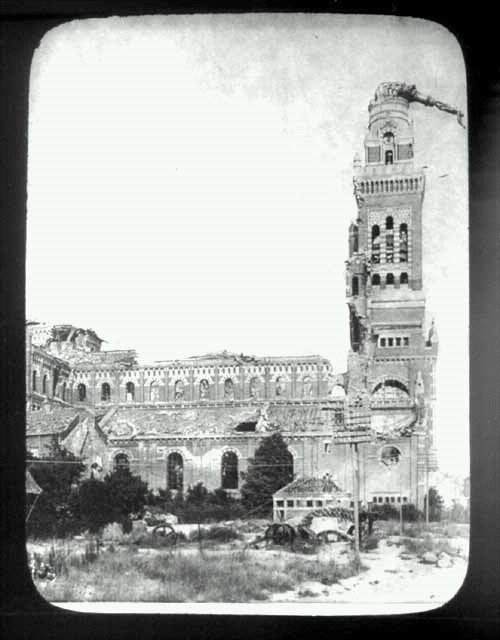 More churches closing than opening survey finds
From Ekklesia - 28/02/06
More churches are closing than opening, a new survey has found. The figures are initial findings from the English Church Census, a large scale survey undertaken by the independent Christian Research organisation which tracks changes over the last seven years.
The Methodist Church suffered a net loss of about 300 churches, and the Church of England fell by more than 100 during this period. It follows figures released by the Church of England at the beginning of the year, that showed little sign that its long-term decline was being reversed. The headline figures however mask underlying changes which saw more than 1,000 new Christian churches also created.
All the major denominations opened new churches but the biggest growth was among the black Pentecostal churches. About half of the new congregations were created by the Pentecostal churches, with help from other ethnic minorities such as the Chinese and the Croatians. New initiatives such as "Fresh Expressions" and other alternative churches, accounted for a fifth of new congregations. The remaining new churches were scattered among the mainstream denominations. But the survey found that more churches had closed than had opened, with the Methodists shutting the most.
Statisticians warn that it is difficult to calculate how many extra worshippers the new churches had generated as new congregations sometimes included existing churchgoers. They added that the majority of the new congregations used existing buildings rather than constructing new ones. Peter Brierley, the executive director of Christian Research, said "the losses in the older denominations are faster than the gains in the newer ones".
The Pentecostal Churches, whose congregations are largely drawn from African communities in London, started nearly 500 churches since 1998, the research showed. Christian Research has previously suggested that churches may be heading for extinction by 2040 – with just two per cent of the population attending Sunday services and the average age of congregations rising to 64.
Wednesday, July 05, 2006
US Gun Lobby Slams UN Meeting on Illegal Arms Trade
by Agence France Presse
Thursday, June 22, 2006
A UN conference on curbing illegal global trade in small arms came under fire from US gun owners who fear losing their weapons, UN organizers said. The two-week conference, which kicks off here next Monday, is meant to review a program agreed by UN member states five years ago to stem the illegal global trade in small arms, which kill an estimated 1,000 people a day. However, members of the National Rifle Association (NRA), the lobby of US gun owners, view the drive as a threat to what they call their constitutional right to bear arms and a first step toward a global treaty to ban gun ownership by civilians.
"I have received over 100,000 letters from some (of the) US public, criticizing me personally saying, 'You are having this conference on the 4th of July, you're not going to get our guns on that day'," Sri Lanka's UN ambassador Prasad Kariyawasam, who will chair the conference, told reporters Wednesday. "It's a total misconception," he said. "First of all, July 4 is a holiday for the UN and we will not be meeting on that day," he added. "The program of action does not refer to legal possession of small arms by any entity. It is only about illegal possession and illegal trafficking," Kariyawasam noted. Organizers make it clear that the United Nations is not seeking a global ban on gun ownership by civilians and that each country is sovereign and has its own laws governing gun ownership.
But in an interview with The Economist weekly last month, NRA executive vice president Wayne LaPierre claimed that the United Nations aims to take away Americans' guns because it is a club of governments, some of which want to "strip opposition forces of the means to challenge their authority. So, after we are disarmed, the UN wants us demobilized and reintegrated. I can hear it now: Step right this way for your reprogramming, sir... Once we confiscate your guns, we can demobilize your aggressive instincts and reintegrate you into civil society. "No thanks," he added. LaPierre, whose new book is titled "The Global War on Your Guns: Inside the UN Plan to Destroy the Bill of Rights," claimed that "individual gun ownership is the "ultimate protection against tyranny".
by Agence France Presse
Thursday, June 22, 2006
A UN conference on curbing illegal global trade in small arms came under fire from US gun owners who fear losing their weapons, UN organizers said. The two-week conference, which kicks off here next Monday, is meant to review a program agreed by UN member states five years ago to stem the illegal global trade in small arms, which kill an estimated 1,000 people a day. However, members of the National Rifle Association (NRA), the lobby of US gun owners, view the drive as a threat to what they call their constitutional right to bear arms and a first step toward a global treaty to ban gun ownership by civilians.
"I have received over 100,000 letters from some (of the) US public, criticizing me personally saying, 'You are having this conference on the 4th of July, you're not going to get our guns on that day'," Sri Lanka's UN ambassador Prasad Kariyawasam, who will chair the conference, told reporters Wednesday. "It's a total misconception," he said. "First of all, July 4 is a holiday for the UN and we will not be meeting on that day," he added. "The program of action does not refer to legal possession of small arms by any entity. It is only about illegal possession and illegal trafficking," Kariyawasam noted. Organizers make it clear that the United Nations is not seeking a global ban on gun ownership by civilians and that each country is sovereign and has its own laws governing gun ownership.
But in an interview with The Economist weekly last month, NRA executive vice president Wayne LaPierre claimed that the United Nations aims to take away Americans' guns because it is a club of governments, some of which want to "strip opposition forces of the means to challenge their authority. So, after we are disarmed, the UN wants us demobilized and reintegrated. I can hear it now: Step right this way for your reprogramming, sir... Once we confiscate your guns, we can demobilize your aggressive instincts and reintegrate you into civil society. "No thanks," he added. LaPierre, whose new book is titled "The Global War on Your Guns: Inside the UN Plan to Destroy the Bill of Rights," claimed that "individual gun ownership is the "ultimate protection against tyranny".
Tuesday, July 04, 2006
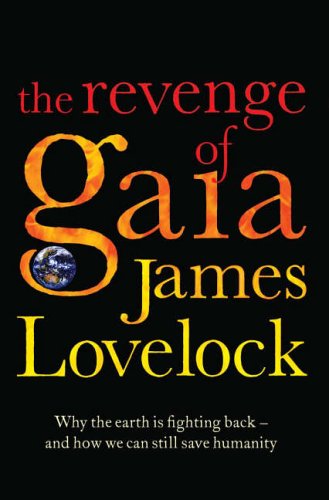 Just Finished Reading: The Revenge of Gaia by James Lovelock
This book was just SO disappointing. I read two of his previous books outlining Gaia theory (basically that the Earth reacts to change as if it were a living organism) and thought that the idea was well thought out and had great merit.
Then he goes and ruins it all by writing this…… polemic. What a waste.
In the book Professor Lovelock came across as a bitter old man who has foreseen the end of human civilisation and wants to tell the world about it. Typically these people wander the streets of London holding placards with quotes from the Bible on them, but in this case the author acquired a book deal on the back of his reputation.
The book is pro-nuclear, anti sustainable development and dismissive of environmentalism – except rather strangely the ‘Deep Greens’ who value the natural world far above mere humanity. It also put forward what I thought was the absurd idea that we are already doomed and, as in the disaster movie The Day After Tomorrow, we should try and save as many people and as much of our hard won knowledge as we can.
In my opinion Professor Lovelock is being far too pessimistic. Sure, Global Warming is very real and is a ‘real and present’ danger but he takes the implications too far. Whilst true that many will die before everyone recognises the level of the threat we face I don’t think that we are anywhere need the end of civilisation scenario that Lovelock paints. Humanity is pretty stupid I agree. But we’re not that stupid. Even I have more faith in us that that. When pushed into a corner we have a great ability to move Heaven and Earth to fix things. Obviously the longer we wait the worse things will get but I have confidence in our ability as survivors. All is definitely not lost – unless maybe you believe this book.

Monday, July 03, 2006
Blair Loses Popular Lead for First Time: Poll
From Reuters
Friday, June 30, 2006
LONDON - A poll in Britain revealed on Friday that British Prime Minister Tony Blair is less popular than his main rival for the first time in 12 years. Blair also suffered more bad news on the electoral front, with results from by-elections for two vacant parliamentary seats yielding a poor showing for his Labour Party. Pollsters YouGov, in a survey commissioned by the Daily Telegraph newspaper, found 30 percent of Britons thought new Conservative Party leader David Cameron would make the best prime minister, against 28 percent who preferred Blair. The Telegraph said it was the first time any of five successive Conservative leaders had been preferred to Blair since Blair took the helm of the Labour party in 1994 as opposition leader under Conservative Prime Minister John Major.
In the Welsh district of Blaenau Gwent, independent Dai Davies defeated a Labour candidate for parliament, thwarting Labour's hopes of winning back one of its heartland seats, which Blair's party lost at the last election last year. The area had been safely held by Labour for years until Labour stalwart Peter Law quit the party and ran as an independent, refusing to step aside when Labour leaders said the party's candidate must be a woman. After Law died of cancer, Labour hoped to win the seat back, and dispatched high profile cabinet members to campaign there, to no avail. Friday's results also brought bad news for Cameron, who took over the Conservative leadership seven months ago. A Conservative candidate nearly lost the seat of Bromley, scraping by with just a few hundred votes in a seat which had been held strongly by the Conservatives since 1945. Labour placed an embarrassing fourth, with fewer than 2,000 votes, behind the fringe anti-European UK Independence Party.
According to the Daily Telegraph poll, 39 percent of respondents would vote Conservative if there were a general election tomorrow, against 33 percent who would vote Labour. That compares to 35 percent backing Labour in April, with 33 percent saying they would vote Conservative. Blair, who led Labour to an unprecedented third consecutive general election victory last year, has pledged not to seek a fourth term. But a series of government scandals over sex, sleaze and mismanagement has led to calls for him to step down soon in favor of finance minister Gordon Brown. Of those quizzed by YouGov, just 7 percent said Brown would make an excellent prime minister, while 31 percent said he would be pretty good and 25 percent said he would not be very good. The poll also showed the Conservatives, whose reputation for economic competence was hit when the British pound crashed out of the European Exchange Rate Mechanism in 1992, catching up with Labour on the key question of economic management. The survey showed both parties were equal at 31 percent on the question of which would run the economy best.
From Reuters
Friday, June 30, 2006
LONDON - A poll in Britain revealed on Friday that British Prime Minister Tony Blair is less popular than his main rival for the first time in 12 years. Blair also suffered more bad news on the electoral front, with results from by-elections for two vacant parliamentary seats yielding a poor showing for his Labour Party. Pollsters YouGov, in a survey commissioned by the Daily Telegraph newspaper, found 30 percent of Britons thought new Conservative Party leader David Cameron would make the best prime minister, against 28 percent who preferred Blair. The Telegraph said it was the first time any of five successive Conservative leaders had been preferred to Blair since Blair took the helm of the Labour party in 1994 as opposition leader under Conservative Prime Minister John Major.
In the Welsh district of Blaenau Gwent, independent Dai Davies defeated a Labour candidate for parliament, thwarting Labour's hopes of winning back one of its heartland seats, which Blair's party lost at the last election last year. The area had been safely held by Labour for years until Labour stalwart Peter Law quit the party and ran as an independent, refusing to step aside when Labour leaders said the party's candidate must be a woman. After Law died of cancer, Labour hoped to win the seat back, and dispatched high profile cabinet members to campaign there, to no avail. Friday's results also brought bad news for Cameron, who took over the Conservative leadership seven months ago. A Conservative candidate nearly lost the seat of Bromley, scraping by with just a few hundred votes in a seat which had been held strongly by the Conservatives since 1945. Labour placed an embarrassing fourth, with fewer than 2,000 votes, behind the fringe anti-European UK Independence Party.
According to the Daily Telegraph poll, 39 percent of respondents would vote Conservative if there were a general election tomorrow, against 33 percent who would vote Labour. That compares to 35 percent backing Labour in April, with 33 percent saying they would vote Conservative. Blair, who led Labour to an unprecedented third consecutive general election victory last year, has pledged not to seek a fourth term. But a series of government scandals over sex, sleaze and mismanagement has led to calls for him to step down soon in favor of finance minister Gordon Brown. Of those quizzed by YouGov, just 7 percent said Brown would make an excellent prime minister, while 31 percent said he would be pretty good and 25 percent said he would not be very good. The poll also showed the Conservatives, whose reputation for economic competence was hit when the British pound crashed out of the European Exchange Rate Mechanism in 1992, catching up with Labour on the key question of economic management. The survey showed both parties were equal at 31 percent on the question of which would run the economy best.
Sunday, July 02, 2006
 My Favourite Music: Rachmaninov’s Piano Concerto No.2
This is another of my favourite classical pieces and one that I had also heard long before I knew what it was. If you have seen either Brief Encounter or The Seven Year Itch then you’ve heard this piece of music.
For some, as yet unexplained, reason I love the sound of the piano. It may indeed be my favourite musical instrument, though I do like the guitar too – both classical and electric. This particular example of the piano is masterful and very, very Russian. It holds an infinite sadness and yet there is power and hope in there too. It soars with a knowing passion all too aware that nothing lasts forever. If you let it, the music can transport you to a place from which you return a wiser and more sober person. As I said, it’s all very Russian. Check it out if you have a spare 20 minutes or so. You won’t regret it.
The Simpsons as philosophy
From The BBC.
Friday, 19 May 2006
The Simpsons is more than a funny cartoon, it reveals truths about human nature that rival the observations of great philosophers from Plato to Kant... while Homer sets his house on fire, says Julian Baggini. With the likes of Douglas Coupland, George Walden and Stephen Hawking as fans, taking the Simpsons seriously is no longer outré but de rigeur. It is, quote simply, one of the greatest cultural artefacts of our age. So great, in fact, that it not only reflects and plays with philosophical ideas, it actually does real philosophy, and does it well.
How can a comic cartoon do this? Precisely because it is a comic cartoon, the form best suited to illuminate our age. To speak truthfully and insightfully today you must have a sense of the absurdity of human life and endeavour. Past attempts to construct grand and noble theories about human history and destiny have collapsed. We now know we're just a bunch of naked apes trying to get on as best we can, usually messing things up, but somehow finding life can be sweet all the same. All delusions of a significance that we do not really have need to be stripped away, and nothing can do this better that the great deflater: comedy.
The Simpsons does this brilliantly, especially when it comes to religion. It's not that the Simpsons is atheist propaganda; its main target is not belief in God or the supernatural, but the arrogance of particular organised religions that they, amazingly, know the will of the creator. For example, in the episode Homer the Heretic, Homer gives up church and decides to follow God in his own way: by watching the TV, slobbing about and dancing in his underpants. Throughout the episode he justifies himself in a number of ways.
"What's the big deal about going to some building every Sunday, I mean isn't God everywhere?"
"Don't you think the almighty has better things to worry about than where one little guy spends one measly hour of his week?"
"And what if we've picked the wrong religion? Every week we're just making God madder and madder?"
Homer's protests do not merely allude to much subtler arguments that proper philosophers make. The basic points really are that simple, which is why they can be stated simply. Of course, there is more that can and should be said about them, but when we make decisions about whether or not to follow one particular religion, the reasons that really matter to us are closer to the simple truths of the Simpsons than the complex mental machinations of academic philosophers of religion. And that's true even for the philosophers, whose high-level arguments are virtuosi feats of reasoning, but are not the things that win hearts and minds. They are merely the lengthy guitar solos to Homers crushing, compelling riffs.
However, being simple is not the same as being simplistic, which is one of the greatest crimes in the Simpsons' universe. We can see this when Homer's house catches fire, in what could be seen as divine retribution for his apostasy. But what actually led to the fire was not God's wrath but Homer's hubris and arrogance. Sitting on his sofa thinking smugly, "Boy, everyone is stupid except me," he falls asleep, dropping his cigar. What really caused the fire was thus a slippage from the simple into the simplistic. Homer's mistake was to think that because the key points which inform his heresy are simple, that the debate is closed and he has nothing left to learn from others. But this is being simplistic, not keeping things simple.
Revealing simple truths about simplistic falsehoods is not just a minor philosophical task, like doing the washing up at Descartes' Diner while the real geniuses cook up the main courses. For when it comes to the relevance of philosophy to real life, all the commitments we make on the big issues are determined by considerations which are ultimately quite straightforward. A rich philosophical worldview is in this sense like a pointillist picture - one of those pieces of art in which a big image is made up of thousands of tiny dots. Its building blocks are no more than simple dots, but the overall picture which builds up from this is much more complicated. Yet we need reminding that the dots are just dots, and that errors are made more often not by those who fail to examine the dots carefully enough, but those who become fixated by the brilliance or defects of one or two and who fail to see how they fit into the big picture.
And the Simpsons certainly plays out on a broad canvas. Any individual or group is shown to be ridiculous when only their pathetic and partial view of the world is taken to be everything. That's why no one escapes satire in programme, which is vital for its ultimately uplifting message: we're an absurd species but together we make for a wonderful world. The Simpsons, like Monty Python, is an Anglo-Saxon comedic take on the existentialism which in France takes on a more tragic hue. Albert Camus' absurd is defied not by will, but mocking laughter. Another reason why cartoons are the best form in which to do philosophy is that they are non-realistic in the same way that philosophy is.
Philosophy needs to be real in the sense that it has to make sense of the world as it is, not as we imagine or want it to be. But philosophy deals with issues on a general level. It is concerned with a whole series of grand abstract nouns: truth, justice, the good, identity, consciousness, mind, meaning and so on. Cartoons abstract from real life in much the same way philosophers do. Homer is not realistic in the way a film or novel character is, but he is recognisable as a kind of American Everyman. His reality is the reality of an abstraction from real life that captures its essence, not as a real particular human who we see ourselves reflected in. The satirical cartoon world is essentially a philosophical one because to work it needs to reflect reality accurately by abstracting it, distilling it and then presenting it back to us, illuminating it more brightly than realist fiction can. That's why it is no coincidence that the most insightful and philosophical cultural product of our time is a comic cartoon, and why its creator, Matt Groening, is the true heir of Plato, Aristotle and Kant.
From The BBC.
Friday, 19 May 2006
The Simpsons is more than a funny cartoon, it reveals truths about human nature that rival the observations of great philosophers from Plato to Kant... while Homer sets his house on fire, says Julian Baggini. With the likes of Douglas Coupland, George Walden and Stephen Hawking as fans, taking the Simpsons seriously is no longer outré but de rigeur. It is, quote simply, one of the greatest cultural artefacts of our age. So great, in fact, that it not only reflects and plays with philosophical ideas, it actually does real philosophy, and does it well.
How can a comic cartoon do this? Precisely because it is a comic cartoon, the form best suited to illuminate our age. To speak truthfully and insightfully today you must have a sense of the absurdity of human life and endeavour. Past attempts to construct grand and noble theories about human history and destiny have collapsed. We now know we're just a bunch of naked apes trying to get on as best we can, usually messing things up, but somehow finding life can be sweet all the same. All delusions of a significance that we do not really have need to be stripped away, and nothing can do this better that the great deflater: comedy.
The Simpsons does this brilliantly, especially when it comes to religion. It's not that the Simpsons is atheist propaganda; its main target is not belief in God or the supernatural, but the arrogance of particular organised religions that they, amazingly, know the will of the creator. For example, in the episode Homer the Heretic, Homer gives up church and decides to follow God in his own way: by watching the TV, slobbing about and dancing in his underpants. Throughout the episode he justifies himself in a number of ways.
"What's the big deal about going to some building every Sunday, I mean isn't God everywhere?"
"Don't you think the almighty has better things to worry about than where one little guy spends one measly hour of his week?"
"And what if we've picked the wrong religion? Every week we're just making God madder and madder?"
Homer's protests do not merely allude to much subtler arguments that proper philosophers make. The basic points really are that simple, which is why they can be stated simply. Of course, there is more that can and should be said about them, but when we make decisions about whether or not to follow one particular religion, the reasons that really matter to us are closer to the simple truths of the Simpsons than the complex mental machinations of academic philosophers of religion. And that's true even for the philosophers, whose high-level arguments are virtuosi feats of reasoning, but are not the things that win hearts and minds. They are merely the lengthy guitar solos to Homers crushing, compelling riffs.
However, being simple is not the same as being simplistic, which is one of the greatest crimes in the Simpsons' universe. We can see this when Homer's house catches fire, in what could be seen as divine retribution for his apostasy. But what actually led to the fire was not God's wrath but Homer's hubris and arrogance. Sitting on his sofa thinking smugly, "Boy, everyone is stupid except me," he falls asleep, dropping his cigar. What really caused the fire was thus a slippage from the simple into the simplistic. Homer's mistake was to think that because the key points which inform his heresy are simple, that the debate is closed and he has nothing left to learn from others. But this is being simplistic, not keeping things simple.
Revealing simple truths about simplistic falsehoods is not just a minor philosophical task, like doing the washing up at Descartes' Diner while the real geniuses cook up the main courses. For when it comes to the relevance of philosophy to real life, all the commitments we make on the big issues are determined by considerations which are ultimately quite straightforward. A rich philosophical worldview is in this sense like a pointillist picture - one of those pieces of art in which a big image is made up of thousands of tiny dots. Its building blocks are no more than simple dots, but the overall picture which builds up from this is much more complicated. Yet we need reminding that the dots are just dots, and that errors are made more often not by those who fail to examine the dots carefully enough, but those who become fixated by the brilliance or defects of one or two and who fail to see how they fit into the big picture.
And the Simpsons certainly plays out on a broad canvas. Any individual or group is shown to be ridiculous when only their pathetic and partial view of the world is taken to be everything. That's why no one escapes satire in programme, which is vital for its ultimately uplifting message: we're an absurd species but together we make for a wonderful world. The Simpsons, like Monty Python, is an Anglo-Saxon comedic take on the existentialism which in France takes on a more tragic hue. Albert Camus' absurd is defied not by will, but mocking laughter. Another reason why cartoons are the best form in which to do philosophy is that they are non-realistic in the same way that philosophy is.
Philosophy needs to be real in the sense that it has to make sense of the world as it is, not as we imagine or want it to be. But philosophy deals with issues on a general level. It is concerned with a whole series of grand abstract nouns: truth, justice, the good, identity, consciousness, mind, meaning and so on. Cartoons abstract from real life in much the same way philosophers do. Homer is not realistic in the way a film or novel character is, but he is recognisable as a kind of American Everyman. His reality is the reality of an abstraction from real life that captures its essence, not as a real particular human who we see ourselves reflected in. The satirical cartoon world is essentially a philosophical one because to work it needs to reflect reality accurately by abstracting it, distilling it and then presenting it back to us, illuminating it more brightly than realist fiction can. That's why it is no coincidence that the most insightful and philosophical cultural product of our time is a comic cartoon, and why its creator, Matt Groening, is the true heir of Plato, Aristotle and Kant.
Saturday, July 01, 2006
Early signs of elephant butchers
From The BBC.
Thursday, 29 June 2006
Bones and tusks dating back 400,000 years are the earliest signs in Britain of ancient humans butchering elephants for meat, say archaeologists. Remains of a single adult elephant surrounded by stone tools were found in northwest Kent during work on the Channel Tunnel Rail Link. Scientists believe hunters used the tools to cut off the meat, after killing the animal with wooden spears. The find is described in the Journal of Quaternary Science. The first signs of the Stone Age site were uncovered by constructors at Southfleet Road in Ebbsfleet, Kent.
Excavations revealed the skeleton of an extinct species of elephant (Palaeoloxodon antiquus) lying at the edge of what would once have been a small lake. Flint tools lay scattered around, suggesting the animal had been cut up by a tribe of the early humans around at the time, known as Homo heidelbergensis. "It is the earliest site of elephant butchery in Britain," Dr Francis Wenban-Smith of the University of Southampton told the BBC News website. "In fact it is the only such site in Britain and it is very rare to find undisturbed evidence of this kind."
Dr Wenban-Smith believes the elephant, which was twice the size of those living today, was probably brought down by a pack of hunters armed with wooden spears. "They either hunted it or possibly found it in an injured state and then killed it," he explained. "Then they got some flint tools from nearby and they would have swarmed all over it and cut off the meat. They would have been carrying off armfuls of meat to their local base camp."
The elephant would have been eaten raw, as there is no evidence that fire was used for cooking at the time. The hunter gatherers probably also feasted on other large mammals, as the bones of buffalo, rhino, deer and horse were also found nearby. "There does seem to be increasing evidence that they were focusing on hunting only the larger animals with more meat and suggestions that they were living in larger groups than we've generally thought," said Dr Wenban-Smith. The remains of the elephant - including parts of its upper torso, skull, fore-limbs, tusks and some teeth - have been taken to the Natural History Museum for further analysis. The site itself has been covered over and now lies beneath a roundabout near the Channel Tunnel Rail Link car park.
From The BBC.
Thursday, 29 June 2006
Bones and tusks dating back 400,000 years are the earliest signs in Britain of ancient humans butchering elephants for meat, say archaeologists. Remains of a single adult elephant surrounded by stone tools were found in northwest Kent during work on the Channel Tunnel Rail Link. Scientists believe hunters used the tools to cut off the meat, after killing the animal with wooden spears. The find is described in the Journal of Quaternary Science. The first signs of the Stone Age site were uncovered by constructors at Southfleet Road in Ebbsfleet, Kent.
Excavations revealed the skeleton of an extinct species of elephant (Palaeoloxodon antiquus) lying at the edge of what would once have been a small lake. Flint tools lay scattered around, suggesting the animal had been cut up by a tribe of the early humans around at the time, known as Homo heidelbergensis. "It is the earliest site of elephant butchery in Britain," Dr Francis Wenban-Smith of the University of Southampton told the BBC News website. "In fact it is the only such site in Britain and it is very rare to find undisturbed evidence of this kind."
Dr Wenban-Smith believes the elephant, which was twice the size of those living today, was probably brought down by a pack of hunters armed with wooden spears. "They either hunted it or possibly found it in an injured state and then killed it," he explained. "Then they got some flint tools from nearby and they would have swarmed all over it and cut off the meat. They would have been carrying off armfuls of meat to their local base camp."
The elephant would have been eaten raw, as there is no evidence that fire was used for cooking at the time. The hunter gatherers probably also feasted on other large mammals, as the bones of buffalo, rhino, deer and horse were also found nearby. "There does seem to be increasing evidence that they were focusing on hunting only the larger animals with more meat and suggestions that they were living in larger groups than we've generally thought," said Dr Wenban-Smith. The remains of the elephant - including parts of its upper torso, skull, fore-limbs, tusks and some teeth - have been taken to the Natural History Museum for further analysis. The site itself has been covered over and now lies beneath a roundabout near the Channel Tunnel Rail Link car park.

Subscribe to:
Posts (Atom)