About Me

My photo
I have a burning need to know stuff and I love asking awkward questions.
Showing posts with label 1066. Show all posts

Thursday, July 23, 2026


Just Finished Reading: The Last English King by Julian Rathbone (1997) [388pp] 

Europe, 1070. Walt the Wanderer is making his way, slowly and painfully, across Europe to the Holy land to seek atonement. The guilt he is carrying is almost crushing him, the guilt of failure, the guilt of shame and the guilt of survival. When he at last looks across the waves at Constantinople he hears a voice he can understand in a sea of foreigners. Unable to pay the ferryman his new companion Quint offers to pay for both of them. Having nothing to offer in return Walt initially declines until Quint says that he can pay his way by telling the story of his life. After a longer than expected pause Walt agrees and tells a tale of growing up in service to a powerful lord, of learning to fight in single combat and in the shield wall, of becoming an elite Companion and of travelling to Ireland, Wales and to France where he met Duke William, the Bastard. He tells his tale of political manoeuvrers, of broken oaths and of love both found and lost and he tells of battles won and battles lost along with his right hand and of fallen heroes including the last English king - Harold Godwinson. 

I've been looking forward to reading this for some time. As someone who is more than a little obsessed with 1066 'and all that' (actually the title of Part VII of the novel, which made me laugh out loud!) I'm always up for reading anything on the subject be it fiction or non-fiction. Unfortunately, so far, the novelisations around the period have been less than impressive – not so for this very good rendition. Although told mostly in 'flashback' I thought it was an excellent way at looking at the events running up to Hastings and the immediate aftermath of the calamity. Not only is Walt in effect paying for his supper he is also using his narrative to come to terms with what happened (to him, Harold and England) and as a method for dealing with his survivor's guilt plus an unhealthy dose of PTSD. The fact that he is often telling his tale with an audience – up to 5-6 people at some points – with his audience asking questions or countering his narrative with THEIR understanding of the facts – allows for a much more rounded look things. 

I think I was most impressed by the way that the author mixes what we DO know of the events with some very plausible explanations for the mysteries that historians still argue and publish books about – notable the much-discussed oath that Harold was purported to have made to support Duke William's claim to the English throne. The thing that gave me MUCH pause for reflection (and a need to read up far more on the period) were the relationships between some of the main players notably Edward the Confessor. I did have my 'suspicions' in the area of his sexual preferences, but the author really ran with them. What actual credence they have will need some more research on my part! Speaking of sex... there is some scattered throughout the novel and it is moderately explicit at times, although its easily skippable. I think the thing that surprised me more than anything was who was having sex with who and how most of it was at least tolerated or regarded as barely noteworthy. Anglo-Saxon sexual mores are something I know VERY little about so I'll see if I can find out more in my reading. 

Overall, I thought this was at least very good with long moments of excellence. I certainly couldn't fault any of the historical fact (or at least what I know of it) and not a single thing broke me out of the narrative. Harold was obviously the hero throughout and William was portrayed as borderline psychotic which he may very well have been taking into account his early life and his actions post-Hastings and especially after the Northern rebellions. Edward played an interesting role rather different from my expectations (sexual preferences aside) which actually explained quite a bit. The battles of Stamford Bridge and especially Hastings were very well done and dramatic – including the in/famous arrow which did briefly raise an eyebrow to be honest, but I forgave him quickly. Loved it and I'm looking forward to more from this author. HIGHLY recommended especially if you have any interest in Anglo-Saxon England or (more especially) the pivotal Battle of Hastings.

Thursday, June 12, 2025


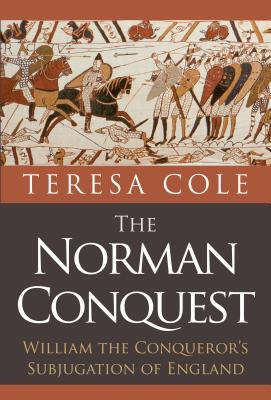
Just Finished Reading: The Norman Conquest – William the Conqueror’s Subjugation of England by Teresa Cole (FP: 2016) [260pp] 

Most books on this pivotal moment in English and European history start a few years before the main event in 1066. They point out that Edward the Confessor had failed to produce an heir and that Harold Godwinson was elected to follow in his footsteps. There is often much debate as to exactly how Harold managed to be in a position to gain the throne of England – especially as it was supposed to have been promised to William, Duke of Normandy – but that’s usually the background given followed by invasion (in both the North and South), battle, defeat (or victory depending on how you look at it) and take-over. 

Interestingly, and highly informatively, this author starts by looking MUCH further back starting with Edward gaining the English throne in 1003 giving us a 60+ year run up to the cataclysm that befell the Anglo-Saxons at Hastings. This allows for a much better, much deeper, understanding as to how England ended up in the position of facing two invasions only days apart and why exactly Harold’s position was challenged so early in his reign. To be quite honest, even with my belief that I’m reasonably familiar with the era and the events covered here, not only did I learn quite a bit, but my UNDERSTANDING of things is so much better now. What made things even better, if that’s possible, was that the authors writing style and her obvious grasp of the subject was outstanding. The six-decade run-up to Hastings and the requirement of the conquering army to constantly reassert its dominance over a fractious people seemed straight out of Game of Thrones (but very much in a good way) with political manoeuvring, rather useful ‘accidents’ (it's amazing how many important people died “falling from a horse” or soon after a hearty meal/drinking session much to the immediate advantage of one group or another) [Side note: is ‘falling from a horse’ the periods equivalent of ‘falling out of a window’ or ‘shot whilst trying to escape’ that we’re more familiar with these days?] 

But let me put any false impressions in their place – this is gripping without being sensationalist. The author examines what happened, what was said to have happened (and the reasons why it happened) with a sceptical eye – after all, as we know, history tends to be written by the victors (in this case the Normans) and any pronouncements by them need to be taken with that in mind. She looks at each story, legacy or legend in turn – from the ‘arrow in the eye’ to Harold’s pledge of fealty prior to Edwards death – and critically examines each in turn, looks at the evidence (if ANY) and either decides – all too often on the balance of probabilities – which is more likely to be true. With the passing of 960 years its understandably difficult to be almost any definitive statements about the events discussed between these pages but, I think, the author makes an excellent stab at it. She didn’t let any speculation go too far but she also didn’t leave too much hanging in the air as inexplicable either. Any speculations she did make she backed up with a knowledge of how things worked – differently in Norman and Anglo-Saxon societies – plus a heavy dose of rationally informed scepticism. 

1066 and the surrounding events constantly fascinate me for understandable reasons. The Battle of Hastings that year changed the direction and fate of a whole nation. Was it for the ‘better’? That’s arguable but it would be interesting to know, rather than idly speculate, how an Anglo-Saxon nation, rather than an Anglo-Norman one, would have made its way in the world and how the present might have been different because of that. As you might be able to tell, I really enjoyed this book and will be looking forward to reading more by its author. There’s more coming on 1066 too. Very much recommended and a highlight of the year so far.   

Monday, January 08, 2024


Just Finished Reading: 1066 Turned Upside Down by Various Authors (FP: 2016) [200pp] 

The events of 1066, and not just the all-important Battle of Hastings, were pivotal in English and, arguably, European history. But Hastings in particular was a very close-run thing after long hours of intense fighting. On several occasions it looked like the Normans had been beaten – but what if they had been, or what if the famous battle hadn’t taken place at all? It’s always a fun game, looking back at historical events and wondering: what if? This is especially so when the thinkers both know their subject and are willing to push the boat out (or set it afire) to examine the possibilities. Here we have 11 intriguing examples of what if – including one with an actual (wrist mounted) Time Machine. To say that they were fun is an understatement. 

From the obvious: What if Harold and the Anglo-Saxons had won at Hastings to the more interesting questions – many of which hadn’t previous crossed my mind! - the reader is presented with some pretty good (and I think often historically reasonable) alternatives. What if, for instance, after Edward the Confessors death in 1066 rather than Harold Godwinson gaining the throne, it was Edward's young great-nephew Edgar the Ætheling? What difference would that have made? What if the Norwegian King Harald Hardrada had been defeated at the Battle of Fulford and so Harold and his army were ready for William’s invasion forces? What if Harold, rather than victorious at Stamford Bridge had actually been defeated and killed and Hardrada had been declared King of England? Would William have still invaded? One of my favourite stories in this excellent collection was the time-traveller tale where Harold was distracted just at the right/wrong moment that changed everything. Unfortunately, for a pedant like me, the consequences didn’t make a whole lot of logical sense but the *idea* behind it was still fun! 

If you have any interest in 1066 or have ever wondered ‘What if’ around the many possibilities of that profound year, then this is most definitely the book for you. Don’t worry if you’re not a Science-Fiction person. There’s only one tale with a SF component and that is lightly applied. The rest are, by and large, straight alt-history scenarios without a time-machine to be seen or heard. Most enjoyable and definitely recommended.     

Thursday, July 08, 2021


Just Finished Reading: The Norman Conquest by Marc Morris (FP: 2012) [353pp]

1066 and the events that followed that most critical and calamitous year for Anglo-Saxon England are certainly a defining date in British history (and arguably the most important date/battle in the whole of that islands long history). It is even arguable that the Battle near Hastings in that year altered the course of European and thence world history. It is no surprise, therefore, that historians keep revisiting that most significant date again and again. It is also unsurprising, as the author quickly alludes to, that historians almost as soon as the last arrow flew have picked sides either lamenting Harold Godwinson’s hasty arrival on the south coast to give battle or trumpeting William’s genius on the battlefield and his clear right to rule. Whilst acknowledging the partisan feelings around the Norman Conquest the author is clearly of the opinion that it’s high time we moved on to look at the events as dispassionately as possible. Despite being an Anglo-Saxon fan from way back I think I’d have to grudgingly agree here. History and historians shouldn’t really be in the business of picking sides – even if one of them is, at least technically, French.

I’m certainly well aware of the broad sweep of the narrative presented here. It’s difficult not to be as Hastings featured prominently in my early education. The author follows the well-known plot of an Anglo-Saxon England where the Godwin family had risen to prominence in southern England through a mixture of military prowess and political manoeuvring. This was an age where, if no clear succession to the throne existed, that the great and the good would ‘elect’ a new leader. As the head of the most powerful family the election of Harold Godwinson didn’t come as much of a surprise – except apparently in Normandy where the young Duke William was expecting to be invited to England to take up the kingship there. It is still unclear exactly who had the right to sit on the English throne. Harold’s lineage was weak but by position and, apparently by deathbed decree, he had a reasonable case. William, meanwhile had a stronger lineage and had, again apparently, been promised the throne by the recently decreased King. There was really only one way to settle it – trial be combat and let God decide.

God, it seemed, was on the side of the Norman’s and gave the closely fought battle near Hastings to William – although not without a few tense moments on both sides. But even after the matter had been settled in heaven there was still a country to subdue. One battle may have settled the succession but there were enough survivors and enough others scattered about to question Norman hegemony. The battle might have been over but the fighting was far from done. Over the next 20 years William and his fellow Norman knights fought pitched battles, skirmishes and put down repeated rebellions. Introducing castles and other strongpoints the Norman’s enforced their rule and slowly squeezed any idea of organised resistance out of the English – or at the very least reduced it to background noise. Apparently the killing of Norman soldiers became so common throughout England that special ordinances had to be created to attempt to stamp it out long after the English should have been pacified. The rebellious northerner’s (bless them) became such a thorn in William’s side that he campaigned there to such a harsh degree that he even disgusted his own officers who asked to be able to return to their estates in Normandy rather than witness another harrowing. Yorkshire in particular took hundreds of years to recover from the devastation wrought by William. Some historians argue that the whole of the North never recovered to this day.


Despite reading a number of books on the invasion or of that era I still managed to glean a fair bit more, especially about the post battle occupation, than I was aware of previously. The author has produced here a tale every part as dramatic as anything seen on Game of Thrones with twists, assassinations, disputes and betrayals enough to keep anyone riveted. Of course what makes it all the more interesting is that this is history and not invented fantasy – although I admit that the arrival of a dragon or two over Hastings might have added even more drama. The circumstances around the pivotal battles (3 or 4 depending on which ones you count) of 1066 still have a significant draw for me. This particular volume is definitely among the best of the narratives I’ve read, so far, and I look forward to reading more from him. Highly recommended.

Thursday, April 23, 2020


Just Finished Reading: The English Resistance – The Underground War Against the Normans by Peter Rex (FP: 2004)

After the loss of Harold at the Battle of Hastings all it seems was not lost. Although the King was dead, as were many of his best men, others across the Kingdom had yet to fight. More importantly there was a possible successor to Harold who had a counter claim to the throne to rival William the Bastard – Edgar the Aetheling. But in the Occupied Zone still others, for a variety of reasons, where already collaborating with the invaders. William was consolidating his position. Before long he and his victorious army would be marching north into the Free Zone to stamp his authority on his new Kingdom and, at last, pacify the country and bring it fully under Norman control. Little did William know just how long it would take and how much devastation he would need to inflict upon the English to bring them, reluctantly at last, to heel. Years after 1066 ‘rebels’ operated in the hills and forests, in the ravaged lands and the fens, attacking Norman forces whenever the opportunity presented itself. Widespread killings of Norman troops throughout the country became so common that new laws and harsh penalties where created to bring them under control. England may indeed be occupied but it was far from pacified.

One of the things that really struck me about this excellent little book was the way the author compared the Norman invasion and subsequent occupation to the German invasion of France in 1940 and the subsequent Occupation and Resistance. France was only freed after the 1944 Normandy Invasion something that never happened (and was actually unlikely to happen from the possible liberators in Scandinavia) and would have been unlikely to free themselves even at the height of Resistance activity – although without access to alternate worlds this is unlikely ever to be settled one way or the other. Likewise, a fractured and hunted English Resistance was highly unlikely to repel the Normans without substantial outside help. The other thing that really stuck out was the author’s revelations/speculations about the resistance fighter Hereward (NOT the Wake!). Interestingly he had been a hero of mine since my school days after the history teacher sold him very much in heroic guise – probably against guideline but, equally interestingly, there is still after the passing of over 950 years Norman and Anglo-Saxon factions both in the world of historians and in the general population. Despite my Celtic roots from Ireland I’m firmly in the Anglo-Saxon camp!

Of course its endless fascinating to speculate what might have happened if Harold had triumphed at Hastings. If I had access to a Time Machine I’d be about half a mile away from Senlac Hill with a sniper rifle looking for William. Of course that presupposes that Norman society completely replaced the Anglo-Saxon one – which in many ways it didn’t. Many elements of Anglo-Saxon life and governance lasted long after the crows had their fill on the countless corpses generated by the Norman Invasion. There might be a LOT of Norman churches still standing but the services are more than likely to be attended by those with Anglo-Saxon roots rather than Norman ones. As you can tell the events surrounding 1066 are still emotive – at least for me. So much so that I’ve created a 1066 label over on the right. This certainly won’t be the last book on the subject here. Recommended for anyone interested in one of THE seminal moments in British history. 

Monday, November 13, 2017


Just Finished Reading: The English Rebel – One Thousand Years of Trouble-making from the Normans to the Nineties by David Horspool (FP: 2009)

We Brits are a belligerent bunch. Not only will we pick a fight with just about anyone but we never know when we’re beaten (or invaded) and never take a slight or insult lying down. We’ll fight each other and we’ll fight anyone who has the temerity to tell us what to do - at least that’s what it feels like reading through this fascinating history of rebellion. Starting with the 20+ year resistance to the Norman Invasion (they probably regretted invading us not long after they arrived), the all too regular power grabs from the friends and family of the rulers, the Baron’s rebellion that led to the signing of Magna Carta in 1215, The Peasant’s Revolt of 1381, the Wars of the Roses (incorporating the uprisings led by Jack Cade and Perkin Warbeck), the arrival of Mary Tudor and the death of the Earl of Essex who plotted with Mary Queen of Scots, Robert Catesby and the Gunpowder Plot, the Civil Wars, the Commonwealth and Oliver Cromwell, the Glorious Revolution of 1688, Mutiny’s and Strikes throughout the 18th Century, The Chartists, The Suffragettes, the General Strike of 1926, the Battle of Cable Street in 1936 and ending with the Poll Tax Riots in 1990. All in all quite a breathless ride!

I was impressed that I’d at least heard of most of the incidents discussed in these 400 pages although one or two events were new to me. I did enjoy learning more about (and the links between) popular protests from the 18th century on. Most of the earlier stuff – pre-modern – normally concerned grabs for power within the existing power elite. Although an important part of our history it actually interested me less than the more popular or class based revolts and rebellions of peasants and the working class. From the earliest days of the Industrial Revolution a more political revolution was never really far below the surface. People like the Luddites and the Chartists showed that the workers could never be taken for granted or ever completely subdued. Especially after the horrors of the French Revolution the upper class of Britain never slept in their beds in total ease. Taken more for granted these days there is still that vague fear that the ‘lower orders’ might turn on their ‘betters’ if pushed far enough. The periodic riots in some major cities are proof of that. The English Rebel is far from dead!

As an overview (it could be little more with 400 pages covering almost 1000 years) this is a solid introduction to political unrest in England – Scotland, Ireland and Wales need their own similar book to cover their individual rebellious history. I shall be examining some of the more modern rebellions in more detail later (indeed I’m reading about the 1926 General Strike presently) so there’s much more rebellion to come. This certainly helped to focus future reading and future investigation and helped me define any likely post-retirement PhD project a little more. Recommended for anyone interested in rebels or rebellions.     

Thursday, December 22, 2016


Just Finished Reading: 1066 – A New History of the Norman Conquest by Peter Rex (FP: 2009)

The Battle of Hastings in October 1066 – a mere 950 years ago – is arguably the most important battle to take place on British soil and (at least in my opinion) can be ranked with the Battle of Britain in 1940 in significance. If either battle had gone the other way the whole world would (again arguably) be a very different place. But, as the author rightly reminds us 1066 was the year of THREE battles rather than just one.

Any change of leadership in a country is potentially troubling especially in an age of powerful monarchs. Smooth transitions, when they happened, were normally through close kin or by agreement long before the event. Less than smooth transitions were the result of a lack of a direct heir or, worse, where a number of possible contenders for the throne exist and who are willing to prove their claim at the point of a sword. This was, it was claimed by the Normans at the time and by later Norman historians, the situation in 1066 after the death of Edward the Confessor. Despite naming Harold Godwinson as his legal heir rival claims from Norway and Normandy had to be dealt with. First came an invasion from Harald Hardrada, victorious when he met English forces at the Battle of Fulford then beaten roundly by Harald Godwinson at Stamford Bridge. Then, just as Harold was catching his breath Duke William of Normandy (who the author amusingly refers to by his earlier nickname of ‘the Bastard’ throughout his narrative) arrived off the south coast and landed his forces unopposed. Racing back from his earlier victory Harold gathered men on route and met William in Battle not far from Hastings. After an epic 9 hour battle, which was apparently a very close run thing, the English shield wall collapsed and Harald lay dead. With a single stroke (of luck?) William had not only defeated the English army but had also eliminated most of the potential leaders of any fightback.

Of course we learnt this well-trodden tale in school history class. We learnt a little of the controversy regarding the succession – who promised what to who - briefly discussed the battle itself (along with the much talked about feinted retreats) and then moved on to consolidation, castle building and the Doomsday Book. What we tended not to do it talk about what happened next which is often the most interesting bit. Now, even after all this time emotions surrounding the battle and 1066 in general can run rather hot. Even today there are those in the history profession who call each other names over which side they ‘support’. This author is most definitely not a Norman apologist. No reading between the lines is required to understand who he feels lost the war and who the illegitimate successor was. The language the author uses is most instructive and very modern. The deposing of Harald and his replacement by William was ‘regime change’, those in the upper echelons of Saxon society who accommodated to the new reality (mostly members of the Clergy) were ‘collaborators’, the Saxons who fought and rebelled for the next ten years were ‘insurgents’ or simply ‘resistance fighters’ not unlike the French Resistance under German occupation. One of the most famous, and most effective, was Hereward (wrongly called ‘the Wake’) who became a very painful thorn in William’s side for a considerable time.

All this, and more, was covered in the final 2/3 of the book dealing with the inevitable aftermath of invasion a defeat at the hands of the Normans who did not take any opposition to their rule lightly. Any resistance, and rebellion or uprising was crushed with terrible consequences for the people or area involved. A northern rising was dealt with so severely – the Harrowing of the North – that it took generations to recover anything like the productivity it once had and became a lawless wasteland for decades. The Normans were determined to hold what they had taken no matter the cost to the local population. I guess that this generally doesn’t get taught to children in school because they certainly don’t want to teach too much about rebellion unsuccessful or not. Nor do they want to delegitimise (even superficially) the idea of Monarchy or royal succession. After all where would such thinking possibly end?

This is a book full of information regarding the lead up to the battle, the battle itself (in quite graphic detail) and, more importantly, what happened next. I found it to be very well told and, despite reading several books on the subject and era before, I learnt new stuff too – which I always enjoy doing. One fact which particularly struck me was that the word ‘Murder’ came from the Norman French for killing by stealthy means and they had to introduce the word into English law because so many Norman’s were being killed in out of the way places or simply ‘disappeared’ as they went about their business. Whole villages were heavily fined in an attempt to stamp out the practice which took years to subside. Whatever else you can say about the Saxon population they certainly didn’t just roll over once the battle was over. Overall an excellent read for anyone interested in the period and I’ll be following this up with more from the author and from others on this most famous battle.

Thursday, August 15, 2013

Just Finished Reading: The Anglo-Saxon Age – A Very Short Introduction by John Blair (FP: 1984)

This was to be honest a very short introduction indeed only running to a mere 75 pages. Needless to say I started and finished it during a single Sunday a few weeks ago. The author is very clear that, for most of the period under discussion, we can say precious little about what happened and what we can say must be taken cautiously. Very little text survives before 600AD and what does survive is partisan. The archaeological evidence, again what has survived, can tell us something about the spread of Anglo-Saxon burial sites across what would become England – named after the Angles of course – but provides us with no great detail and says very little indeed to decide the thorny question of what happened to the indigenous population after the Anglo-Saxons arrived in ever increasing numbers. Where they assimilated, exterminated or forced to leave to inhabit the edges of the island in Cornwall, Wales and Ireland? It is a question and a debate that may never be fully answered.

What does seem to be clear is that, over 400-500 years various waves of immigration (or invasion depending on your point of view or perspective) arrived on the English shore and set up home here. Inevitably conflict arose and throughout that period dynasties rose and fell, territories expanded and contracted and both heroes and villains fell under the swords of their enemies. This is the area where legend and history meet and intermingle and national foundation myths are born. I was certainly brought up on stories of Alfred the Great, Arthur and, at the end of the Anglo-Saxon age Harold Godwinson. I wonder how many names the present young generation would recognise. Not many I’m guessing. We are, it would seem, increasingly cut adrift from our history and national legends much to our detriment I feel.

Despite its brief nature this is a well written and detailed introduction to the very edge of British history in that twilight moment between the withdrawal of Rome and the arrival of the Normans in 1066. Much more on this fascinating period to come. Recommended. 

Thursday, March 21, 2013


Just Finished Reading: Conquest by Stewart Binns (FP: 2011)

England in the Year 1053. Despite the firm hand of the King, Edward I (The Confessor) the realm is not as secure as it could be. The King has failed to produce an heir and claimants are already positioning themselves to be his nominated successor. Meanwhile in the Fens a young, headstrong Hereward of Bourne is causing trouble in his small tightly knit community. Infatuated with a local beauty he will let nothing stand in his way to see her as often as he can. When he hears that a local cleric has also shown an interest in her he plans to run away and start a new life together. But before he can act the cleric, a powerful man, hires three killers to teach her and her lover a lesson they will never forget. Left for dead Hereward is found by his family’s retainers and is nursed back to health. Vowing revenge he acts months later tracking down his would be killers and dispatching them in a very public manner. Moving onto the cleric he is stopped just in time and is banished for his crime. Forced to wander England as an outlaw Hereward finally finds his way into Wales and thence to Ireland and Scotland before finding his true calling as a sword for hire in Europe’s interminable wars of conquest. Returning finally to England over 10 years later he becomes part of the personal guard for a man he grows to greatly admire – Harold Godwinson, one of the most powerful men in England and a man who is rumoured to be the next King of England. When Edward dies suddenly Harold is crowned King but before he has had time to take up his position he is forced to defence the nation against attacks both in the North and the South. With Hereward at his side he is convinced that he can beat off the opposition to his rule – but his most dangerous opponent knows his battle techniques all too well and seems to have both Right and God on his side, William Duke of Normandy. If Harold is defeated Hereward vows to lead the survivors in a covert war against the hated Normans – but can one man stand if a nation has fallen?

I was looking forward to this book for some time. Not only have I become rather fascinated with Anglo-Saxon England and the final Battle of Hastings which marked its end but I still remember the thrill of discovering the story of Hereward of Borne (or Hereward the Wake as we knew him) when I was still very young – probably no older that 7-8. The idea of a single man, leading a rag-tag collection of fighters against probably (one of) the best fighting force(s) in the world at the time and more than holding his own (apparently) stirred my little heart. Hereward was, at least for me back then, one of the premier English heroes. He has certainly kept that place – along with the other British greats – since then. So, as you can imagine I was hoping for something that stirred the blood and thrilled the spirit. How disappointed I was! The author clearly had an idea of making Hereward into a towering hero but that was the problem. Binns’s Hereward wasn’t a man to be reckoned with – he was a god come down to Earth, a giant of a man, unbeatable in battle who could wield weapons others could not even lift! He was, in other words, simply unbelievable. During his time in European exile not only did he meet and impress Duke William himself but El Cid! Everyone seemed to be clambering to have Hereward as his personal bodyguard. He was, clearly, without peer – until Binns introduced Harold who, rather bizarrely, he first presented as someone who could barely make a decision – suddenly transformed into a battle winning warrior on his ascension to the throne. Binns also repeated and appeared to give a great deal of credence to the idea, called heavily into question by historians, the Harold had given his fealty to William and had agreed to serve him as the rightful King of England and that, becoming King himself, his taking up arms against the Norman invasion was an act of rebellion. More than once I almost put the book down almost in disgust at the sloppy writing, questionable characterisation and deep inconsistencies. Sometimes I kept going through sheer momentum and the hope, vain it turned out, that things would get better. The set-piece battles where well described and, as far as I know, pretty accurate, but everything else really didn’t gel with me. Deeply disappointing, at least for me, so cannot be recommended. 

Thursday, October 18, 2012


Just Finished Reading: The Battle of Hastings – The Fall of Anglo-Saxon England by Harriet Harvey Wood

The Battle of Hastings on Senlac Hill in late 1066 is arguably one of those turning points in history when everything changed. At the time it was seen as a calamity on a Biblical scale. It was to the Anglo-Saxons the end of their world. After 1066 they were no longer in control of their own country or their own destiny. From that fateful date they were an occupied people in an alien land.

But how and why did such a thing happen? Why did a successful warrior and leader of men like Harold Godwinson end up on the wrong side of history and bring down his whole civilisation with him? That is, it seems from this narrative, the mystery of Hastings – Why we lost. I say we for several reasons, firstly like the author of this work I fully identify with the resident Anglo-Saxons rather than the invading Normans. Second looking back on the invasion and the aftermath with the 20:20 vision of historical hindsight I think it’s more than reasonable to say that, although we lost the Battle, we almost certainly won the cultural war. Not long after their ‘victory’ the Normans both at home on the Continent and here in their new possessions went into terminal decline and practically vanished from history in surprisingly quick order. Their culture – what there was of it – was absorbed into and diluted by the Anglo-Saxon culture that was both more sophisticated and with deeper roots in the community.

In many ways Harold was unlucky. If the dying King had lived just a few more years it is unlikely that William would have been in a position to invade. If the bad weather that held William in France had lasted a few more days (or a few less weeks) there would have been ample time for Harold to defeat Tostig at Stamford Bridge – a major victory only overshadowed by his defeat at Hastings – or to meet William on the coast with a full army and navy not yet released for the harvest. With so little actual hard evidence to go on historians either throws up their hands and says that nothing truly meaningful can be said on the subject or are forced to speculate in order to weave a coherent story from very thin thread. This author certainly weaves a good tale of a masterful warrior and good king forced to fight battles at opposite ends of the country only days apart with an almost predictable outcome during battle number two. She tries to understand what motivated Harold to force battle the way he did when, apparently, all he needed to do was wait out the Normans crushing them at his leisure. Then, of course, there is the famous arrow and the unlucky eye. The author comes down on the side that Harold was indeed hit by an arrow in the face and this caused his battle line to fall apart at exactly the wrong moment. His personal bodyguard – all high ranking aristocrats in their own rights – stood by him and died to a man ensuring that no one was left alive to solidify a useful opposition force hence accelerating the fall of the rest of the country.

Finally the author speculates on what might have happened if Harold had won (or William had lost) and sees England entering into a Golden Age which would have changed the course of European, and hence World, history away from the one we know. Knowing at least a little about the time and the way politics was done back then I somehow doubt that this would have been the case. It is interesting however to speculate about Harold being victorious and either driving the upstart Normans into the sea or even killing William in battle – he was after all unseated from his warhorse at least twice on the day.

Despite being biased (in a good way in my opinion) this was still a very good and often thrilling interpretation of 1066 and the events leading up to it. Obviously sad as to the outcome the author tries her best to understand just what went wrong. On its own this book would probably give an at least mildly distorted picture of Hastings but, in conjunction with the other works already reviewed and the others in the pipeline, potentially rounds out the view of the battle and its antecedents in opposition to the pro-Norman historians who think that we should get over being beaten and move on. Like Harold and his Housecarls I say come over here and make me!

Thursday, August 16, 2012


Just Finished Reading: A Brief History of Britain 1066 – 1485 – The Birth of a Nation by Nicolas Vincent

I’m positive that my High School teachers would be proud of the interest (bordering on obsession) that I’ve managed to develop in history and in particular British history over the past 5 years or so. It seems like every other book I read has an historical bent to it – be they fiction or non-fiction. Books like this one are the reasons that my interest/obsession continues to grow. Like most inhabitants of this ‘sceptred isle’ I am generally familiar with the major facts, which King (or sometimes Queen) did what and when, battles being fought and history taking a new turn depending on the victory, and of course the dark side of our history, the murders, revolts, suspicious deaths and sometimes questionable lineage that makes up the story of our royal families. This book has it all – running the 400 or so years from the Battle of Hastings and the coming of the Normans in 1066 to Bosworth Field and the end of Plantagenet rule in 1485 in just under 500 pages it is, as you might imagine, quite a romp presenting those turbulent and often violent times with verve, an obvious love of the subject and a generous dose of (sometimes rather black) humour.

One of, the many, things I really liked about this book was the authors willingness to point to our basic lack of knowledge regarding the details about the earliest period being covered. Even the cataclysmic events of 1066 are shrouded in deep layers of mystery. Clearly we know who won the battle on Senlac Hill on that fateful day but we don’t know exactly how they won. As always the history of events are written and shaped by the victors who, as usual, portray the losers in a less than flattering light especially in a culture where victory in battle is seen as a ‘thumbs up’ from God. The lack of reliable sources is highlighted time and again which actually makes for a far more fascinating look at the period I’d assumed to be rather more known than it actually is.

The other thing I found particular fascinating was how (and how often) the English throne in particular changed hands. I had assumed, quite wrongly it seemed, that king followed king (and sometimes Queen) in a reasonably ordered fashion – apart from the occasional hic-up. Not so, it transpires. Although sometimes son followed father or agreed heir followed the death of kings more often than not the infighting which resulted from the death of a king was bloody, confused and decided by battle, treachery or poison than by bloodline or seniority. A disturbing number of royals died ‘falling from their horse’ or at the dinner table ‘suddenly’ and, as often as not, conveniently for one faction or another at court. Being in-line to the throne was a very dangerous place to be it would appear.

Lastly, although I was developing a fairly good idea of why Britain and France have had a very long, and again bloody, history together I now appreciate far more why exactly this is the case. Not only the Norman invasion but cross contacts both ways for hundreds of years afterwards left an indelible mark on both sides of the Channel that neither country could easily put to one side.

If you want to know about the early years of British history this is definitely the book for you. Very well written by someone who knows his ‘stuff’ and who is not afraid to point out the limitations of our knowledge and is likewise unafraid of pointing out the more questionable actions of some of our national icons, this is an eye opening, fascinating and sometimes laugh out loud funny introduction to the birth of a nation. Highly recommended to history fans and anglophiles. 

Monday, July 02, 2012


Just Finished Reading: A Brief History of The Normans – The Conquests that Changed the Face of Europe by Francois Neveux

I was interested in reading this book because, of late, I have become increasingly interested in European and especially British history and seem, for an unaccountable reason, to have developed a fascination with the events leading up to (and the ramifications of) the defining Battle of Hastings in 1066.

As you might expect the majority of this book does not indeed deal with 1066 but with the centuries before that pivotal event. The Normans, or North Men, were originally of Scandinavian origin who settled in the area of what is now called Normandy after earlier raiding the French coasts with their Viking compatriots. Normandy was given to them by the French King on the understanding that they would protect the hinterland from future attacks. This they did, very successfully, but they also carried out their own raids further inland sometimes with, and sometimes without, the Kings permission or at least his blind eye. Inevitably, over time, the Normans married into the families of existing ‘royalty’ and became ‘royal’ in their own right. The crowning achievement of this process was William, Duke of Normandy – AKA William the Bastard, AKA William the Conqueror who, with as many barons as he could muster invaded England in 1066, defeated Harold at the Battle of Hastings and was crowned King that same year.

I hadn’t realised, until recently, that the events known as the Norman Invasion had produced pro and anti Norman historians. I knew that history is reinterpreted by each generation and that new artefacts are periodically discovered that change our views on historical events but I didn’t quite appreciate that history is also a fertile ground for philosophical factionalism – especially about such things as 1066. How naïve I was! I had only heard of pro-Norman historians recently so it was interesting to actually read one who was so blatantly of that party. Of course the author is French so should be assumed to have some bias in favour of William over Harold. What surprised me more that a little was a depth of feeling the author had over English complaints that they were in fact invaded and occupied by a foreign power so long ago. He virtually said, in all but these words, that we should just get over it and deal with the fact that we lost. Of course this brings out the interesting idea that we modern British (or English) still identify with the losing Anglo-Saxons rather than with the victorious Norman French. That alone speaks volumes. The Norman invasion, it would seem, was initially successful but over time the invaders have been absorbed into the English society they sought to conquer. Obviously the Normans had a huge impact on the future of the English but not as much as this author proposes or would prefer. Pro Anglo-Saxon historians continually point out that English society in 1066 was one of the most modern and sophisticated in Europe at that time and that the outcome of Hastings was far closer that some other historians would have us believe. It is intriguing to speculate as to what the world would now be like if Harold had not died on Senlac hill but had led his troops to victory over the Norman usurper.

Speaking of Harold’s death, the author perpetuates what many now consider at least questionable if not an outright myth – that Harold died and the battle was lost because of a lucky (or skilfully aimed) arrow in the eye and that he wasn’t the rightful heir anyway so got what he deserved. Both of these assertions, and much more besides, are being challenged by English historians and a whole new mini-industry seems to have grown up around this world changing battle almost 1000 years ago. I am looking forward to reading their accounts and will pass on my thoughts here. Although rather biased (in my opinion) this is still worth a read if only to get the French side of the story.  

Thursday, May 03, 2012


Just Finished Reading: A Brief History of The Anglo-Saxons – The Beginnings of the English Nation by Geoffrey Hindley

This history of the Anglo-Saxons covers the period from the end of Roman rule up to the invasion by the Normans in 1066. The (very) broad outline is basically a tale of invasion and settlement by colonists and mercenary armies from Northern and Central Europe into the vulnerable and recently abandoned Roman province. The British of course fought back but where slowly overwhelmed as wave after wave of invaders arrived, settled and changed the make up of the country until Britain became Angle-land – England. It is a long and involved story spanning centuries full of warfare, treachery and occasional acts of heroism. It was also a time of great religious conversion as heathens became Christians as both Irish and Roman Christianity fought for ideological supremacy throughout the land. One interesting fact was that the date for Easter was, for a while at least, celebrated on two different dates in different churches in the same city until, that is, such weighty matters where settled once and for all by Rome. At the end of this period, just prior to the events in 1066, England was a fully formed, prosperous and well organised nation-state. It was in many ways the envy of Europe. Unfortunately, as we English school children are taught, that all came crashing down when William the Conqueror AKA William the Bastard led his army against King Harold and defeated him on Senlac Hill near Hastings. What I didn’t know until recently, and what (at least as far as memory serves) we were never told in school was that not only was the battle a very close run thing but that even after the defeat and the crowning of William on Christmas Day 1066 the English resisted Norman rule for another 22 years! It seems that as a nation we’ve never gone down that easy!

Overall, although the book did fill in some important gaps in my historical knowledge, I did find it rather dull and in some places a definite slog. The author seems to be interested in early Ecclesiastical history – which I am most definitely not – and spent what I considered to be an inordinate time detailing how English Christian missionaries helped to shape the faith of the European mainland. I also, to be honest, lost the plot a few times with the number of kings, queens and other VIPs who had very similar sounding names. Taken together with the inevitably litany of brother killing brother for the throne in various regions and dodgy dealings all round it did kind of all blend into a bit of a mind-numbing morass. What I need in future, I think, is something a bit more targeted on smaller events and individual people. Saying all that, this book does give a fairly detailed and comprehensive overview of a turbulent and foundational time in our history. Read with a keen eye it will offer you many possible inroads into the period and has a very handy bibliography (something I have a habit of checking almost before I read the index). Reasonable.