About Me

My photo
I have a burning need to know stuff and I love asking awkward questions.
Showing posts with label UK. Show all posts

Thursday, July 02, 2026


Just Finished Reading: Riots and Rebels – Popular Protest in Britain from The Peasants’ Revolt to Extinction Rebellion by Nick Rennison (FP: 2025) [197pp] 

I’m still not 100% sure why exactly but I have long been interested in rebels and revolutionaries. It might well stem from growing up in the 1970’s when some (at least) of my History teachers were young radicals themselves. It's certainly where I first learned of Hereward the Wake, (possibly) Boudica and other famous English rebels and, of course, we had our fictional heroes such as Robin Hood. So, when I saw this slim volume laid out on a table in my Indie bookshop (next visit in August!) I snapped it up. I was not disappointed. 

Clearly, we Brits are a feisty and rebellious lot! Putting aside the usual regular dynastic conflicts that punctuate Britain’s bloody history the author concentrates on rebellions and uprisings from the ‘lower orders’ of society kicking off with the Peasants Revolt (1381) led by Wat Tyler [another rebel learnt about in school] and Jack Cade’s rebellion (1450) [ditto] before moving onto the rather tumultuous Tudor period. 

Even a cursory knowledge of the Tudors will point you towards THE cause of the numerous rebellions/uprisings of that fascinating period of British history – religion. As the country moved from Catholicism to Protestantism, back again and then back AGAIN its hardly surprising the number of people who suffered from ecclesiastical whiplash (to say nothing about stake burning!). Some of the uprisings I was familiar with [school AGAIN] such as the Pilgrimage of Grace (1536) and Kett’s Rebellion (1549) but a few of them, covered by the author, had obviously passed me by (there only SO much rebellion you can cover in a few school years of history). 

Naturally, one of my favourite periods for such activities is the Civil Wars of the 17th century. I’m a BIG fan of both the Levellers and the Diggers and will be reading more about both later. I’m somewhat familiar with the political debates within the New Model Army (some of which were very modern and very radical for the time) but I was unaware of groups such as the Fifth Monarchy Men nor of the Bowdy House Riots of 1668 which sound interesting to say the least! 

Upheaval in the 18th and 19th centuries revolved around increasing mechanisation (Go Luddites!) and the results of rapid social and economic change. The focus though of the 19th century was on the struggle for increased Rights and especially the Right to Vote. The Chartists definitely need some of my attention going forward. Generally, my knowledge gets increasingly sketchy before the mid-19th century which is something I need to address! 

Of course, the 20th century was hardly a time of calm – even putting to one side both World Wars! We had the Suffragettes (definitely a terrorist organisation), the unrest following demobilisation after the Great War, the General Strike of 1926, the Battle of George Square in Glasgow (tanks on the streets!), the Invergordon Mutiny (1931), the infamous Battle of Cable Street (1936), the Jarrow hunger march (also 1936), various race riots in the 1950’s, anti-Vietnam protests in the 60’s, anti-Nazi protests/riots in the 70’s, Greenham Common and anti-nuclear protests in the 1980’s (I was there for some of those demonstrations) and, of course, the Poll Tax riots during the Thatcher premiership (I saw the aftermath of some of that when I worked in central London in the late 1980’s. 

Phew...! Yup, LOTS of upheaval over MANY years. Never a dull moment as they say! I was impressed by how much the author covered and by how many new incidents I discovered to find out more about – I forgot to mention the Peterloo Massacre and the Tolpuddle martyrs!! (more of which later). This was a fun and fast read and was especially interesting considering the present protests and rioting both here are elsewhere. It's always good to put things into historical perspective. Definitely recommended for anyone interested in our turbulent past – and probable future! 

Thursday, June 25, 2026


Just Finished Reading: A History of Britain in 21 Women by Jenni Murray (FP: 2016) [276pp] 

It is a truth (generally acknowledged) that many women have been ‘written out’ of History. Part of this is through ignorance, but part of it is intentional and at least part of the authors intentions with this interesting book was to put part of that oversight right. Another part was to showcase women she admires and who she took as examples to aspire to. Most of the list was pretty obvious – indeed unavoidable – given British history. Women such as Boadicea (using the old spelling that both the author and I grew up with) and Elizabeth I are shoe-ins on any such list as this. Others I was either unaware of – like Aphra Behn (a 17th century playwright) or Ethel Smyth (a 19th century composer) or only knew in passing.  

Naturally a good chunk of the text, and a good number of the women listed, revolved around the movement for and the gradual increase of the Rights of Woman, with an expected chapter on Mary Wollstonecraft, and included Emmeline Pankhurst, Millicent Garrett Fawcett and Constance Markievicz who was the first woman MP elected in the 1918 General Election. Nancy Astor (also getting her own chapter here) was actually the first woman MP to take her seat in the House of Commons as Constance Markievicz had refused to do so as a member of Sinn Fein who boycotted the English parliament in protest at the lack of Home Rule for Ireland. 

The last few women on this list had the extra ‘wrinkle’ of having actually being interviewed by the author during her career as a journalist. These included Labour politician Barbara Castle (who I liked), Prime Minister Margaret Thatcher (who I voted for TWICE) and fashion designer Mary Quant (who I definitely want to read more about). Rounding the list out was Scottish SNP Leader Nicola Sturgeon whose political career has been.... ‘interesting’ to say the least, especially lately! 

Overall, this was an interesting read which introduced me to a few objects of further interest as well as showcasing the fact that women did actually exist in the historical past and did actually have an impact on British history. One of the things I find most gratifying, even in just the 10 years since the publication of this work, is the number and range of women's biographies from across the globe that have plucked important (and often fascinating) women from the previous obscurity they had been condemned to inhabit. Definitely worth your time for both snapshots of British history and as an introduction to some of the women who helped shape it. More to come. 

Monday, June 08, 2026


Just Finished Reading: The Men of 1924 – Britain's First Labour Government by Peter Clark (FP: 2023) [238pp] 

It was a risk but, they thought, worth it. The recent election had not provided any part with a clear majority but there was enough Liberal support to allow the brand-new Labour Party to form a government – the first in British history. Views across the country varied with political affiliation. Socialists, of which there were a growing number, saw it as an opportunity to gain for the working man and push back against the Capitalists. The trade unions saw it as an opportunity to bring in new laws and strike down old ones to protect jobs and improve the often-harsh working conditions in factories and mines. The working-class voters wanted to see what they could do, to give them a chance. 

The elected Labour politicians had hopes too, but they also were more than aware of the pitfalls and problems ahead of them. The first and foremost was the simple calculation of the number of Labour MPs – not enough. Certainly not enough to do anything ‘radical’ (as some members and some supporters certainly wanted them to do), not that the Labour leadership wanted any truck with that. Feared as either communists in sheep's clothing or some other form or revolutionary (as some of them were!) the leadership wanted to prove to the electorate – including Conservative and Liberal voters – that the country was in ‘safe hands’ despite everything they had heard or read in the papers. So, it was part ‘business as usual’ and part dressing appropriately to meet the King. 

A problem the whole Labour government was more than aware of – for obvious reasons – was their sheer lack of experience. Although many of the new members had been – and indeed many still were – leaders of various trade unions – few had been council leaders or in any other kind of administrative positions and fewer yet had knowledge or experience of foreign affairs. Picking cabinet posts was going to be difficult and challenging. Choosing members of the House of Lords to aid in any legislation was going to be even more of a challenge.  

Unfortunately, the opportunities to gain experience, pass meaningful legislation and prove to the electorate that they had nothing to fear from a Labour administration ended abruptly after only 10 months in office with the withdrawal of Liberal support and the loss of a confidence vote. Although they increased the number of MPs in the subsequent election, the Conservatives with Stanly Baldwin at the lead were back in power – and with a majority. The Labour experiment was over – for now. 

This was a surprisingly interesting – indeed often fascinating – look at the 20th century seismic political shift in British politics. For generations previously there had been two political parties – Conservative and Liberal. The growing Working class tended to vote Liberal but for a number of reasons that allegiance was falling away. Slowly (indeed very slowly) the number of Labour MPs increased and were increasingly voted into parliament. But it was only in 1924 that enough had done so to form a government – minority or not. Split into 3 parts – the political shift and the growth of Socialism, the government itself and mini-biographies of the men involved (the leader, Ramsey MacDonald, getting a whole chapter to himself) - this was chocked full of information and I honestly learnt a LOT.  

I do actually have quite the fascination for the ‘Between the Wars’ period as the world recovered from one global conflict and then prepared for another and this fills in a gap in my knowledge very nicely indeed. I have another book about this presently sitting on my Wish List so I’ll be deepening my knowledge of this event soon(ish). I’ll also see about adding a few more Prime Ministers from this period to my ‘list’. Definitely recommended for anyone interested in the emergence of British socialism and the Labour movement.

Thursday, May 07, 2026


Just Finished Reading: Northerners – A History from the Ice Age to the Present Day by Brian Groom (FP: 2022) [336pp] 

Despite living over half of my life in the South (both East & West) I am, and will always be, a Northerner – not just at heart by bone deep. When I worked in London for 6 years it always felt special travelling north to visit my parents and go HOME. I always looked out for certain landmarks after we left Birmingham (at the halfway mark) and although I never had a tear in my eye it always felt different, special. 

Of course, the North IS different, as the author rightly points out. Not only because of its history but because of the basic geology. There is a real North-South divide in the very rocks under our feet. A real consequence of that is very real differences in farming between the two regions. Whereas in the South we see rolling fields of wheat, in the North we have much smaller farms and plenitudes of sheep. The North is also rich in things like coal and iron which is a major reason why the Industrial Revolution happened there. At first the industries around these resources huddled close but it wasn’t long before the demand, especially for coal, required its transport over distance hence the building of first an extensive canal system and then an expanding rail network that was later exported across the world. Industry and the pollution that followed defined the North in ways still remembered and still satirised to this day. It was indeed, at least for a long while, grim ‘Up North’. 

Written with a wide knowledge and a healthy dose of love this was a fun and informative read from beginning to end. I’ve been looking for something like this for a while now. Most English general history books tend to mention the North in passing (often focused just on the Industrial Revolution) so it was good to see the whole North as THE focus of a book. A fair bit of spice was added by an extension bibliography which I’ll be diving into in the coming months for recommendations – it'll certainly help me in my Ancestry endeavours. I was already aware that the author had another book out on the history of Manchester (already on my Wish List) but I’ve just discovered (during my search for a cover to post here) that he’s also produced a general people’s history of the entire British Isles too!  

This is definitely recommended for any Northerner out there curious about their region's proud history. More to come from this author (naturally) and from the North itself. I’m particularly looking forward to a history of Liverpool (the city of my birth) which is out in July. 

Monday, April 27, 2026


Just Finished Reading: Why We Get the Wrong Politicians by Isabel Hardman (FP: 2018) [307pp] 

If you’re anything like me and live on the British mainland (mostly England to be honest), you’ll have probably wondered where exactly politicians come from, what exactly they do in Parliament and why (oh why?) it seems far easier to really screw something up than accomplish anything even vaguely useful. If so, this is definitely a good place to start. 

The author certainly is at the centre of things. As the Assistant Editor of The Spectator she has spent a considerable amount of time wandering the halls of Parliament and has interviewed numerous politicians of all stripes including local MPs (both long standing and of the newly minted variety), Ministers and even David Cameron himself prior to him leaving the House of Commons after the Brexit vote. She certainly had plenty of material to work with and used it wisely. It's not easy getting your bum on the green leather benches in the Commons. Not only do you need to get enough people to vote for you – possibly in a constituency you might be unfamiliar with – you need to be selected in the first place by the Party you’re part of (being an Independent makes the whole process and the likelihood of success MUCH more difficult). To do this you need to have put your time in (usually unpaid) for a number of years and be ‘inside’ enough and persuasive enough for the Party to support you through the process. This, naturally, eliminates many potential candidates and is one reason why it's rare indeed to see someone much outside the expected norms giving their traditional first speech on the floor of the Commons (there was one just recently that really stood out – a female ex-plumber for the Green Party. Knowing what I do now about the Parliamentary system I wish her well). 

It must be quite the shock – or maybe aftershock – to show up on your first day at the Commons. From what the author lays out it’s not exactly (or usually) the smooth transition many would hope. It seems that many MPs are given a brief talk and then essentially left to get on with things. The bigger more established parties have, apparently, tried to be a little more organised but I think they still have a fair bit to go. I’ve had a few creaky first weeks in various jobs, but nothing like the general experience of new MPs. Again, the experiences of INDEPENDENT MPs must be horrendous! Given a 4-5 year term (barring snap elections) it's a STEEP learning curve even for those who are already political animals – maybe previously a local councillor – but what they learn very quickly is that you vote with your Party and not with your conscience. Rebels certainly do not thrive and most certainly don’t get Ministerial positions where, naturally, most of the real power is. Those who are already (or become) Subject Matter Experts might expect to be placed on committees to scrutinise upcoming legislation (because that’s their job really) but they’d be both surprised and disappointed. The government of the day certainly doesn’t want a lowly (or NEW!) MP criticising their project with FACTS – and by extension giving aid to the Opposition(!) so no committees for them. That’s of course if they even have time to scrutinise the proposed Bill in the first place. 

This was quite THE eye-opener of a book. I certainly understand Parliament a great deal more (admittedly from quite a low bar) and am finding that I can already understand more of the language use in the Commons, both what they’re saying (or really saying) and what they’re not – both to make such unsaid comments public and to hide behind parliamentary language in order to confuse or deflect. This is definitely recommended for anyone who want to begin to understand how Parliament ‘works’ and, more importantly, why it doesn’t.  

Thursday, March 19, 2026


Just Couldn’t Finish Reading: Camelot and the Vision of Albion by Geoffrey Ashe (FP: 1971) [220pp] 

It seems that whilst growing up in England you absorb the legends and myths surround King Arthur simply by breathing in the air. Even without doing TOO much research I came probably name most of the characters and most of the highlights off the top of my head. I actually picked this book up decades ago (long after its publication date though!) and have, finally, gotten around to reading it. Unfortunately, it really wasn’t what I was looking for. 

The author was well placed to discuss all things Arthurian – and I do mean ALL (which was the main issue I had here) - having been the editor of a book on the subject with contributions of eminent scholars and being involved in the archaeological dig at Cadbury Hill fort where Arthur (the real one) apparently had his headquarters. So, things started out pretty well... 

The author made some interesting observations about the ancient origins of the Arthur legend – going back to Ancient Greece no less – which I kind of went along with (for the most part) but I think he hit his sweet spot with the discussion of the REAL Arthur in the 5th Century and the evidence for his existence and where exactly some of the storied locations might have actually happened. Unfortunately, after this, things got a little.... weird. Not only did the author bring in the Vikings, which seemed reasonable, there were diversions into early British Christianity and then into the Russian Revolution, Zionism and Ghandi.... So, weird...  

Although SOME of what he said was interesting – from a general standpoint – the problem I had was the authors growing lack of focus on the subject at hand: Arthur and the legend that surrounded him. More discussion on how the legend arose (there was some of that here but nowhere near enough) as well as how it changed over time to suit changing times (ditto) without the distractions from other parts of the world would have helped a LOT here. But much to my annoyance such an investigation was largely absent. 

No doubt there are much better books out there on Arthur and his Round Table etc.. I do have one more (much more modern and substantial – at least on page count) which I’ll see to include this year but, for the time being, I might see if I can schedule in some of my fiction/fantasy Arthurian reads. Regrettably not recommended. 

Monday, February 23, 2026


Just Finished Reading: 1971 – Never a Dull Moment by David Hepworth (FP: 2016) [395pp] 

1971 was a big year for me as I transitioned from Junior to Senior/High school. It was quite the step change essentially from childhood to the start of the journey to adulthood. It was also, according to the author, quite THE year for music. 

Although I was certainly listening to music back then I was still a few years away from being a member of the record buying public. We had a few (old) records at home but most of my awareness of the music of the day came from the limited BBC radio output (I think we still listened to quite a bit of Radio Two around then before moving more onto Radio One with everything – naturally – being controlled by my parents choices) and, of course Top of the Pops on TV. I’m not sure when (or where!) I acquired a portable radio, but it was probably a few years later that I started listening to Radio Luxemburg and, a little later still, to Pirate Radio. I do also remember tagging along with my older brother and his friends to local record shops and browsing (plus listening!) through the Prog rock section stacked with the latest 33rpm vinyl.  

But what I didn’t know about or, to be honest, care about was who exactly made the tunes that I bopped to. Sure, I knew the bands names but more often than not I had no idea what all of the band members were called, where they came from or much of anything else. I just knew what I liked (if I’d heard it all all) and what I didn’t. So, as you might imagine, I ended up learning quite a bit in this excellent look at the music scene at the leading edge of the 1970’s. I’m glad to say that I had at least HEARD of most of the single artists and bands discussed here. A few of the more obscure (American) bands had obviously passed me by but the BIG groups were not only known to me but over the years I’ve accumulated a number of their most famous albums on CD. 

The author is a music lover and (later) music journalist of MANY years and it shows. Not only had he a deep knowledge of the subject but writes about it with style and a fair bit of humour. Even if I wasn’t as interested in music as I am I still think I would have enjoyed this slice of cultural history. There are many things to like here. Even if you are too young to remember the age (or indeed the specific year) the author provides a list of 10 tracks to listen to after each monthly section. Plus, at the end of the book, he lists THE 100 must listen to albums of the year. His encyclopaedic knowledge of the industry was impressive. Not only did I find his stories (and insights) about my favourite bands interesting (and often frankly bizarre) but he even managed to make the producers (previously completely unknown to me!) just as fascinating as they used the latest technology – both incredibly primitive and often hand-built – to produce sounds that have never been heard before. I really enjoyed it. Fortunately, this is not his only book, and I have (I think) at least two more to schedule in. I’m already looking forward to them so definitely more from this author and much more on music to come. Definitely recommended for lovers of the era's music, for those who lived through it and for those who want to see what they missed. 

Thursday, December 11, 2025


Just Finished Reading: 1914 – Fight the Good Fight: Britain, the Army & the Coming of the First World War by Allan Mallinson (FP: 2014) [551pp] 

Britain was unprepared for war in 1914. Despite rising tensions on the Continent since the assassination of the Austrian Archduke (and actually long before that) Britain was, as always, focused on the Empire. Despite the Entente Cordiale signed with the French in 1904, Britain had no intention of getting entangled in another European conflict. For more than a hundred years the British policy in regard to Europe was simply to prevent one power becoming all dominant and, therefore, becoming a threat to British and Imperial interests. Also, being primarily a maritime power, the British army was tiny in comparison to its European counterparts. Indeed, the German Kaiser himself called it contemptible and quipped that if it entered German territory, he would have the local police arrest them. 

Just how unprepared the British were was made clear in this excellent book. The Germans had a very detailed plan (flawed but VERY detailed) as to how precisely they were to remove the French threat prior to engaging the large, but slow, Russian one. With France and Russia being allies the LAST thing the Germans wanted was the dreaded “war on two fronts”. So, knock out the French with the majority of their army and then entrain everyone for a swift redeployment in the East. Simple. Except that they should have remembered that NO plan survives contact with the enemy. Unfortunately for Germany (and to be honest the whole of Europe) the Schlieffen Plan had no flexibility built in. NONE. The French plans were almost as detailed. They even had several plans to work from. Unfortunately for France their plan(s) was based on two assumptions – never of which were true – that the Germans would hold back their reserves and leave more divisions in the East than was actually the case and that they would behave exactly as the French expected them to. Meanwhile the British... well, THEIR plan (such as it was) was to deploy their entire available force – minus some divisions kept back for home defence until the possibility of invasion had passed – on the left of the French line... and that was IT. At least it had the advantage of simplicity. 

Despite aerial reconnaissance by both sides (although still VERY much in its infancy at this point) the British managed to blunder into the main German thrust where they found themselves outnumbered by roughly 8 to 1. Despite everything the British actually managed their ‘first contact’ surprisingly well being both highly trained and highly professional with the painful experience of the Boer War still very much present. Struggling to disengage during their subsequent retreat (strategic withdrawal?) they finally managed to do so and continued the retreat until finally they managed to reform and reinforce. In coordination with the French, they launched a significant counterattack and knocked the Germans on their heels. The Schlieffen Plan had failed, and a long war of attrition was about to begin. 

This quite outstanding book is focused very much on the beginning of things and only really covered the first few months of the conflict. Much of the book was focused on background – primarily from the British point of view obviously – and to give you an idea of just how much background we’re talking about here the first shots exchanged between British and German forces happened around page 380. Although, inevitably, some of the reasons behind the outbreak of the war were discussed that wasn’t the focus of the book. This was about how the British responded to the emergency and exactly why they behaved as they did. It was more than a little shocking to realise that the Cabinet only began discussing options AFTER the German army crossed the Belgian border! There was even debate over whether Britain should intervene AT ALL despite its undertaking to guarantee Belgium integrity. The reluctance to get involved and the political smokescreen deployed to cover this confused everyone. The French, for example, were convinced that Britain would be at their side every step of the way – regardless of the Belgian issue – and planned accordingly. The Germans, however, convinced themselves that Britain was staying out... and planned accordingly. 

One of the things I really liked about the author, who isn’t a professional historian but clearly knows his ‘stuff’ being an ex-cavalry brigadier, was his reluctance to speculate about what the main players were thinking (or not) beyond the evidence available. Equally I enjoyed a whole chapter of speculation of ‘what might have been’ if the British had thought things through more carefully. An earlier report on Belgian fighting capabilities fully expected that they would either put up a token face-saving fight and quickly capitulate with honour intact or be swept away by German might. What was completely unexpected was both how well and how aggressively the Belgians DID fight which, incidentally, completely threw off the German timetable. IF the British had been more aware of this fact before they deployed to France, they could have had an agreement with the Belgian king to quickly come to their aid in case of invasion (the Belgians were adamant that NO army would be crossing their border without permission). They could have been based at nearby railheads and, once the Germans crossed the border, been shoulder to shoulder with the Belgian forces in a matter of hours and could (possibly) have stopped the German advance DEAD in its tracks. When Russia invaded East Prussia on 7th August 1914 the Germans would’ve been faced with a nightmare scenario. It's entirely possible that they could have quickly sued for peace. So, no Great War, possibly no Russian Revolution, certainly no Second World War... Oh, the possibilities. 

As you can tell I was DEEPLY impressed by this book. I’ll definitely be looking out for more of his military history works as well as diving into his novel series in the New Year. So, MUCH more to come! Very Highly recommended to anyone interested in the start of the Great War and a definitely highlight of the year.  

[This is the first of a bunch of 20th Century history books I've been meaning to schedule for a while now. It'll run from 1914-1983. So, stay tuned!]

Thursday, November 27, 2025


Just Finished Reading: The Spanish Armada by Robert Hutchinson (FP: 2013) [254pp] 

It was, without doubt, a turning point heralding both the rise of England to global power status and the long slow decline of the Spanish Empire into eventual obscurity. The Great Enterprise of the Spanish Armada was supposed to ring the death knell of Elizabeth’s Protestant England. Not only did it fail in rather spectacular fashion it set in motion a chain of events that would change Europe and the world forever. 

The launch of the Armada in 1588 came as no great surprise to anyone. Not only was Spain an avowed enemy of England after the accension of Elizabeth to the throne in late 1558 but Phillip II (ex-husband of Mary I of England) had publicly vowed to expunge the heretical monarch by fire and invasion if necessary. As the Anglo-Spanish War (1585-1604) dragged on plans were drawn and ships began to cluster in various ports ready to destroy the English navy [I had to constantly correct myself thinking of England’s forces as “British” or thinking of England as either Britain/Great Britain or the UK as such entities had yet to come into existence] and facilitate a full invasion from the Spanish held Netherlands. Such a fleet took an inordinate amount of time to bring together. So long indeed that the early stores brought aboard began in rot in their casks. The fleet itself was a motley collection of newly commissioned ships, barges, older warships and even oar powered/assisted galleons. In all the fleet consisted of 141 ships and took two days just to leave port. Moving at the speed of the slowest ship it progressed towards England at a pace of 4MPH.  

From the ‘off’ things did not go well. Bad weather forced several ships back into port almost immediately and later storms forced several ships to leave for repairs. Finally reaching the English Channel it began to face increasing attacks from English warships which although smaller than many of their Spanish counterparts where much nimbler, better crewed and better armed. The failings of the Armada began to become obvious to all concerned. Barely half of the actual Armada were warships whilst most of the English ships could be described as such. Although the English did have a number of armed merchantmen the majority were very much men-o-war manned by experienced and hardened combat veterans. Retiring to Calais to await the invasion force from the Netherlands, the Spanish fleet were set upon by 8 English fireships causing only slight damage overall but scattering the remainder and beaching several ships. Interestingly, these 8 ships were the only English losses attributed to the fighting.  

Scattered, harried and with contrary winds – to say nothing of the dead and dying from various encounters including the Battle of Gravelines – the Armada pushed into the North Sea with the idea of circumnavigating the British Isles and returning to Spain. This is where things got really bad for the fleet. A mixture of unseasonably stormy weather, lack of charts, death, disease and fast running out supplies meant that the remaining 110 ships suffered greatly on their journey home. Finally, months after they sailed certain of their victory, only 35 ships made it back many containing hundreds of dead and dying. It was a disaster of epic proportions. Spain would never fully recover. 

Naturally the tale of the Spanish Armada is taught with pride (or at least it was in my time) in British schools – despite the fact that most of the damage was done by our notoriously fickle weather. Although its arguable if the Armada could ever have been successful even without the storms it's equally arguable that a successful invasion (if possible) would have ended Elizabeth’s reign reasonably easily. But I think a LOT would have had to have been different for this counter-factual to have much credence. Evidence at the time as well as later evidence from the many wrecks around the coast shows just how unprepared the Spanish had been relying as they did on God and the justice of their cause rather than solid logistics, a well thought out plan and seaworthy ships.  

As an aside, after receiving the rather odd update on my ancestry – that my DNA is apparently 2% Spanish – I paid particular attention to the crews of Spanish ships that washed up on the Irish coast on their way home. It seems that the vast majority either drowned (the idea I understand that it was ‘bad luck’ for a sailor to know how to swim) or were killed on the shoreline (as either invaders or, rather strangely, because of an idea that if you saved someone from the sea then it would be ‘compensated’ by the drowning of a local). Some of the richer survivors did manage to pay their way home (as always) but there is some evidence that a handful of survivors did settle in Ireland in various capacities. It's possible (just) that one of these Spaniards was an ancestor of mine – although I doubt very much if I’m going to find any documentation of a Pedro Gonzales married to Bridget Doyle in 1589.  

Overall, this was a very good examination of why the Armada happened and why it ultimately failed. Even if you have a reasonable familiarity with the events this can still highlight much that you might have missed from your school, movies or casual reading. Definitely worth a read.

Monday, October 06, 2025


Just Finished Reading: Churchill & Orwell – The Fight for Freedom by Thomas E Ricks (FP: 2017) [270pp] 

It surprised me that two of the early 20th centuries icons never met. Although Orwell and Churchill ‘crossed paths’ - although never at the same time or place – they only read each other's works at a distance. Even more surprising, as the author points out, was the fact that we know of them at all. From an early age Winston liked to put himself into the middle of things, partially for the sheer thrill and (more importantly) in order to gain a public reputation that could be converted into electoral votes. He was in the thick of things – with bullets flying – on the Afghan border, South Africa (where he was captured and escaped from a POW camp) and Cuba. Interestingly, it was in New York 1931 (aged 57) where he was hit by a car and suffered several cracked ribs and a slashed skull. If the car had been going faster and the injuries had been worse then England would have been denied its iconic Prime Minister in its (and his) finest hour. Likewise, Orwell was shot in the throat (everyone in the area assumed he would be dead before they reached him or soon after) in Spain during the Civil War in 1937. Imagine a world without Homage to Catalonia, Animal Farm or 1984. Would anyone even know who George Orwell was today?   

Covering the two greats' lives and their formative years, this quite excellent look how their joint opposition to authoritarianism (of BOTH extremes) shaped both their lives and the word we live in today (and indeed some of the very language we use to describe and think about it – imagine a world without the concert of Orwellian politics). Churchill was an anti-Fascist from the earliest days and spent his wilderness years vainly warning Britain (and by extension the Western Powers) about the rise of the authoritarian leaders in both Italy and Germany. Although Churchill was pleased when Germany was stupid enough to invade the Soviet Union, he already had great misgivings about Stalin and never trusted him. For Winston it was a clear ‘enemy of my enemy’ temporary accommodation. Orwell's journey was a little more complex. Although never a Communist he was most definitely ‘of the Left’ and felt the need to do something (other than write) about the fighting in Spain. Randomly allocated a position in an Anarchist division it wasn’t long before his direct experiences soured him to the Russian ‘advisors’ in the war zone and not much longer after that he was warned that both himself and his wife had been added to an effective ‘capture & kill’ list. It transpired that the true enemies of the Communists were not their Fascist foes but the more ‘politically dangerous’ Socialists and Anarchists.  

This was VERY well written (as you might expect from a Pulitzer Prize winner) and often honestly fascinating. If you’re interested what drove Winston Churchill so hard during WW2 and what underlay Orwell’s political beliefs and informed his later and most famous works, this is definitely the book for you. One of the highlights of the year. I’m looking forward to (finally) reading the authors book on the Iraq war. 

Monday, September 29, 2025


Just Finished Reading: How Churchill Waged War – The Most Challenging Decisions of the Second World War by Allen Packwood (FP: 2018) [264pp] 

You really can’t discuss (or arguably understand) the Second World War without reference to Winston Churchill. Although he wasn’t British Prime Minister at its outbreak, indeed he was still very much in the political wilderness at that point, it wasn’t long before he assumed that position on the resignation of Neville Chamberlain. But what made him such an effective leader and how did he cope (and indeed keep his job) when things went badly wrong? 

This honestly fascinating analysis of Churchill’s strategic and political thinking during WW2 not only increased my appreciation of the man himself but really enhanced my understanding of the North Africa campaign in particular. Previously I had looked on the fighting there in a simple one-dimensional fashion – it was to protect the Suez Canal and the MUCH shorter route to India and the rest of the British Empire. This is indeed true – but barely tells half of the story. Of course, the loss of Egypt and the Canal would have been devastating and maybe could have knocked Britain out of the war (or at the very least lengthened the conflict significantly) but its simple retention would have merely enabled the existing status quo. The significance of the North African campaign was far larger than that. Firstly, it would show the Russians that Britain was still in the fight and was drawing away troops from the Russian Front. This, hopefully, would bolster Russian resistance and prevent them from making a separate peace with Germany. Continuing the fighting in the North African desert also showed the Americans that we were not beaten and that it was worth their time and expense to keep sending us weapons and other goods to continue a (potentially) winnable war – despite what Roosevelt’s ambassador to Britain was feeding him. The ongoing conflict in Africa also (probably) had an effect on both Spain and Turkey preventing them from joining the Axis Powers (although I don’t think that Spain seriously contemplated this so soon after their Civil War). Finally, despite the victory in the Battle of Britain (as well as the ongoing slog in the Battle of the Atlantic) the British Army had yet to develop the fighting skills to beat the Germans in particular (the Italian Army was CRUSHED in the early North Africa battles) at their own game. Once the right General was in place and the right weapons in his arsenal the Afrika Corps was sent packing, and the strategic initiative started to swing in favour of the Allies. The rest, as they say, is History. 

As the author is the Director of the Churchill Archives Centre it should come as no surprise that this is a deeply researched work. Covering the initial decision to assume the role as Prime Minister, to the type of Government he created on the assumption of that role (being both PM and the first Minister of Defence), to the competing demands of fighting in France and then coping with her defeat, his approach to both the USSR and the USA as allies or potential allies, to coping with (and politically surviving) the Fall of Singapore (something I MUST read far more about) to, finally, Churchill’s decision to fight the 1945 General Election on his war record – and LOSE! I learnt a LOT from this book, and it has become one of the best Churchill books I’ve read so far. Highly recommended to anyone who wants to understand British warfighting policy in WW2 and those who want a deeper insight into how Winston thought and fought. 

Monday, September 22, 2025


Just Finished Reading: Churchill’s Cold War – How the Iron Curtain Speech Shaped the Post War World by Phillip White (FP: 2012) [232pp] 

It came as quite the surprise. After steering Britain to victory in the European war, Churchill and his Conservative Party fully expected to win the snap election in 1945. It had been 10 years since the last election and the decision to go to the polls early was a calculated one. Churchill was still basking in the glow of a war won and was keen to finish the job (not least the still on-going war in Asia). But it was not to be. Not only were the Conservatives beaten, but the election returned the Labour Party in a landslide. Churchill’s wife, Clementine, tried to soften the blow by calling it a ‘blessing in disguise’. After some weeks rest in Italy Churchill had begun to agree with her – but he was far from done. Fading away into a well-earned retirement was not the way Winston wanted to end his astounding career. Plus, he had work to do. After the defeat of Germany, a new (or maybe old) dangerous adversary had emerged onto the world stage: The Soviet Union. As yet, preoccupied as they were with the last stages of the War, few it seemed recognised the dangers ahead. But when Winston spoke, most especially with the memory of his ignored warnings of Hitler’s Germany still very much present, people around the world listened. But how to get the word out to the widest possible and most influential people. Although an icon, Winston was now a private citizen.  

Meanwhile across the Atlantic in the American Midwest the President of Westminster College in Fulton Missouri was looking for a signature speaker to restart his establishments credentials after the war. A friend, almost off-handedly, suggested Churchill. Intrigued by the idea but convinced that he was shooting at the Moon he made enquiries and called on friends across the nation to help. Help came in the form of an endorsement from another President – Harry S Truman. After a series of meetings and cross-correspondence between notables, an invitation was finally sent to the great man himself. Churchill, naturally, received countless invitations to speak and, just as naturally, rejected most of them. This one was different. Not only did it contain a hand-written note from Truman, but it almost seemed like Fate itself. Here was the opportunity to give the speech of a lifetime and at a forum that would, no doubt, attract the word’s press. It was just too good an opportunity to pass up. He accepted and the rest, as they say, is historic. 

I knew OF the famous speech given in Fulton in 1946 but had no real idea of the background to it nor the effort it took to make it happen. On seeing this book in my Indie Bookshop some time ago I jumped at the chance to find out. You would think that the details of setting up such an event would be mundane and boring. The author shows that they were nothing of the sort – from arraigning accommodation, lists of who to invite, extra phone lines and much more for the press, as well as simply having enough food for the thousands of people expected to be in-town just to see the spectacle – the stress levels of all involved must have been epic. Switching alternately between Britain and the US (along with context of global events especially in Eastern Europe and Greece) the author highlighted the speech [which got its own chapter] for its importance as a turning point in the relationship between the West and the Soviets. Indeed, the knock-on effects of Churchill’s warning arguably including the implementation of the Marshall Plan to revitalise Europe and the creation of the North Atlantic Treaty Organisation (NATO).  

This was a (largely) laser focused look at a niche event that had a profound and lasting effect on modern geopolitics. Well written with lots of interesting details this is a valuable examination of the power of Churchill oratory skills. Recommended to anyone interested in the man himself or in the beginning of the Cold War. More to come.  

Thursday, August 28, 2025


Just Finished Reading: The Power of Geography – Ten Maps That Reveal the Future of Our World by Tim Marshall (FP: 2021) [364pp] 

This was, essentially, a continuation of the authors previous work on Geopolitics – Prisoners of Geography. Here he is more forward looking although each section still contains a goodly slice of history for the required context. Starting off with Australia (which I remembered him musing over in the previous book) he looks at that continental country in context with its place in the Japan, South Korea, China axis, especially focused on the ongoing problems in the South China Sea. This does look like a potential conflict zone in the years ahead if cooler heads fail to prevail. I doubt if it would take too much pushing to start an actual shooting war – never mind how stupid and pointless that conflict would be. 

Moving onto the ever ‘interesting’ Middle East zone, we looked at both Iran and Saudi Arabia. I’ve read a little (emphasis on little) about Iran, but this author really helped me understand its geography – especially in a strategic sense – much better than I had previously. I can now understand exactly why Iraq had such a hard time invading during their bloody conflict. The section on Saudi looks very much at its economic future as the US in particular slowly removes its reliance on Mid-East oil and its involvement in Mid-East politics. Although this is a good idea in and of itself (for a whole host of reasons) it doesn’t follow that the tensions in that area will diminish greatly never mind vanish overnight. There are certainly enough other ethnic and religious divisions in the region – to say nothing of Israel’s actions – to keep it in the news for decades to come. 

I’ve been aware of the ‘issues’ between Turkey and Greece for a while now, both from my reading about the region and from watching various conflicts (notably Cyprus) play out on my TV. So, it was a real eye-opener to understand exactly why these two countries – NATO allies indeed – are potentially at each other's throats so much. Not only do they have a LONG history of conflict to draw on, but there’s a whole new cause in play right now: the resources of the eastern Mediterranean. How this will play out... is definitely an open question. 

I’d be the first to admit that my knowledge of Africa is practically non-existent. Apart from some knowledge of Ancient Egypt, the North African campaigns of WW2 and a passing knowledge of the Boer War in South Africa I know almost nothing of that great continent. So, it was good to see two sections in this book dedicated to diminishing that oversight. Looking at conditions throughout the Sahel and Ethiopia I now have a much greater appreciation of the area's problems (often caused by those pesky straight borders again) and what they (and, typically, the Chinese) are doing about it. MUCH more on Africa to come! 

Overall, I enjoyed this a great deal and learnt MUCH. This is a valuable addition to his previous work, and I can definitely recommend it to anyone (like me) who is trying to understand why the world is the way it is. More to come.  

Monday, August 04, 2025


Just Finished Reading: A Brief History of The Hundred Years War – The English in France, 1337-1453 by Desmond Seward (FP: 1978) [265pp] 

Any war that lasts 100 years, or in this case 116, is going to be complex. Over that people, and especially during that age, leaders change – from Kings to warband captains – alliances shift, marriages and deaths change political dynamics, technologies change and mature (here the introduction and early use of gunpowder firearms) and outside events such as Crusades and Plague have impacts on who is available to fight. In fact, the use of ‘complex’ in reference to this was barely covers it. 

Of course, one of the (many) things that stick out in a jarring sort of way is that this wasn’t really a conflict between England and France at all. Although England was, by and large, a unified state at the point when the war started (essentially over who would sit on the French throne) the nation of France was nothing of the sort. ‘France’ was more of an idea than a reality, more of an aspiration – at least for some. ‘France’ was actually a loose confederation of regional powers with different histories and even different languages. Parts of what we now call ‘France’ had been owned and managed by the English for several hundred years and had no intention of changing that. So, when war broke out, the regions picked sides – or stayed neutral (or at least tried to). If that wasn’t complex enough, we have other actors involved. We have Holland and the Low Countries fighting for their independence offering their allegiance to anyone who could help them. We have the Holy Roman Emperor attempting to influence things and we had, for at least part of the war, the issue of rival Popes in Avignon and Rome excommunicating each other's followers.  

One thing that raised an eyebrow (or at least mine) was the authors ‘take’ on Joan d’Arc. I guess that I’ve grown up with the more Hollywood version of Joan that we know and admire [side note: I actually lit a candle for her in, I think, Sacré-CÅ“ur, Paris during my brief visit there] so, naturally, though of her as a ‘big deal’ during the war. Although not completely dismissive the author, despite dedicating an entire chapter to the events surrounding her, put her impact at close to zero. Although the Dauphin was more than willing to use Joan (or indeed anything or anyone he could get) he made no effort to recover her injured from the battlefield and made no attempt to rescue her after she was captured by the Burgundians (French allies of England – complicated indeed) and handed over to the English for trial and execution. Apparently, it was only MUCH later that Joan became a patron saint of France. I have a few books on Joan (3 I think) so more RESEARCH to be done here, I think! 

Going into this book I thought that I had a reasonable, if rather top-level, knowledge of this pivotal conflict. I was wrong. My ‘knowledge’ it turns out was, if anything, rather superficial. So, I’ll see what I can do about rectifying that rather large gap in my knowledge. There’s certainly MUCH to explore here about both countries and the larger European context. The whole TWO POPES thing, which I was aware of previously, would be interesting to dig into further as would the whole shifting alliances that played such a large part in the process. One last thing that amused me somewhat was that Normandy was occupied by the English for around 30 years and was taxed heavily to pay for the war. I couldn’t help but wonder what it felt like with the shoe being on the other foot... 

As you can probably tell, I really enjoyed this brief history. I learnt a lot, I was pointed in other directions to learn more, and it (at least temporarily) changed my opinions on a few things. At the very least it’ll prompt me to finally read at least ONE of my Joan d’Arc books before too long. More to come from the author and the period. Definitely recommended.  

Monday, July 21, 2025


Just Finished Reading: For All the Tea in China – Espionage, Empire and the Secret Formula for the World’s Favourite Drink by Sarah Rose (FP: 2009) [275pp] 

In all my years of drinking the stuff (as I am right now) I’ve never really thought about where tea comes from or how it became THE drink of the English and much of the rest of the world. I knew of its association with China and, especially, India but had assumed that it simply grew in different areas – like other plants – and that was it. I had no idea that it was actively STOLEN from China in order to break China’s monopoly on the trade and, not incidentally, make the East India Company a great deal of money. At the centre of things was botanist Robert Fortune who was tasked to gain access to China’s interior (at that time out of bounds to Europeans), accumulate tea plants and seeds, discover the secrets of making tea – from plant to pot – and make it out alive to tell the tale. Needless to say, the attempt was not without considerable risk as China was largely terra incognita before its borders were forcibly opened, but the potential profit was likewise considerable. Nothing like it had been attempted before. It was going to be quite the adventure! 

Tea is so ubiquitous that its almost invisible here. A ‘cup of tea’ is, as often parodied (with a lot of truth) as the ‘answer to everything’. That’s not far wrong. I’m not exactly sure at what age I started drinking it (5 maybe?) but growing up it was a regular ritual throughout the day. I think we drank it at least 3 or 4 times (maybe more) each day at home. But, until very recently, I never even thought to ask what TYPE of tea it was – mostly ‘blended’ standard tea (AKA the cheap stuff) - or where it came from. On going to university in the early 80’s I ‘fell in with’ a group of HEAVY tea drinkers – probably 6-10 cups a day or more! – which was cool. Tea kept us up, focused and fun to be with. I’m sure that it helped with our studies too. 

After Uni and my move to London, I kept up the tea habit for a while, but it slowly seemed more of a drag making it for myself and I slowly lost the habit. Only after a break of years – if not decades – I started drinking it again (presently green tea with lemon & honey) and found that I really missed it. My daily cuppa – just the one – is something I look forward to with some anticipation. After reading this book I’ve decided to expand my range into other teas (I picked up a box of Assam today) and intend to try out as many as I can find. I think it’ll be fun experimenting with ‘real’ tea rather than the standard blends I’ve been used to my whole life. It might take me a while to move away from teabags though – but I DO have an unused pot that could be dusted off... and I’ve seen some really nice/cute diffusers...  

If you have any interest or curiosity about the world's favourite drink this will definitely fill in the gaps in your knowledge. A fascinating read of global industrial espionage that got me wondering about other food and drink we’ve stolen and transplanted around the world. More to come. Recommended. 

Thursday, June 12, 2025


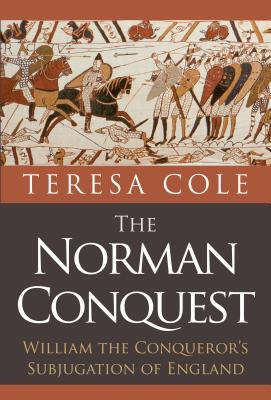
Just Finished Reading: The Norman Conquest – William the Conqueror’s Subjugation of England by Teresa Cole (FP: 2016) [260pp] 

Most books on this pivotal moment in English and European history start a few years before the main event in 1066. They point out that Edward the Confessor had failed to produce an heir and that Harold Godwinson was elected to follow in his footsteps. There is often much debate as to exactly how Harold managed to be in a position to gain the throne of England – especially as it was supposed to have been promised to William, Duke of Normandy – but that’s usually the background given followed by invasion (in both the North and South), battle, defeat (or victory depending on how you look at it) and take-over. 

Interestingly, and highly informatively, this author starts by looking MUCH further back starting with Edward gaining the English throne in 1003 giving us a 60+ year run up to the cataclysm that befell the Anglo-Saxons at Hastings. This allows for a much better, much deeper, understanding as to how England ended up in the position of facing two invasions only days apart and why exactly Harold’s position was challenged so early in his reign. To be quite honest, even with my belief that I’m reasonably familiar with the era and the events covered here, not only did I learn quite a bit, but my UNDERSTANDING of things is so much better now. What made things even better, if that’s possible, was that the authors writing style and her obvious grasp of the subject was outstanding. The six-decade run-up to Hastings and the requirement of the conquering army to constantly reassert its dominance over a fractious people seemed straight out of Game of Thrones (but very much in a good way) with political manoeuvring, rather useful ‘accidents’ (it's amazing how many important people died “falling from a horse” or soon after a hearty meal/drinking session much to the immediate advantage of one group or another) [Side note: is ‘falling from a horse’ the periods equivalent of ‘falling out of a window’ or ‘shot whilst trying to escape’ that we’re more familiar with these days?] 

But let me put any false impressions in their place – this is gripping without being sensationalist. The author examines what happened, what was said to have happened (and the reasons why it happened) with a sceptical eye – after all, as we know, history tends to be written by the victors (in this case the Normans) and any pronouncements by them need to be taken with that in mind. She looks at each story, legacy or legend in turn – from the ‘arrow in the eye’ to Harold’s pledge of fealty prior to Edwards death – and critically examines each in turn, looks at the evidence (if ANY) and either decides – all too often on the balance of probabilities – which is more likely to be true. With the passing of 960 years its understandably difficult to be almost any definitive statements about the events discussed between these pages but, I think, the author makes an excellent stab at it. She didn’t let any speculation go too far but she also didn’t leave too much hanging in the air as inexplicable either. Any speculations she did make she backed up with a knowledge of how things worked – differently in Norman and Anglo-Saxon societies – plus a heavy dose of rationally informed scepticism. 

1066 and the surrounding events constantly fascinate me for understandable reasons. The Battle of Hastings that year changed the direction and fate of a whole nation. Was it for the ‘better’? That’s arguable but it would be interesting to know, rather than idly speculate, how an Anglo-Saxon nation, rather than an Anglo-Norman one, would have made its way in the world and how the present might have been different because of that. As you might be able to tell, I really enjoyed this book and will be looking forward to reading more by its author. There’s more coming on 1066 too. Very much recommended and a highlight of the year so far.   

Thursday, May 29, 2025


Just Finished Reading: A Brief History of The Tudor Age by Jasper Ridley (FP: 1998) [303pp] 

The Tudor dynasty is an endlessly fascinating period in our country's history. Not only was it a period of significant change but it was also the start of what would (briefly) become the British domination of the globe and we can still see echoes of this age almost everywhere we look – not just in castles (and ruins) but in beliefs and much else.  

Starting with a fast romp through the Tudor monarchy, the author covers a LOT of ground here. Looking at their impact on London, which wasn’t exactly a world class city when they began their reign, we move swiftly on to transport and the road system, the landed estates of the rich and shameless, house building in general, food, fashion and sport. The era was a turbulent one – to say the least! - so much attention is paid to changes in the political and religious landscape. To be honest I don’t know how people didn’t get philosophical whiplash over the changes in direction depending on who was in power – from Catholic, to Protestant, back to Catholic and then back to Protestant again. It does make the modern (or at least THIS modern) head swim. How did people keep up? Did people get confused about what they were supposed to believe on any particular day? I know that some people refused to change, or change back, which inevitably led to trials, sentences and deaths in various horrible ways. It was NOT a good time to hold firmly held and public views on almost anything without having a ‘flight bag’ pre-packed and a fast horse ready to take you to the nearest port. 

One of the things that did rather surprise me was the number and detail of the regulations of everyday life. Not only were people told who and how to worship but rules – enforced! - around where people could live, how and if they could travel, what they could wear and even how long they could have their hair where on the statute books for years or even generations. Apparently, people just accepted it and got on with their lives. Looking back 5-600 years this seems quite bizarre. But, of course, it was still in the age of the ‘Divine Right of Kings’ which was pretty hard to argue with. 

Although this book had some impressive breadth and that I learnt quite a lot of interesting details of life under various Tudors, I did find this book rather dry overall. It also irritated me at times when the author seemed to cover parts of the subject by essentially translating parts of the Tudor legal codes into modern English with little comment, expansion or explanation. I certainly intend reading (much) more about this period so I’m hoping/expecting that more modern historical works will be more readable and enjoyable. A generally good overview of the period and worth reading if you can source a copy. More to come..

Monday, May 12, 2025


Just Finished Reading: The Escape Artists – A Band of Daredevil Pilots and the Greatest Prison Breakout of WW1 by Neal Bascomb (FP: 2018) [267pp] 

Most of us will be familiar with the PoW camp breakouts of WW2 popularised by such films as ‘The Great Escape’ but what about the Great War? One thing that I hadn’t realised, until reading this interesting narrative, was the fact that prisoners at that time where not covered by what we now think of as the Geneva Convention. The Third Geneva Convention "relative to the Treatment of Prisoners of War" was only adopted in 1929, so any prisoners taken from 1914-1918 would have been covered under the earlier, and much less precise or robust, Hague Conventions of 1899 and 1907. This meant that at least some of the captured could be forced to work for the opposing side and could have their freedoms restricted on top of their actual captivity. Indeed, they could be denied all of the ‘rights’ including their right to life itself with only the possibility of retribution after the war or the fear of reprisals against their own soldiers in captivity to stop them. The running or various camps – in Germany in this case – was, by and large, up to the officer in charge under whatever direction he had been given from his superiors. 

What was also clear, as we were still in the era of Edwardian sensibilities and the (mostly) rigid class system, was that officers and ‘other ranks’ were treated VERY differently within the PoW system. Although not actually in the regulations of the British Army it was considered the duty of an officer to at least try to escape. If an enlisted man did likewise, and was caught, it was entirely possible that he would either be shot or, at the very least, sent somewhere to serve out the rest of his captivity doing hard labour for the enemy. If an officer successfully escaped and was later recaptured, they might very well be punished – usually be a period of solitary confinement and loss of any privileges – but they would, by and large, be physically safe. So, it’s no surprise that any escape, attempted or successful, was undertaken by officers only although assisted by their enlisted men who were essentially ‘escaping’ by proxy. 

The main thrust of the narrative was the escape of around 30 captives – Army and RFC in the main – from the Holzminden camp where the most persistent and hardened escapees from other camps were held. [Side note: Its always amused me the way that the authorities kept the most dangerous people in the same place so that they could plan things together and learn from each other's mistakes and who, eventually, expressed shock and surprised when the best of the best managed to break out of supposedly escape proof facilities]. The place did have a ‘Colditz’ feel to it which helped with visualisation and the author made a valid point when pointing out that the escape ‘philosophy’ often felt familiar (from the arguably much more famous WW2 escapes) because the escapes of WW1 actually informed the escape and evasion training given during WW2. 

I won’t give too much away about the escapes and how they were accomplished (from various camps before Holzminden as well as the place itself) but needless to say they were as various and as excentric as the officers devising them. This is/was one of the aspects of war that I haven’t really thought about or read about previously, but I think I’ll see if I can pick up a bit more on the subject. Although obviously written by a non-historian this was still an interesting and sometimes moving tale of fortitude, grit and determination under often extreme circumstances. Recommended if you’re interested in this aspect of warfare or just want some ideas of how to get out of a secure facility. 

Thursday, March 27, 2025


Just Finished Reading: To Win a War – 1918 The Year of Victory by John Terraine (FP: 1978) [259pp] 

1917 was a hard year for the Allied Powers. Not only had their offensives failed to achieve victory, but their attempts had almost destroyed their army's ability to fight. The French front-line commands had been wracked with mutiny and some of their politicians were calling for peace at *any* price. The British meanwhile where struggling to fill their basic manpower needs and where being forced to downsize the units in France. What made things worse was that Russia had dropped out of the war with the inevitable influx of German units moving west for a renewed offensive.  

Despite prior knowledge, and a limited amount of preparation, the Allies where still taken by surprise when the hammer fell in the spring of 1918. Despite warnings the Allies still packed their front trenches with men and whole units were destroyed by massive artillery bombardments. Once overrun and with the survivors in headlong retreat, the German infantry poured through the gaps and moved deep into France. But, despite their numbers, despite their planning and despite new tactics (including elite Stormtrooper units) the Allied Front was never breached. Broken sure, bent out of shape certainly, but after weeks of attacks and thousands of casualties the line held. Completely exhausted, low on supplies and distracted by the opportunity of looting Allied supplies abandoned in haste, the German assault ground to a halt. Hit first by outbreaks of Spanish Flu they were hit time and time again by the French, British and increasingly by American counter attacks. Slowly withdrawal became retreat and retreat become a general fallback from ground bloodily taken and retaken over the past four years. The 100 days of defeat had begun, and the end of the Great War was finally in sight. 

After reading about the German spring offensive (or rather offensives) of 1918 I was reasonably familiar with the events discussed in the first half of this book. What I was much less familiar with, and which I found very interesting, was the political manoeuvring behind the scenes to end the war and why, for instance, the Allies seemed to be satisfied by an Armistice rather than the full and unconditional surrender they demanded in 1945. Despite planning for campaign in 1919 (and indeed with some thinking that the war would still be raging in 1920!) both the British and most especially the French were spent, or close to being so, in the latter half of 1918. It was just conceivable that the final push could take place in 1919 but any continuation of the war beyond the spring of that year was unthinkable even with the growing manpower of the US Army. 

Despite having some notable axes to grind – the author *really* didn’t like the UK PM David Lloyd George! – this was an interesting and informative read. Getting some insights into the thinking of the Allied and German commanders certainly added to my understanding of why the war took so long to end even after it was obvious to just about everyone that Germany had lost the fight. Recommended if you can source a copy. More up to date works on this important period to come.