About Me

My photo
I have a burning need to know stuff and I love asking awkward questions.
Showing posts with label Tudors. Show all posts

Thursday, November 27, 2025


Just Finished Reading: The Spanish Armada by Robert Hutchinson (FP: 2013) [254pp] 

It was, without doubt, a turning point heralding both the rise of England to global power status and the long slow decline of the Spanish Empire into eventual obscurity. The Great Enterprise of the Spanish Armada was supposed to ring the death knell of Elizabeth’s Protestant England. Not only did it fail in rather spectacular fashion it set in motion a chain of events that would change Europe and the world forever. 

The launch of the Armada in 1588 came as no great surprise to anyone. Not only was Spain an avowed enemy of England after the accension of Elizabeth to the throne in late 1558 but Phillip II (ex-husband of Mary I of England) had publicly vowed to expunge the heretical monarch by fire and invasion if necessary. As the Anglo-Spanish War (1585-1604) dragged on plans were drawn and ships began to cluster in various ports ready to destroy the English navy [I had to constantly correct myself thinking of England’s forces as “British” or thinking of England as either Britain/Great Britain or the UK as such entities had yet to come into existence] and facilitate a full invasion from the Spanish held Netherlands. Such a fleet took an inordinate amount of time to bring together. So long indeed that the early stores brought aboard began in rot in their casks. The fleet itself was a motley collection of newly commissioned ships, barges, older warships and even oar powered/assisted galleons. In all the fleet consisted of 141 ships and took two days just to leave port. Moving at the speed of the slowest ship it progressed towards England at a pace of 4MPH.  

From the ‘off’ things did not go well. Bad weather forced several ships back into port almost immediately and later storms forced several ships to leave for repairs. Finally reaching the English Channel it began to face increasing attacks from English warships which although smaller than many of their Spanish counterparts where much nimbler, better crewed and better armed. The failings of the Armada began to become obvious to all concerned. Barely half of the actual Armada were warships whilst most of the English ships could be described as such. Although the English did have a number of armed merchantmen the majority were very much men-o-war manned by experienced and hardened combat veterans. Retiring to Calais to await the invasion force from the Netherlands, the Spanish fleet were set upon by 8 English fireships causing only slight damage overall but scattering the remainder and beaching several ships. Interestingly, these 8 ships were the only English losses attributed to the fighting.  

Scattered, harried and with contrary winds – to say nothing of the dead and dying from various encounters including the Battle of Gravelines – the Armada pushed into the North Sea with the idea of circumnavigating the British Isles and returning to Spain. This is where things got really bad for the fleet. A mixture of unseasonably stormy weather, lack of charts, death, disease and fast running out supplies meant that the remaining 110 ships suffered greatly on their journey home. Finally, months after they sailed certain of their victory, only 35 ships made it back many containing hundreds of dead and dying. It was a disaster of epic proportions. Spain would never fully recover. 

Naturally the tale of the Spanish Armada is taught with pride (or at least it was in my time) in British schools – despite the fact that most of the damage was done by our notoriously fickle weather. Although its arguable if the Armada could ever have been successful even without the storms it's equally arguable that a successful invasion (if possible) would have ended Elizabeth’s reign reasonably easily. But I think a LOT would have had to have been different for this counter-factual to have much credence. Evidence at the time as well as later evidence from the many wrecks around the coast shows just how unprepared the Spanish had been relying as they did on God and the justice of their cause rather than solid logistics, a well thought out plan and seaworthy ships.  

As an aside, after receiving the rather odd update on my ancestry – that my DNA is apparently 2% Spanish – I paid particular attention to the crews of Spanish ships that washed up on the Irish coast on their way home. It seems that the vast majority either drowned (the idea I understand that it was ‘bad luck’ for a sailor to know how to swim) or were killed on the shoreline (as either invaders or, rather strangely, because of an idea that if you saved someone from the sea then it would be ‘compensated’ by the drowning of a local). Some of the richer survivors did manage to pay their way home (as always) but there is some evidence that a handful of survivors did settle in Ireland in various capacities. It's possible (just) that one of these Spaniards was an ancestor of mine – although I doubt very much if I’m going to find any documentation of a Pedro Gonzales married to Bridget Doyle in 1589.  

Overall, this was a very good examination of why the Armada happened and why it ultimately failed. Even if you have a reasonable familiarity with the events this can still highlight much that you might have missed from your school, movies or casual reading. Definitely worth a read.

Saturday, May 31, 2025


Happy Birthday: Lady Margaret Beaufort (31 May 1443 – 29 June 1509) was a major figure in the Wars of the Roses of the late 15th century, and mother of King Henry VII of England, the first Tudor monarch. She was also a second cousin of Kings Henry VI, Edward IV and Richard III of England.

A descendant of King Edward III, Lady Margaret passed a disputed claim to the English throne to her son, Henry Tudor. Capitalising on the political upheaval of the period, she actively manoeuvered to secure the crown for her son. Margaret's efforts ultimately culminated in Henry's decisive victory over King Richard III at the Battle of Bosworth Field. She was thus instrumental in orchestrating the rise to power of the Tudor dynasty. With her son crowned Henry VII, Margaret wielded a considerable degree of political influence and personal autonomy. She was also a major patron and cultural benefactor during her son's reign, initiating an era of extensive Tudor patronage.

Margaret is credited with the establishment of two prominent Cambridge colleges, founding Christ's College in 1505 and beginning the development of St John's College, which was completed posthumously by her executors in 1511. Lady Margaret Hall, Oxford, a 19th-century foundation named after her, was the first Oxford college to admit women.

[She was an amazing woman that I really need to read more about... So watch this space!]

Thursday, May 29, 2025


Just Finished Reading: A Brief History of The Tudor Age by Jasper Ridley (FP: 1998) [303pp] 

The Tudor dynasty is an endlessly fascinating period in our country's history. Not only was it a period of significant change but it was also the start of what would (briefly) become the British domination of the globe and we can still see echoes of this age almost everywhere we look – not just in castles (and ruins) but in beliefs and much else.  

Starting with a fast romp through the Tudor monarchy, the author covers a LOT of ground here. Looking at their impact on London, which wasn’t exactly a world class city when they began their reign, we move swiftly on to transport and the road system, the landed estates of the rich and shameless, house building in general, food, fashion and sport. The era was a turbulent one – to say the least! - so much attention is paid to changes in the political and religious landscape. To be honest I don’t know how people didn’t get philosophical whiplash over the changes in direction depending on who was in power – from Catholic, to Protestant, back to Catholic and then back to Protestant again. It does make the modern (or at least THIS modern) head swim. How did people keep up? Did people get confused about what they were supposed to believe on any particular day? I know that some people refused to change, or change back, which inevitably led to trials, sentences and deaths in various horrible ways. It was NOT a good time to hold firmly held and public views on almost anything without having a ‘flight bag’ pre-packed and a fast horse ready to take you to the nearest port. 

One of the things that did rather surprise me was the number and detail of the regulations of everyday life. Not only were people told who and how to worship but rules – enforced! - around where people could live, how and if they could travel, what they could wear and even how long they could have their hair where on the statute books for years or even generations. Apparently, people just accepted it and got on with their lives. Looking back 5-600 years this seems quite bizarre. But, of course, it was still in the age of the ‘Divine Right of Kings’ which was pretty hard to argue with. 

Although this book had some impressive breadth and that I learnt quite a lot of interesting details of life under various Tudors, I did find this book rather dry overall. It also irritated me at times when the author seemed to cover parts of the subject by essentially translating parts of the Tudor legal codes into modern English with little comment, expansion or explanation. I certainly intend reading (much) more about this period so I’m hoping/expecting that more modern historical works will be more readable and enjoyable. A generally good overview of the period and worth reading if you can source a copy. More to come..

Saturday, September 07, 2024


Happy Birthday: Elizabeth I (7 September 1533 – 24 March 1603) was Queen of England and Ireland from 17 November 1558 until her death in 1603. She was the last monarch of the House of Tudor.

Elizabeth was the only surviving child of Henry VIII and his second wife, Anne Boleyn. When Elizabeth was two years old, her parents' marriage was annulled, her mother was executed, and Elizabeth was declared illegitimate. Henry restored her to the line of succession when she was 10, via the Third Succession Act 1543. After Henry's death in 1547, Elizabeth's younger half-brother Edward VI ruled until his own death in 1553, bequeathing the crown to a Protestant cousin, Lady Jane Grey, and ignoring the claims of his two half-sisters, the Catholic Mary and the younger Elizabeth, in spite of statutes to the contrary. Edward's will was set aside within weeks of his death and Mary became queen, deposing and executing Jane. During Mary's reign, Elizabeth was imprisoned for nearly a year on suspicion of supporting Protestant rebels.

Upon her half-sister's death in 1558, Elizabeth succeeded to the throne and set out to rule by good counsel. She depended heavily on a group of trusted advisers led by William Cecil, whom she created Baron Burghley. One of her first actions as queen was the establishment of an English Protestant church, of which she became the supreme governor. This era, later named the Elizabethan Religious Settlement, would evolve into the Church of England. It was expected that Elizabeth would marry and produce an heir; however, despite numerous courtships, she never did. Because of this she is sometimes referred to as the "Virgin Queen". She was eventually succeeded by her first cousin twice removed, James VI of Scotland, the son of Mary, Queen of Scots.

In government, Elizabeth was more moderate than her father and siblings had been. One of her mottoes was video et taceo ("I see and keep silent"). In religion, she was relatively tolerant and avoided systematic persecution. After the pope declared her illegitimate in 1570, which in theory released English Catholics from allegiance to her, several conspiracies threatened her life, all of which were defeated with the help of her ministers' secret service, run by Sir Francis Walsingham. Elizabeth was cautious in foreign affairs, manoeuvring between the major powers of France and Spain. She half-heartedly supported a number of ineffective, poorly resourced military campaigns in the Netherlands, France, and Ireland. By the mid-1580s, England could no longer avoid war with Spain.

Monday, July 15, 2024


Just Finished Reading: The Testimony of Alys Twist by Suzannah Dunn (FP: 2020) [273pp] 

England, circa 1554. It was the very pinnacle of achievement; she was a laundress to royalty itself. It was, even if she said so herself, a strange kind of royalty – a Queen, ruling alone, without a man, a King, to guide her. Alys thought it both disturbing and oddly exhilarating. Even so, a Queen needed a King to produce heirs and Queen Mary wasn’t getting any younger. More worryingly though was the fact that the new monarch still clung to the old religion and was, it seemed, dedicated to bringing it back to prominence with all the dangers that such an idea entailed. One of those dangers was the Queen’s younger half-sister the Lady Elizabeth. As an adherent to the new religion of Protestantism she was likely to be a lightning rod for any conspiracy against the rightful crown. But Miss Twist thankfully realised, this was none of her concern – until it was. The Lady Elizabeth needed staff and elements within the Queens orbit needed information. As Alys had only just arrived at court, she was the ideal subject to be transferred to look after Elizabeth’s laundry. Now at the very heart of things, Alys begins to wonder which side she was on and whether being on any side in such an endeavour wasn’t just a quick road to an execution. 

As usual I picked this up years ago because it looked interesting and different. It also focused on a particularly interesting period of English/Tudor history – the countries (brief) return to Catholicism following Henry’s establishment of the Church of England and the reign of ‘Bloody Mary’ so revealed in later centuries. Although both monarchs are only very briefly ‘on the page’ they have very distinct and well-known characters – Elizabeth is young, intelligent, crafty and lucky whilst Mary is wracked with doubt, pious to a fault, paranoid (especially about Elizabeth) and delusional if not actually mad. The main thrust of this often-excellent novel is, as the title suggests, the life of Alys Twist herself. Alys is a great character, maybe a little too modern for the period but I can understand why this is the case. Like updating the language to a more modern parlance – I'm not sure if more authentic ‘Shakespearian English’ would work with most readers! - a more modern mindset/personality is more palatable to a modern reader as long as things aren’t TOO modern that is. This is where the author come in for my only criticism, if I can use that word. The world the author creates and the characters she populates it with are very good indeed. The author's style is, likewise, very good indeed and I thoroughly enjoyed my reading experience. But, sometimes, I paused and thought to myself – did people REALLY say such things in the mid 16th century? Would someone in 1544 even find that particular thought even possible? I’ll explain... 

Metaphors or styles of speech have their time and place. Words, meanings and common usage are born, live and, sometimes, die. Phrases have historical roots. For example, a Roman would never have said that something was ‘a flash in the pan’ or that everything had been taken ‘lock, stock, and barrel’ - because both phrases date from the age of gunpowder flintlocks. In this novel nothing ‘quite’ like that happened, but on more than one occasion the author used a phrase that knocked me out of the narrative because it made me wonder – without any actual knowledge to back it up – if such a phrase COULD be used at the time. It certainly didn’t ruin things for me – nowhere near – but it was more than a little irritating at times. This was, however, my only quibble with the book which, apart from that, I thought very good and edging towards excellent. It’s from a very interesting period of British history, its chocked full of interesting characters and has a real sense of place which I enjoyed. There are some minor (non-conventional) non-explicit romantic elements which shouldn’t bother anyone but is worth a mention. Overall, a fun intriguing read. Definitely recommended to all history, and especially Tudor history, buffs.                

Thursday, December 30, 2021


Just Finished Reading: Royal Witches – Witchcraft and the Nobility in Fifteenth-Century England by Gemma Hollman (FP: 2020) [275pp]


The accusation of witchcraft has often been used as a weapon directed (for the most part at least) at women. Those accused of such crimes could lose all of their belongings to be distributed by the accuser. It was for some a highly profitable way of removing elderly relatives sitting on valuable land or simply discrediting their perceived enemies. But such accusations were not completely risk free. In England, for most of its history, judges and magistrates were almost universally sceptical about people pointing to witches in their midst. Indeed, even in the midst of the great European witch craze it was in England that accused witches had the greatest chance of surviving the experience. Not surprisingly most witches, the so-called ‘wise women’ and ‘wise men’ within most communities were poor, often living on the margins. But some high-born (or at least high-status) women were also accused of practicing the Black Arts. Here the author tells the tale of four of them and what befell them.

Of the four mentioned women – Joan of Navarre, Eleanor Cobham, Jacquetta of Luxembourg and Elizabeth Woodville – I was only previously aware of the last two by previously reading novels by Philippa Gregory. In each case the accusation was for largely political reasons – to discredit or disinherit the woman herself or to attack another member of her family (usually her husband) by being associated with a witch. Each accusation outlined here resulted in varying consequences. One lost her property and land – essentially a ‘shakedown’ to pay for a war – but a significant part was eventually returned to her, another lost just about everything but kept her life and another merely had people whispering behind her back for the rest of her life. Despite a spell of incarceration – if you can call months spent in rather palatial castles being waited on by servants' ‘incarceration’ - few of these women could be said to have suffered overly much because of their status as ‘maybe witch’. 

Overall, I must admit that I was somewhat less than impressed by this book. Although accusations of witchcraft figured somewhat in the lives of all four women – who were connected by marriage, birth or association – such things were generally peripheral and felt like a rather contrived link to create the book. I wouldn’t say that the title/sub-title was misleading but I think it sometimes flirted with the idea. Whilst generally a reasonable history of the period I often found the focus elsewhere from the women it was supposedly about. The author herself, on multiple occasions, stated that little was known of this period in her life or that incident (a dead giveaway to me is the referencing of bills of payment in lieu of anything else on record) but speculated anyway. But from my perspective the worse ‘sin’ was that I felt that the author spent far too much time speculating on the emotional states of the women filtered through her own feelings of the incidents described – separation from husband/children, loss of property/status, the great unknown of what was going to happen next. Although people living 500 years ago were essentially the same as those living today their culture and upbringing (at any social level) was vastly different. For example, with high infant mortality it was not uncommon for children of poor families not to be named until weeks or months after their birth because there was a greater emotional cost to burying a named child rather than an unnamed one. Such things are practically unthinkable today and such parents would be called ‘unfeeling’ or even ‘monsters’ but 500 years ago it was simply pragmatic. So, assigning unknowable emotional responses based on our present cultures beliefs is questionable at least. Reasonable with caveats.         

Monday, July 19, 2021


Just Finished Reading: The Last White Rose – The Secret Wars of the Tudors by Desmond Seward (FP: 2010) [349pp]

‘Uneasy rests the Crown’…. No more uneasy, it seemed, than that of Henry VII. After snatching victory from the very jaws of defeat on Bosworth Field in 1485, and that very victory ensured by an act of betrayal, it came as no surprise that the King saw enemies everywhere – because he did indeed have enemies everywhere. The Tudor faction may have prevailed on the battlefield but Henry soon realised that gaining power and holding power are two very different things. The key element that defined Henry’s rule was fear of a conspiracy to unseat him. There was certainly enough cause to fear. Scattered throughout England and in exile on the near continent and in Ireland were members of Richard’s family and of his affinity who actively plotted with other European powers to return the Plantagenet’s to their rightful place. All of this took a toll on Henry himself and the country as uprising after plot after rebellion rose up and had to be put down – sometimes with a great deal of blood. The longed for peace after the Wars of the Roses did not materialise. Growing up in this environment the young future Henry VIII could hardly have been unaffected by the paranoia that plagued his father’s very existence. Knowing that enemies, both foreign and domestic, both real and purely imaginary, had dedicated their very lives to end the Tudor dynasty must have both warped Henry’s responses to threats and informed him as to where those threats existed. Woe to those families with too strong a link to the Plantagenet line of succession. Even the very existence of a potential heir of that line could be enough to condemn otherwise largely innocent men and women to be imprisoned or executed. Professions of loyalty, bribes, hostages or simple innocence cut little ice with Henry VIII in his quest for safety.

Most histories of the Wars of the Roses end with Bosworth in 1485 when the contest between the Houses of Lancaster and York had been apparently settled in suitably brutal fashion. Here we see the aftermath of the war for the victor on that day and the following generation, both who had to deal with or at least felt that they had to deal with rivals for their legitimate position as English monarch. The ‘peace’ following Bosworth was nothing of the sort and was instead an age of smouldering enmity and resentment on the Yorkist side and fear and paranoia on the Tudor side. Thinking about how Henry VIII was exposed to this atmosphere from birth goes some way to explain his actions (or over reactions!) as monarch as he sought out and destroyed ‘enemies’ wherever he found them. One thing that also struck me – although not explicitly covered in this excellent volume – was the effectiveness of Elizabeth I’s intelligence network both domestically and within Europe. Such an organisation, even managed by someone as talented as Sir Francis Walsingham, could not have been created overnight. It would seem that such a network of spies and informants had been in the process of being built long before Elizabeth came to power during her father’s and indeed her grandfather’s reign.

This is an excellent insight into aspects of the Tudor dynasty that are far too often overlooked. Plantagenet pretenders (and actual legitimate heirs) offered a real and present threat to Tudor rule and had a significant impact on English history. Definitely a must read for anyone interested in the era.  

Thursday, August 31, 2017


Just Finished Reading: The Kingmaker’s Daughter by Philippa Gregory (FP: 2012)

England: 1465. Eight year old Anne Neville is concentrating very hard indeed. Her task is not to tread on her mothers or her older sisters dress as they approach the new Queen. It is very important that they don’t embarrass their mother and especially their father, the Earl of Warwick who has been instrumental in placing the King on the throne. Of course Warwick is far less pleased that the King has chosen his wife without his advice and destroyed years of hard negotiating with France and the possibility of marriage between the two historic enemies possibly healing a rift for all time and finally uniting the two kingdoms. But, it was not to be, love (or more likely lust) has reduced that plan to dust. But Warwick still has two daughters he can move into positions of power and position for despite the recent setback there is still much to play for. But Warwick, the Kingmaker, has not bargained on the talents and ambitions of the upstate Queen Elizabeth Woodville. Without reference to protocol or rank she, through her husband start placing members of her enormous family in important positions gaining increasing power and wealth for the Woodville clan – the Rivers. Clearly no longer under Warwick’s influence he begins to move in the background to have someone more amenable on the throne and he knows exactly who should be the new Kings wife – one of his daughters who will in turn produce the next King of England putting the Neville family is an unassailable position for generations to come.

This is the 4th book in the Cousin’s War series and is as gripping as ever. I think the most surprising aspect of the whole thing is that, essentially the same ground is covered (or at least they seriously overlap) but each looks at the Wars of the Roses from different perspectives – York and Lancaster as well as each major family involved – to give a much more rounded view of what actually happened. Of course different players give events a different emphasis and a different spin. Here the supposedly evil Richard III gets a much better press and (despite still being unable to explain what happened to the Princes in the Tower) comes out of things in much better shape if not exactly smelling of Plantagenet white roses. So much so, indeed, that I’m no longer so sure that Richard was indeed a bad guy! Oh, the power of literature. I’m going to have to research this further. Of course Richard lost at Bosworth and, as we all know the victors write the histories so maybe, just maybe, he wasn’t the complete power grabbing bastard I’ve been told since early in my school career… The author makes no bones about her overall ‘mission’ in her novels – to bring the long neglected women of that period back into the foreground of public consciousness. The problem, as she rightly states, is that even for high ranking women such as Anne and her sister Isobel there is actually little to go on in the historical record. Of necessity much in the novel has to be speculation and the serious filling in of gaps in the historical record. But, and this is an important point, the author clearly knows just how far she can go in her speculative musings. She knows the period and knows her stuff. This is historical fiction – and clearly portrayed as such - with the aim of getting people to read the history of the era and not simply leave things in the fictional realm. So much so that this, and other books in the series, come complete with a bibliography which, to be honest, you will find in very few modern novels! Needless to say that I was, yet again, deeply impressed with this slice of the continuing sage of the war between York and Lancaster. Much more to come both in fiction and non-fiction of one of my favourite periods of English history.

Thursday, July 27, 2017


Just Finished Reading: Her Majesty’s Spymaster – Elizabeth I, Sir Francis Walsingham, and the Birth of Modern Espionage by Stephen Budiansky (FP: 2005)

It was a dangerous age. With the Catholic ‘Bloody’ Mary dead and her Protestant sister Elizabeth now on the throne the realms enemies, both foreign and domestic, only seemed to be growing. Catholic Spain’s enmity was implacable and very public. Everyone knew that England had an enemy here like no other. A regional super-power with a global reach, immense wealth and, inevitably, the ear of the Pope. The relationship with France was more nuanced and more open to politics and negotiation. Or it was until, one fateful morning on St Bartholomew’s Day the Catholics in Paris and, later across France, struck out at the Huguenots and killed them in their hundreds. In the middle of the carnage was the British ambassador – Francis Walsingham – and here he learnt lessons that he would never forget: the dangers of fanatical religion, the duplicity of princes and what was truly at stake with England’s political and religious survival. It was nothing less than a life or death matter for an entire nation. On his long awaited return home to serve his Queen more closely that he became entrusted with more and more aspects of the nation’s security – against assassination attempts, plots, state sponsor terrorism, threats of invasion and war and, most disturbing (and dangerous) of all the unresolved situation with Mary, Queen of Scots. To counter so many enemies across countries and continents Walsingham needed to create something that had never existed before. A secret intelligence organisation comprising of professional spies, paid informants, skilled interrogators, codes and cyphers (and their breakers) and minds that could plan moves to counter moves behind moves shrouded in the fog of clandestine conflict. This was, at least to begin with, a Cold War wrapped in a Religious War wrapped in a War for Survival itself. At the centre of it all, pulling strings, was Walsingham, a man who, on his death, Catholic hierarchies throughout Europe would celebrate.

Of all of the Tudors Elizabeth is definitely my favourite. The Elizabethan Age is so full of intrigue it makes Game of Thrones look positively mild by comparison. There are also a surprising number of parallels with the world we find ourselves in today. There is political unrest based on religion. There are assassinations and attempted plots. There are bombs going off, secret communications, radical propaganda, state sponsored terrorism, arming and financing of insurgents in enemy homelands, the turning of blind eyes to suspiciously well-armed and well financed ‘private citizens’ joining rebel groups, acts of rendition (extraordinary or otherwise) and much else besides. If we read an equivalent Elizabethan newspaper today a great deal would be recognisable to us. The author brilliantly brings this alive with an impressive understanding of the period and the politics and religious tensions that drove it. He handles the double (and sometimes triple) dealing with seeming ease and not only keeps multiple ‘balls in the air’ but explains both where and why each fell. At a mere 215 pages this is a great way to become familiar (or more familiar) with a highly dangerous and equally fascinating period in English history. I shall be turning my attention to Elizabeth and her fellow Tudors again and soon not least because of this gem of a book. Highly recommended for anyone interested in the reality of political intrigue played for very high stakes indeed.    

Thursday, April 27, 2017


Just Finished Reading: Bosworth – The Birth of the Tudors by Chris Skidmore (FP: 2013)

I’m not sure what it’s like now (though I can guess) but back in my school days in the 70’s every school aged child in England knew the date August 1485. It was the day that England changed direction and, arguably, our greatest age began. On August 22nd of that year a battle took place forever known as Bosworth Field where the young and untried Henry Tudor unexpectedly defeated the battle hardened King Richard III and started the Tudor dynasty. Ever since historians, and quite a few contemporary observers, wondered how exactly Henry managed to pull off this amazing feat of arms. He was young, largely untried in battle, had a much smaller and more poorly armed force and he was facing one of the most successful English generals of the age who had everything to lose so had an overwhelming force to back him up. Yet, in a matter of hours Richard was dead and Henry triumphant. The story of exactly how that came to pass is the meat of this detailed and intriguing book.

It is no real surprise that the creator of Game of Thrones, George R R Martin, based the political background to his series on the Wars of the Roses. If you’ve watched the HBO series or read the books you’ll already have an appreciation of aspects of the deadly decade’s long conflict between the Houses of Lancaster and York. Full of intrigue, double (and triple) dealing, betrayal, sudden change of allegiance, unexplained death and downright evil the later named Wars of the Roses had it all – in spades! Both sides of the conflict, which often split families pitting father against son and brother against brother, gave nor received quarter and often took delight in slaughtering their opponents against every previous convention of war. Two particular incidents spring to mind. After one particularly brutal battle (Tewksbury, I think) the leaders of the losing side fell back to a local cathedral and claimed sanctuary in the expectation that they would, according to custom, eventually be taken prisoner and ransomed back to their families. Unfortunately for them the victors had no intention of facing them in battle again, ordered their troops inside the church and dragged them outside to be beheaded in the public square. So much blood had been spilt inside the church that it had to be re-consecrated. On another occasion a leader of one faction was caught fleeing England across the channel to France. Caught by the other faction’s ships he was brought on to the enemy’s flagship and, without much ceremony, executed with a deliberately rusty sword causing the attempt at beheading to take 5-6 swings in total. As I say, brutal and unforgiving.

Richard’s powerbase began crumbling from the day he, literally, took office as King over the much better claims of the two children of King Edward IV forever known as ‘the Princes in the Tower’. The author kind of glosses over this darkest of dark incidents but there is no getting away from the fact that Richard put them in the Tower and they clearly never came out again. Ruthless in his actions to consolidate and hold on to power he turned even his most loyal servants against him finally. So much so that, at Bosworth itself, when everything hinged on the actions of a few men, those men effectively sat on their hands and did nothing to protect their King.

Despite the fact that I am becoming increasingly familiar with the period I still managed to learn a great deal from this book, especially about Henry’s time in France (actually Brittany which was a separate state back then) and much more about the shifting powerbase on both sides of the conflict. Be warned though, there are a lot of people involved in this take and more than a fair number of them have both the same name and the same title. More than once I stopped myself and thought: hold on a second, I thought he was dead, only to realise that it was the *next* Duke of this or Earl of that who was *also* called Edward or Richard. You definitely have to keep your wits about you with this period of history. One final thing which my American readership should find interesting is that, despite the fact that Bosworth took place over 500 years ago passions around the York/Lancaster split still enrage passions today. When the body of Richard III was recently discovered in Leicester to resultant publicity and law cases over the disposition of his remains got very heated at times with both Yorkists and Lancastrians coming out of the woodwork to shout abuse at each other. Of course the Yorkists had it all wrong. The fact is that they lost and should just get over it – being a Lancastrian myself has, of course, nothing to do with it. An excellent romp through some of our bloodiest history and highly recommended.  

Thursday, January 28, 2016


Just Finished Reading: Armada by John Stack (FP: 2012)

England, 1587. Everyone knows that it’s coming. It’s just a matter of when and where. Braced for an invasion few reckon can be resisted for long the only hope is the growing power of the English navy made up of a mixture of ‘race built’ galleons are armed merchantmen. But the odds are heavily against them. The Spanish Armada is rumoured to be the greatest naval force ever built and is believed to be all but unstoppable. The plan at hand is to harry the enemy enough to prevent any landing or any meeting of the fleet sent from Spain and the massed forces waiting transport across the English Channel from Holland. In the middle of events is newly promoted Captain Robert Varian, highly regarded by his crew and the senior officers for his skill and aggressive fighting stance. But Robert holds a secret close to his chest that he can never reveal to those around him. In a Protestant country fighting fir its life against Catholic Spain and her allies he is himself a secret Catholic who professes loyalty both to his country and his faith – something many see as an impossibility. But Robert’s secret goes deeper than that. Varian is not his real name and his real father is a traitor to the crown working for the Spanish against England’s interests. With Father and Son on opposite sides as the hammer of Spain begins to fall on her hated heretical enemies in England can the tiny English fleet hope to hold the enemy at bay and where will Robert’s loyalty finally rest when galleons exchange fire at point blank range?

The story of the Spanish Armada is well known to anyone who went through the English education system in the 1960’s and 70’s (I have no idea if they still teach this in these more enlightened times). Standing alone against the major powers of the day – a theme that seems rather familiar – with our backs to the wall and depending for our very survival on a comparatively small number of charismatic and often dangerously brilliant mavericks – another familiar theme – the rest of Christendom fully expected us to fail. Needless to say we didn’t – though luck, good (that is bad) weather, modern tactics and technological superiority and the over confidence of our adversary – yet another common theme!

Though not quite as entertaining as the author’s Roman trilogy I enjoyed this book a great deal. The whole Catholic thing was, I thought, a little over done and heavy handed but everything else was excellent in description and execution. From simple hand-to-hand fighting, through small (or single) ship actions, to whole battles covering miles of the English Channel each differently scaled encounter was very well told and absolutely gripping. The fight on a burning fire ship (not giving a great deal away here) had my heart in my mouth and the very close quarter contests between English and Spanish warships had be gasping and exclaiming out loud. Thrilling just doesn’t cover it. The short historical note backed up my opinion that the author followed the real story very closely and most certainly hit all of the highlights. The reason we won the numerous encounters revolved around tactics – modern versus archaic, the number and quality of cannon on each ship and the oft mentioned impressive fire rate of up to 4 shots per hour from the English guns. Firing these at ranges as low as 50 YARDS from the enemy (I kid you not) you can imagine the devastation which a great storm (Kamikaze anyone?) made worse by driving the Spanish ships around the island of Britain and, eventually back to their Spanish home bases much battered and much reduced. The defeat of the Armada heralded in the decline of Spain as a world power and the seemingly inexorable rise of England on to the world stage. Could it have gone the other way? Possibly, but the Armada was fatally flawed from the offset and its victory would have been a great uphill struggle. If you’re interested in naval warfare or Elizabethan history then this is certainly a book for you. Recommended.

Thursday, April 09, 2015


Just Finished Reading: The Other Queen by Philippa Gregory (FP: 2011)

England, 1568. After a coup in the Scottish court Queen Mary Stewart escapes to England and throws herself at the mercy of her cousin Queen Elizabeth asking for sanctuary and an army to help her restore the Scottish throne to its rightful occupant. But Elizabeth has a problem. Mary is young, beautiful, fertile and a Catholic. She’s also uncontestably in line for the throne of England (and France) in Elizabeth dies or produces no male heirs. Elizabeth meanwhile is aging, approaching the end of her fertile years, unmarried and possibly unmarriageable. Protestant England could die with Elizabeth and Catholic England return forever under Mary and, no doubt, her predicted brood of Catholic children. There is only one clear way forward. Mary must be confined and prevented from gaining her rightful place on any throne. To do that she places this most dangerous woman in the safe keeping of her most trusted servant, George Talbot, Lord High Steward – reputed to be the most honourable man in England. But Elizabeth had not counted on Mary’s intelligence, her ability to scheme and scheme again and her well founded ability to make almost anyone fall in love with her and do her will – even Talbot begins to fall under her spell despite being newly married to his singular wife Elizabeth, known to history as Bess of Hardwick. As conspiracy, rebellion, uprising and possible invasion for the combined forces of France and Spain loom large Bess struggles to keep her finances afloat as she watches Mary weave her spell around her fool of a husband worried that he might take the ultimate gamble and aid her escape - thereby dooming them all.

This is another facet of British history that I knew the outline of but very little of the detail. I had heard or read about the main characters in books both fiction and non-fiction. Bess of Hardwick is a well-known character (yet again I knew of her but had little background detail) who, for me turned out to be the most fascinating character in the book – though I admit that I too felt the pull of Mary Stewart’s beauty – who came from almost nowhere to become one of the richest women in England through her own hard work and business acumen. Her life definitely needs a follow on from this book and one of her biographies is already on its way from Amazon. The overall story – the tragedy of Mary in particular – is fascinating and shows Queen Elizabeth at her controlling, paranoid and fearful worst. As a character on the periphery of this novel she does not come across as either a likable or particularly effective monarch. How true that is I don’t know but the Elizabethan period is definitely continuing to exert its pull on my time and interest. It would probably been a pretty awful time to live in – especially as a Catholic (as I technically am) – and novels such as this remind me that however we might romanticise much of history that they were not pleasant places to be.

Well written, honestly gripping, full of interesting detail, great characterisation and an eye-opening insight into events as they unfolded during one of the most turbulent periods in Elizabeth’s reign. Brilliant and highly recommended.      

[2015 Reading Challenge: A Book based on a true story – COMPLETE (11/50)]  

Thursday, February 26, 2015


Just Finished Reading: A Dangerous Inheritance by Alison Weir (FP: 2012)

Two young women connected by one of English history’s greatest mysteries – what really happened to the Princes in the Tower? Kate Plantagenet has the more personal reason for finding out. Her father, King Richard III, has been widely accused of having them killed in order to illegitimately take the throne of England otherwise why does he refuse to publically show them still alive? Years later Lady Katherine Grey, sister of the recently executed Lady Jane Grey, has a more tenuous reason for wanting to know the truth. Drawn to her namesakes painting and dreaming of her on a regular basis she is drawn to the mystery by the discovery of documents uncovered in the London residence of her future family. Both women find themselves caught up in the tumultuous events of their day – Kate with the bloody culmination of the Wars of the Roses and Katherine with the political and religious machinations of the Tudor court. Both women want to marry for love and both are prevented from following their heart because of reasons of State. Both are made aware that their bodies and their lives are not their own. Who they are is of little consequence. What they are – real or potential contenders for the throne or producers of future heads of State – matters a great deal. Their wishes or desires are irrelevant, their actions are all too significant and potentially deadly when love itself can be seen as an act of the greatest betrayal.

I remember the tale of the Prince’s from school where we had been told as a fact that Richard had them killed to clear his way to the throne. His subsequent defeat at Bosworth which led to the Tudor Age was seen as putting things back on the right track. But things are far from clear and there appears to be no direct evidence that Richard had them killed or even if they died in the Tower at all. Weir looks into these ideas through the eyes of both of her heroines – it did seem more than once actually that we, the readers, where being lectured directly by Weir which was a bit annoying – but the story itself is fascinating enough (and convoluted enough) to keep anyone digging and guessing with or without supporting facts. I did find it interesting that in the early years of the Tudor reign several ‘imposters’ rose up claiming that they were the long lost and presumably murdered princes which Henry VII took very seriously indeed. That’s something I’ll be investigating later.

One other thing I’ve taken from this and previous Weir books (and from those of Philippa Gregory) is that there are female heroines scattered throughout history (and not just English history) that appear to be largely forgotten and overlooked that could be held up as admirable in a world largely dominated by powerful men. Male heroes are easy to find, female heroes noticeably less so. But what I am discovering is that they are there, often side-lined, often obscured and in the shadows but they are there if time and effort is taken to seek them out. Authors such as Weir, Gregory and others seem to spend their time shining light into the corners where these women have long existed (at least according to largely male historians) and much kudos for doing so. I shall look forward to finding out more about these lost, and now rediscovered, heroes.        

Monday, February 03, 2014


Just Finished Reading: The Lady of the Rivers by Philippa Gregory (FP: 2011)

Rouen, France 1435. Recently widowed Jacquetta Luxembourg is fully expecting to be a trophy wife to a rich, powerful and old man of English nobility. But from an early age she has possessed a will and a way to make things happen as she wants them to, an ability inherited from her mother and known down the years to the female side of her family. From time to time they can see into the future, sometimes clearly and sometimes though a mist, sometimes to events just about to happen and sometimes to events still years or decades ahead. The gift, as her mother calls it, comes and goes as it wishes despite the prompting of husbands or heads of state. But one thing alone is certain, Jacquetta will always know when someone close to her dies no matter how far away.

Returning to England she is already in love with her husband’s squire Richard Woodville and marry in secret much to the annoyance of the King. Exiled to the country in disgrace she hopes that she came become a faithful farmer’s wife but fate, and the new Queen, have other ideas. Thrown into the centre of court intrigue fuelled by feuding families she needs to use all of her wits and all of her powers to keep on the right side as alliances shift and power moves first to Lancaster then to York and back again. Fiercely protective of her growing family she must place her children where they can be safe and where they can meet suitable matches. Her eldest daughter Elizabeth is a prize beauty who could have any man in England but Jacquetta feels that she is set for greatness and tragedy in equal measure.

After being somewhat disappointed with The Red Queen (through no great fault of the writing) I found myself falling in love with the Woodville’s again in this, the third book in the Cousin’s War series. At this rate the author might manage to steal me away from the Lancastrian cause and get me to pledge myself to the House of York! Full of fascinating characters, with the mesmerising Jacquetta in the centre of it all, this is a brilliant work of one woman’s attempts to make a life for herself and her family in an age where the hopes, dreams, wishes, needs or demands of women in general where largely of no great account. Jacquetta charts her course through fire, through victory and through defeat knowing that the wheel of fortune turns and that nothing can truly be depended upon except the love of a good man and the devotion of and to her children. This is a great story, all the more so because it is, by and large, a true one. If anyone is looking for a series of books dedicated to female role models this is definitely it. Highly recommended for anyone interested in this fascinating period of English history (The Wars of the Roses) or who just want a damned good read. Luckily there are several more in the series in print and, I understand, more on the way. I’m already looking forward to immersing myself in the troubled 15th century again. I can hardly wait!

Monday, January 06, 2014

Just Finished Reading: A Brief History of the English Reformation by Derek Wilson (FP: 2012)

Clearly my History teacher in school lied to me. We had been told that the reason England, an originally Catholic country (of course all countries where essentially Catholic back then, or as they liked to call them – Christian), became a Protestant one was because of Henry VIII who basically wanted a divorce from his first wife and the Pope refused him. Seeing no other way to get his own way he, in a fit of pique and with a sneer of cynicism, decided to create his own Church and install himself as the head of it thus giving himself the power and authority to divorce his wife.

From reading this detailed and fascinating book just about everything I thought I knew was wrong! Although Henry VIII did indeed end up running the CofE that wasn’t, apparently, his original intention. Apparently even the conclusion of being a Protestant country wasn’t something that anyone started out with actually aiming at – except maybe a few, a very few, hard-line fanatics that no one really trusted to run anything never mind a national church. Not surprisingly the move from Catholicism to Protestantism was chocked full of complexities, advances and reversals, confusion, cowardice, passion, blood and death. It did not progress smoothly – to say the least – and did not move at the same pace in all parts of the country. As always with cultural seismic shifts of this nature the main events took place in cities like London and most often at the heights of the social structure where it moved out into the provinces and trickled down to street level. The big driver was the arrival of print and, in the early decades of that revolution, the arrival of cheap pamphlets which could be distributed to the masses.

I did find it interesting that England had its own home-grown Protestant movement prior to the introduction of European and specially German Protestantism – the Lollards. I’d heard of them before (mostly in passing) but it would seem that they might have ignited the Protestant Revolution if Luther and others had failed to do so. Needless to say, when works in Latin, French and German begin being imported onto these shores as well as foreign printed Bibles it wasn’t long before all Hell broke loose. Without the requirement of the Bible in particular having to be interpreted by the Catholic clergy but available for people to read in the comfort of their own homes then questions where bound to be asked – and few clergy where educated enough to answer them. This was, as you might imagine, explosive stuff. Guess what…..? Explosions happened all over Europe and in England in particular helped along by a mix of radical enquiry, equally radical interpretation and both governmental and clerical mismanagement. Change was coming, that much was certain and expected by most of the people involved but no one quite expected things to move so fast or so far. Fatally, literally in some cases, there where occasional and brutal attempts to put the genie back in the bottle. When Henry VIII died and was succeeded by his daughter Mary (known to Protestant historians as ‘Bloody’ Mary) who was a confirmed Catholic a concerted effort to return the nation to the ‘true’ religion followed with predictable consequences. On her death she was succeeded by her sister Elizabeth who was a confirmed Protestant and everything changed back. I’m guessing that it was a time where smart people acted like chameleons just to stay alive. Not exactly a good time to be too fervent in your religious views in any event. After Elizabeth things calmed down and the Reformation bedded down to the extent that it could have never been uprooted without a massive, protracted and blood-soaked campaign. Thankfully that never happened and thankfully we never found out how far the Spanish would have gone to turn back the clock if their Armada had made it to our shores. As I said, complex, indeed very complex. Luckily for anyone interested in this honestly fascinating period of our history we have books and authors such as this. Far more than simply ecclesiastical history this is political and cultural history at its best. As gripping as a good novel and filled with fascinating characters made all the more so because they really existed this was a history book I found hard to put down. Highly recommended.

Thursday, July 18, 2013


Just Finished Reading: The Red Queen by Philippa Gregory (FP: 2010)

England, 1453. Margaret Beaufort believes herself to be special, special in the eyes of God and with a special destiny ahead of her. Already known for her piety at an early age she models herself on her hero Joan of Arc and expects either to lead a great crusade or possibly be a great Abbess. Her mother, however, has other ideas. Margaret is to do her duty to the family by producing an heir to the Beaufort fortune. To do so she is married to a wealthy and highly positioned Welsh landowner at the age of twelve. Quickly pregnant she goes through a dangerous birth to produce a boy which she names Henry in honour of the King and her cousin Henry VI. Convinced that she has given birth to a future king of England and head of the Lancaster family she is determined to bring up her son herself. The reigning House of York have no intention of allowing Henry to grow up as a threat to their rule and quickly pack him off to a foster family with a proven loyalty to the Yorkist regime. Not to be outdone Margaret begins a lifetime of plotting to put her beloved son on the throne no matter the opposition or the consequences.

You can certainly see why George Martin used the historical example of the Wars of the Roses as an example of the plots and counter plots so prevalent in his Game of Thrones series of books and TV series. The activities of the Houses of York and Lancaster in the mid-15th century are a master class in duplicity, double dealing, double crossing and the timely stab in the back (both metaphorical and literal). Margaret’s fortunes rise and fall like the tide and despite being on the defensive for most of the time she never totally gives up on her ambition. But unlike her enemy Elizabeth Woodville (portrayed in the authors previous book The White Queen) Margaret Beaufort comes across as anything but a likable character. Actually I actively disliked her despite starting the book expecting to find myself naturally on her side (being from Lancashire I naturally identified with the Lancastrian side of things – helped by the fact that ‘we’ won!). She was, by all accounts, not a very nice person. If there is much historical accuracy in this novel then I am not in the least bit surprised. But despite not liking the main character I did find the book a worthy successor to The White Queen. Running almost in parallel with the first book it looked at many of the same events but from the Lancastrian point of view. Cleverly it did not fall into the error of being simply a mirror image of the earlier book but managed to both open out and deepen the reader’s appreciation of those turbulent times. I shall look forward to reading the other books in this series. Recommended. 

Thursday, May 23, 2013


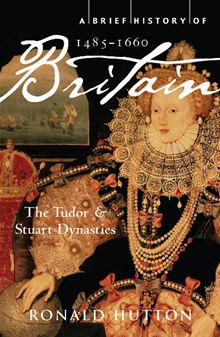
Just Finished Reading: A Brief History of Britain (1485 – 1660) - The Tudor and Stuart Dynasties by Ronald Hutton (FP: 2010)

The very first thing I thought when I picked up this book was that it looked a bit thin. How, I thought, can the author cover and do justice to 175 years of British (not just English!) history in 290 pages. It’s not exactly as if those years were times of quiet contemplation after all! Only the large scale we had the end of Plantagenet rule with the death of Richard III at Bosworth and the rise of the Tudors who are arguably the most famous and loved of our monarchs. Both Henry VIII and his daughter Elizabeth I tower above so many other people during the Early Modern period that it’s difficult to see anyone else – though some very impressive people are scattered through their time. Then there’s the English Reformation caused by Henry’s split with Rome and the inevitable conflict between Catholic and Protestant both at home and abroad including the threat from Catholic Spain which sent her famous Armada against us. Of course Elizabeth being the ‘Virgin Queen’ didn’t leave an heir and had to be followed by James Stuart in 1603 and Charles Stuart in 1625. In the following 17 years tensions between King and Parliament led, in 1642, to a long and bloody Civil War and finally to the declaration of a republic, known as the Commonwealth in 1649 led by Oliver Cromwell who has been a figure of hate and admiration ever since depending on the political stance (and nationality) of the people involved. With the collapse of the Commonwealth in 1660 Charles II was restored to the throne in a matter of weeks and the brief experimentation with republicanism passed into history.

This is only the very briefest of overviews. Mixed in there are plots, wars, revolutions, battles, deaths and much else besides. It was it seems a very dangerous time to be around be you monarch or commoner. So you can imagine that the author certainly had his work cut out for him. What is all the more surprising was that not only did he cover all the bases in sufficient detail that I had a real appreciation of what happened, why it happened and what the consequences where but I was also treated to the authors thoughts on the state of religious observance in Britain, the many effects of the Reformation on the nation and his musings on historical narrative itself. It was all pretty fascinating, if understandably brief, stuff. Hutton has a very good writing style which is at one and the same time chatty and authoritative. It’s almost a case of learning lessons without knowing you’re doing so. It is, in effect, edutainment – but in a good way! Like all good books this left me wanting more. Therefore, I’ll be filling in the gaps, or at least some of them, in the coming months with histories of the Tudors, the Reformation and the Civil Wars – yes Wars, not War. That’s one thing I learnt from this book. What I thought was a singular event (not counting the earlier Wars of the Roses as such) was anything but. But I can address that in more detail later. Needless to say my passion for my own countries history continues and continues to grow. Much more to come!  

Monday, April 15, 2013


Just Finished Reading: The White Queen by Philippa Gregory (FP: 2009)

England, Spring 1464. At the end of her tether Lancastrian supporter Elizabeth Woodville throws herself on the mercy on King Edward IV as her passes her father’s estate on the way to yet another battle to confirm his claim to the throne of England. Entranced by her beauty and her forthrightness he decides to give her back the lands taken from her husband after his execution for rebellion against his rightful lord. So begins a relationship that propels the Woodville family to the very centre of English politics during the turbulent years of what became known as The Wars of the Roses. With her two young sons she enters into royal life innocent of the powerful enemies she has created merely with her existence. Quick to make friends and place her family and loyal retainers in places of power she hopes that by doing so she can weather the inevitable backlash as her husband the King fights for his throne and the House of York he represents. But it is not only the Lancastrian pretenders that must be defended against. There are those in the House of York itself who think they would make a better King than the present incumbent and even the Kings brother is not above plotting against him. It is a dangerous time to rule and an even more dangerous time to be a woman with power.

I think this is only my second Philippa Gregory book. Many years ago – long before the Blogging habit – I read ‘A Respectable Trade’ about the slave trade in Bristol. I remember it being eminently readable but nothing more. This book however entranced me from the very first page (not surprisingly both Elizabeth Woodville and her Mother where both accused of being witches). Not only where the plethora of characters extremely well drawn but the feel of the period – especially now that I know more about it from other sources – comes across very well indeed. I did struggle more than once coming back to the early years of the 21st century after being totally absorbed in the goings on of the late 15th century. I literally lost myself in this book. Luckily for me – and you if you pick up this growing series – there are many more books to follow. Gregory excels at saving historic women from relative obscurity. Far too many of them have been overlooked by historians and by authors of historical fiction. Elizabeth Woodville is a fantastic character and I will look forward to reading more about the real Elizabeth after being so impressed by the fictionalised version. The Wars of the Roses brought several strong and decisive women centre stage and such women should not be forgotten. With authors as good as Philippa Gregory this will, thankfully, not come to pass. Highly recommended. 

Thursday, December 27, 2012


Just Finished Reading: A Brief History of the Wars of the Roses – The Bloody Rivalry for the Throne of England by Desmond Seward

For a period of 30 years in the second half of the 15th century England was at war with itself over who would rule the country. Two sides – grouped together under the banners of the House of York and the House of Lancaster – schemed and, from time to time, engaged in deadly conflict. Neither side had any intention of giving ground or quarter to enemies that they deeply despised. Both sides saw themselves to be in the right with both God and the country on their side. In such an atmosphere it is not difficult to understand that almost any action was justified and any treachery attempted to win the throne once and for all. It was a conflict that pitched father against son and friend against friend. So vicious was the feuding between enemies that even between battles, in times of comparative peace, forces would still ride out to attack their neighbours or waylay them on the open road. After the few pitched battles that did take place – apparently a total of 13 weeks over 30 years – the commanders of the losing side where, as often as not, executed on the spot and, as often as not, by their own relatives. Uncles executed nephews in reprisal for previous executions of sons by fathers. It was by all accounts very nasty indeed. Surprisingly (or at least it surprised me) the rank and file – those who survived the initial slaughter – where not treated in anything like the same way. Obligated to follow their lords into battle they were seen as not fully responsible for their actions. Their lands, now forfeited to the victors, meant that henceforth they would fight for their new masters and so they were sparred – until called upon months or years later to stand on another battlefield.

We covered at least part of this great conflict in my early school history lessons. Back in those days I wasn’t as passionate about history as I am now so I didn’t pay the subject as much attention as I should have. I knew (or had a pretty good idea) that Lancaster won – they did – and that the Wars of the Roses (not called that at the time) culminated in victory at the Battle of Bosworth in 1485 for Henry Tudor and effectively ended the Middle Ages (again not called that at the time). Indeed even before I knew anything about the battle itself I knew who lost because it had been taught to us as a childhood mnemonic to remember the colours of the rainbow – Richard Of York Gave Battle In Vain (Red, Orange, Yellow, Green, Blue, Indigo, Violet). That Richard being Richard III who died at Bosworth repeatedly shouting ‘Traitor’ at the top of his voice (rather than ‘A horse, a horse, my Kingdom for a horse’) as his enemies surrounded him and hacked him to death. The story of the Wars, told in truly excellent fashion by the author, overflowed with towering personalities, both good and bad (in my day for example King Richard III was still pretty much as bad as they get) most of whom I was at least aware of. Two ‘new’ characters did jump out at me in this narrative though – Margaret Beaufort the mother of the Tudor dynasty which culminated in Henry VIII and his daughter Elizabeth I and William Hastings (Lord Oxford) who was the York’s greatest champion.

Despite the fact that the Wars ended over 500 years ago the rivalry between Lancaster and York still exists today and not just in the generally good natured contests between the two Universities. Passions can still flare up around the activities (or accused activities) of both sides and there was certainly enough double dealing, double crossing and suspicious deaths to go around to keep feeding that passion. It is a fascinating story from a very turbulent time in our history and one that I will be revisiting in both non-fiction and fictional format.    

Thursday, August 16, 2012


Just Finished Reading: A Brief History of Britain 1066 – 1485 – The Birth of a Nation by Nicolas Vincent

I’m positive that my High School teachers would be proud of the interest (bordering on obsession) that I’ve managed to develop in history and in particular British history over the past 5 years or so. It seems like every other book I read has an historical bent to it – be they fiction or non-fiction. Books like this one are the reasons that my interest/obsession continues to grow. Like most inhabitants of this ‘sceptred isle’ I am generally familiar with the major facts, which King (or sometimes Queen) did what and when, battles being fought and history taking a new turn depending on the victory, and of course the dark side of our history, the murders, revolts, suspicious deaths and sometimes questionable lineage that makes up the story of our royal families. This book has it all – running the 400 or so years from the Battle of Hastings and the coming of the Normans in 1066 to Bosworth Field and the end of Plantagenet rule in 1485 in just under 500 pages it is, as you might imagine, quite a romp presenting those turbulent and often violent times with verve, an obvious love of the subject and a generous dose of (sometimes rather black) humour.

One of, the many, things I really liked about this book was the authors willingness to point to our basic lack of knowledge regarding the details about the earliest period being covered. Even the cataclysmic events of 1066 are shrouded in deep layers of mystery. Clearly we know who won the battle on Senlac Hill on that fateful day but we don’t know exactly how they won. As always the history of events are written and shaped by the victors who, as usual, portray the losers in a less than flattering light especially in a culture where victory in battle is seen as a ‘thumbs up’ from God. The lack of reliable sources is highlighted time and again which actually makes for a far more fascinating look at the period I’d assumed to be rather more known than it actually is.

The other thing I found particular fascinating was how (and how often) the English throne in particular changed hands. I had assumed, quite wrongly it seemed, that king followed king (and sometimes Queen) in a reasonably ordered fashion – apart from the occasional hic-up. Not so, it transpires. Although sometimes son followed father or agreed heir followed the death of kings more often than not the infighting which resulted from the death of a king was bloody, confused and decided by battle, treachery or poison than by bloodline or seniority. A disturbing number of royals died ‘falling from their horse’ or at the dinner table ‘suddenly’ and, as often as not, conveniently for one faction or another at court. Being in-line to the throne was a very dangerous place to be it would appear.

Lastly, although I was developing a fairly good idea of why Britain and France have had a very long, and again bloody, history together I now appreciate far more why exactly this is the case. Not only the Norman invasion but cross contacts both ways for hundreds of years afterwards left an indelible mark on both sides of the Channel that neither country could easily put to one side.

If you want to know about the early years of British history this is definitely the book for you. Very well written by someone who knows his ‘stuff’ and who is not afraid to point out the limitations of our knowledge and is likewise unafraid of pointing out the more questionable actions of some of our national icons, this is an eye opening, fascinating and sometimes laugh out loud funny introduction to the birth of a nation. Highly recommended to history fans and anglophiles.