 Cartoon Time.
About Me

- CyberKitten
- I have a burning need to know stuff and I love asking awkward questions.
Saturday, September 30, 2006

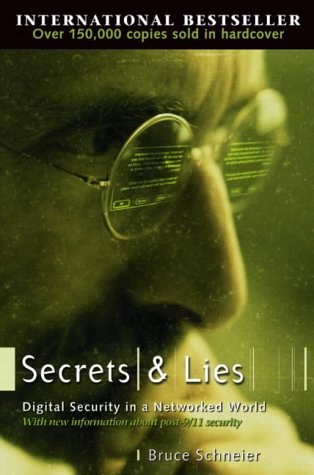 Just Finished Reading: Secrets and Lies – Digital Security in a Networked World by Bruce Schneier
Although fairly old in IT terms (having been written 6 years ago) Secrets and Lies is still a useful introduction into the world of computer security. It certainly covers all of the bases including Cryptography, Authentication, Secure hardware and software together with my particular favourite – Attack Trees which do indeed sound like something from the movie Minority Report.
Anyway, [grin] this has been my bedtime reading for a while now – and not because it helped me sleep. Schneier actually has a very accomplished technique of getting complicated and, to be honest, sometimes tedious information across in a way that even I could understand. Certainly if you have any interest in computer security this is worth a read. It will definitely make you a little more paranoid about connecting your PC to the Internet, but that’s not necessarily a bad thing is it?
Friday, September 29, 2006
Nation of Suspects in Land of the Free
by Steve Chapman for the Baltimore Sun
May 17, 2006
The Bush administration has managed to cross George Orwell with Sting. Every step you take, every move you make, Big Brother will be watching you. No one is exempt from the National Security Agency's program to amass a record of every phone call, with the help of major telecommunications providers. As one insider told USA Today, "It's the largest database ever assembled in the world." And have no doubt: You're in it.
President Bush insisted, "We're not mining or trolling through the personal lives of millions of innocent Americans." In fact, that's exactly what his administration is doing - 24 hours a day, 365 days a year. It is no longer possible (unless you're a customer of Qwest, which has refused to cooperate) to make a telephone call without the government knowing about it and keeping a record of it. We are all suspects now. Why should law-abiding citizens care about this surveillance? To begin with, even the best of us sometimes make calls we wouldn't want everyone to know about. Another reason is that we could be implicated in terrorism through no fault of our own. Suppose you call your friend Bob, who later calls his friend Rashid, who later calls his cousin in Kabul. The government may conclude you're consorting with associates of al-Qaida.
It's not just the NSA that will know whom you call. According to USA Today, the NSA told Qwest that "other government agencies, including the FBI, CIA and DEA, also might have access to the database." What's next? The IRS? The Office of Child Support Enforcement? Your local police? But privacy is valuable even if you have nothing to hide. Each of us benefits from having a zone in which we can do as we please without fear of exposure. Thanks to this program, there is no longer an impermeable barrier around your personal zone. It's more like a screen door on a submarine.
Investigative powers often have been used by unscrupulous people in government to intimidate, coerce or embarrass their enemies. Even if the administration has the noblest intentions, this database is vulnerable to abuse. Law enforcement officers have ample experience with gadgets that monitor who's calling whom. But those require police to convince a judge they will yield information relevant to an investigation. In this program, here's what the government has to show: nothing. His latest extralegal initiative furnishes more evidence that George W. Bush regards himself as an elected dictator, free to do anything he wants in the name of national security.
In December, it emerged that the NSA was eavesdropping on the contents of phone calls and e-mail messages between Americans on U.S. soil and people abroad. That program was of doubtful legality, and so is this one. As a rule, federal law forbids phone companies from turning over calling records to anyone, and it forbids the government from getting call records without a court order or a national security letter. So it's cold comfort to hear Mr. Bush say that "the intelligence activities I authorized are lawful." He said the same thing about the other NSA program. But when the Justice Department undertook an investigation, the White House refused to grant its attorneys the security clearances they needed to proceed. The Bush administration doesn't trust even Bush administration lawyers to agree the program is kosher.
Even if you don't care about the privacy of your phone records, you might care that we have a president who feels no obligation to obey the law. You might care that if the government was secretly doing this, it may be doing other things that are even more worrisome. And you might care that one day, we may find that the free society we claim to cherish has become a police state.
by Steve Chapman for the Baltimore Sun
May 17, 2006
The Bush administration has managed to cross George Orwell with Sting. Every step you take, every move you make, Big Brother will be watching you. No one is exempt from the National Security Agency's program to amass a record of every phone call, with the help of major telecommunications providers. As one insider told USA Today, "It's the largest database ever assembled in the world." And have no doubt: You're in it.
President Bush insisted, "We're not mining or trolling through the personal lives of millions of innocent Americans." In fact, that's exactly what his administration is doing - 24 hours a day, 365 days a year. It is no longer possible (unless you're a customer of Qwest, which has refused to cooperate) to make a telephone call without the government knowing about it and keeping a record of it. We are all suspects now. Why should law-abiding citizens care about this surveillance? To begin with, even the best of us sometimes make calls we wouldn't want everyone to know about. Another reason is that we could be implicated in terrorism through no fault of our own. Suppose you call your friend Bob, who later calls his friend Rashid, who later calls his cousin in Kabul. The government may conclude you're consorting with associates of al-Qaida.
It's not just the NSA that will know whom you call. According to USA Today, the NSA told Qwest that "other government agencies, including the FBI, CIA and DEA, also might have access to the database." What's next? The IRS? The Office of Child Support Enforcement? Your local police? But privacy is valuable even if you have nothing to hide. Each of us benefits from having a zone in which we can do as we please without fear of exposure. Thanks to this program, there is no longer an impermeable barrier around your personal zone. It's more like a screen door on a submarine.
Investigative powers often have been used by unscrupulous people in government to intimidate, coerce or embarrass their enemies. Even if the administration has the noblest intentions, this database is vulnerable to abuse. Law enforcement officers have ample experience with gadgets that monitor who's calling whom. But those require police to convince a judge they will yield information relevant to an investigation. In this program, here's what the government has to show: nothing. His latest extralegal initiative furnishes more evidence that George W. Bush regards himself as an elected dictator, free to do anything he wants in the name of national security.
In December, it emerged that the NSA was eavesdropping on the contents of phone calls and e-mail messages between Americans on U.S. soil and people abroad. That program was of doubtful legality, and so is this one. As a rule, federal law forbids phone companies from turning over calling records to anyone, and it forbids the government from getting call records without a court order or a national security letter. So it's cold comfort to hear Mr. Bush say that "the intelligence activities I authorized are lawful." He said the same thing about the other NSA program. But when the Justice Department undertook an investigation, the White House refused to grant its attorneys the security clearances they needed to proceed. The Bush administration doesn't trust even Bush administration lawyers to agree the program is kosher.
Even if you don't care about the privacy of your phone records, you might care that we have a president who feels no obligation to obey the law. You might care that if the government was secretly doing this, it may be doing other things that are even more worrisome. And you might care that one day, we may find that the free society we claim to cherish has become a police state.
Thursday, September 28, 2006
Girl banned from school bus because she is not baptised
From Ekklesia - 06/09/06
A girl has been barred from taking an official bus to her Church of England school because she has not been baptised. The move brings a new dimension to an ongoing controversial debate about transport to faith based schools, as well as access to them. Many church school already face the accusation that they discriminate unfairly in their admissions policies in favour of children of parents who attend the churches linked to them.
In the latest case Sydnie Jai from Hatfield, Hertfordshire, was hoping to attend Townsend School in St Albans, travelling by bus as her two brothers had done for some years. But Hertfordshire County Council said she must use public transport because she had not been baptised, reports the Evening Standard. A statement from the council said: "We provide free transport to all children attending their nearest maintained faith school if they have a place there in line with their parents' beliefs. This applies for children aged eight or over where the family lives more than three miles away. To qualify for free transport to a Church of England school the child must be baptised or have a parent on the parish electoral roll. We think it quite reasonable when offering transport to faith schools that parents show that the child is of that faith."
Sydnie's mother Frances Wood told London's Evening Standard newspaper she was furious at the council's inflexible attitude. "I can't believe they've stopped Sydnie going to school on the bus," she said. "It's totally outrageous." The council statement added: "If the family do not wish to travel on public transport, there would be the opportunity to attend a local school in Hatfield. Officers are in the process of contacting the family to discuss what support might be available to Sydnie."
In 2004 there was a similar case involving Laura Abbott, who was ineligible for free transport because she did not want to attend a faith-based school, opting instead for a secular school. The British Humanist Association considers that many current LEA school transport policies contravene the Human Rights Act.
In a 2003 survey of Local Education Authorities in England and Wales, they found that 33% of responding LEAs provided help for pupils going to a faith-based school chosen in preference to a nearer community school on grounds of religion – but not to pupils going to an equally distant community school in preference to a nearer faith-based one on grounds of belief. Another 1 in 3 LEAs acknowledged other forms of discrimination such as giving preferential treatment to religious believers or sometimes applying different rules to different belief groups. It has been their contention that school transport policies should treat religious and non-religious families even-handedly.
From Ekklesia - 06/09/06
A girl has been barred from taking an official bus to her Church of England school because she has not been baptised. The move brings a new dimension to an ongoing controversial debate about transport to faith based schools, as well as access to them. Many church school already face the accusation that they discriminate unfairly in their admissions policies in favour of children of parents who attend the churches linked to them.
In the latest case Sydnie Jai from Hatfield, Hertfordshire, was hoping to attend Townsend School in St Albans, travelling by bus as her two brothers had done for some years. But Hertfordshire County Council said she must use public transport because she had not been baptised, reports the Evening Standard. A statement from the council said: "We provide free transport to all children attending their nearest maintained faith school if they have a place there in line with their parents' beliefs. This applies for children aged eight or over where the family lives more than three miles away. To qualify for free transport to a Church of England school the child must be baptised or have a parent on the parish electoral roll. We think it quite reasonable when offering transport to faith schools that parents show that the child is of that faith."
Sydnie's mother Frances Wood told London's Evening Standard newspaper she was furious at the council's inflexible attitude. "I can't believe they've stopped Sydnie going to school on the bus," she said. "It's totally outrageous." The council statement added: "If the family do not wish to travel on public transport, there would be the opportunity to attend a local school in Hatfield. Officers are in the process of contacting the family to discuss what support might be available to Sydnie."
In 2004 there was a similar case involving Laura Abbott, who was ineligible for free transport because she did not want to attend a faith-based school, opting instead for a secular school. The British Humanist Association considers that many current LEA school transport policies contravene the Human Rights Act.
In a 2003 survey of Local Education Authorities in England and Wales, they found that 33% of responding LEAs provided help for pupils going to a faith-based school chosen in preference to a nearer community school on grounds of religion – but not to pupils going to an equally distant community school in preference to a nearer faith-based one on grounds of belief. Another 1 in 3 LEAs acknowledged other forms of discrimination such as giving preferential treatment to religious believers or sometimes applying different rules to different belief groups. It has been their contention that school transport policies should treat religious and non-religious families even-handedly.
Wednesday, September 27, 2006

Tuesday, September 26, 2006
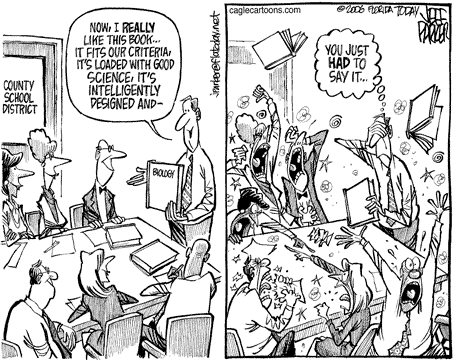
Papal summit to debate Darwinian evolution
Andy Coghlan for NewScientist
30 August 2006
Pope Benedict XVI will this week host a private seminar to firm-up the Catholic Church’s stance on Darwinian evolution. One of the key guests, Cardinal Christoph Schönborn from Vienna, Austria, is known to sympathise with Intelligent Design (ID), the idea that the development of life is masterminded by an unidentified designer, usually assumed to be God. In August, at a Catholic rally held in Rimini, Italy, Schönborn announced that the summit would take place from 1 September to 3 September at Castel Gandalfo, the Pope’s summer palace. It is rumoured that the seminar will be aimed at finding a way to stop the church giving out mixed messages, with some senior figures supporting Darwinism and others denouncing it.
Dominique Tassot, a Roman Catholic scientist and anti-evolutionist, told the US National Catholic Reporter that the aim of the meeting was to “give a broader extension to the debate”. Tassot said that “most catholic intellectuals today are convinced that evolution is obviously true because most scientists say so”. The previous pope, John Paul II, appeared to back Darwinian evolution when in 1996 he described evolution as “more than a hypothesis”. Likewise, Father George Coyne, until recently director of the Vatican Observatory, mocked the idea of Intelligent Design, accusing its backers of underestimating God’s willingness to give “freedom” to nature. Coyne is also on record as having described creationism as “a religious movement devoid of all scientific basis”. In the science monthly periodical Newton, Coyne said: “God isn’t a designer and life is the fruit of billions of attempts.”
This thinking puts Coyne at odds with other church academics such as Schönborn, who repeated in Rimini his belief that the universe cannot have formed in a random way, as proposed by Darwinian evolution. It is not known what stance the Pope himself will take, although in his inaugural sermon on becoming Pope, he said: “We are not the accidental product, without meaning, of evolution”. On 19 August, 73-year-old Coyne was replaced as director of the Vatican Observatory. Rumours abound he was removed because of his vocal views on evolution. Coyne himself is reported as saying that he wished to be replaced because he is being treated for cancer.
Andy Coghlan for NewScientist
30 August 2006
Pope Benedict XVI will this week host a private seminar to firm-up the Catholic Church’s stance on Darwinian evolution. One of the key guests, Cardinal Christoph Schönborn from Vienna, Austria, is known to sympathise with Intelligent Design (ID), the idea that the development of life is masterminded by an unidentified designer, usually assumed to be God. In August, at a Catholic rally held in Rimini, Italy, Schönborn announced that the summit would take place from 1 September to 3 September at Castel Gandalfo, the Pope’s summer palace. It is rumoured that the seminar will be aimed at finding a way to stop the church giving out mixed messages, with some senior figures supporting Darwinism and others denouncing it.
Dominique Tassot, a Roman Catholic scientist and anti-evolutionist, told the US National Catholic Reporter that the aim of the meeting was to “give a broader extension to the debate”. Tassot said that “most catholic intellectuals today are convinced that evolution is obviously true because most scientists say so”. The previous pope, John Paul II, appeared to back Darwinian evolution when in 1996 he described evolution as “more than a hypothesis”. Likewise, Father George Coyne, until recently director of the Vatican Observatory, mocked the idea of Intelligent Design, accusing its backers of underestimating God’s willingness to give “freedom” to nature. Coyne is also on record as having described creationism as “a religious movement devoid of all scientific basis”. In the science monthly periodical Newton, Coyne said: “God isn’t a designer and life is the fruit of billions of attempts.”
This thinking puts Coyne at odds with other church academics such as Schönborn, who repeated in Rimini his belief that the universe cannot have formed in a random way, as proposed by Darwinian evolution. It is not known what stance the Pope himself will take, although in his inaugural sermon on becoming Pope, he said: “We are not the accidental product, without meaning, of evolution”. On 19 August, 73-year-old Coyne was replaced as director of the Vatican Observatory. Rumours abound he was removed because of his vocal views on evolution. Coyne himself is reported as saying that he wished to be replaced because he is being treated for cancer.
Monday, September 25, 2006
Wars of Great Miscalculation
by HDS Greenway for the Boston Globe
August 22, 2006
THE YEAR 2006 will long be remembered for its summer of great miscalculation. Hamas began by thinking that taking an Israeli soldier hostage could lead to the release of Palestinian prisoners. Instead, it brought an Israeli invasion of Gaza. Hezbollah followed suit by capturing two Israeli soldiers, which brought down the wrath of Israel's armed might on Lebanon in a manner that Hezbollah could not have expected. As for Israel, having suffered the pin pricks of rocket attacks from Gaza and from Lebanon, the kidnappings presented an opportunity to rid itself of the Islamist, albeit democratically elected, government in Gaza; and then destroy Hezbollah in Lebanon. Israeli Prime Minister Ehud Olmert's Lebanon war enjoyed almost unprecedented popularity, but what might have been contained as border incidents were turned into major military campaigns.
Olmert, his military and his government, badly underestimated the strength of Hezbollah. Its rocket attacks on Israel became a meteor shower that reached farther south than ever. Israel also miscalculated the ability of airpower alone to defeat Hamas. By the time its ground war got underway, the destruction of civilian life and infrastructure from the air was so devastating that even the Bush administration had to blink. Another fateful Israeli decision was to take the war to Lebanon -- even attacking Lebanese military facilities - rather than restricting its efforts to degrading Hezbollah. Destroying the lighthouses of Beirut symbolized this campaign of counterproductive destruction to get the Lebanese to act against Hezbollah or suffer intolerable pain. Although there were many in Lebanon, and indeed the Arab world beyond, who blamed Hezbollah for all that it had unleashed, the inability of the Israelis to crush Hezbollah, plus the mounting death toll on hapless Lebanese civilians, drowned the anti-Hezbollah voices from Baghdad to Beirut, and created a legend of heroic Hezbollah resistance.
The Bush administration badly miscalculated by thinking that if it gave Israel a green light to continue the war, in the face of almost universal calls for an immediate cease-fire, Israel could get the job done and rid Lebanon of an armed state within a state. But Israel did not get the job done. President Bush tried to make it appear that Hezbollah ``suffered a defeat in this crisis," but Israelis and Lebanese know better. Now that the shooting has stopped, Olmert's government is having to answer for its miscalculations, and for now plans for future withdrawals from Palestinian lands are off.
The international force that will police southern Lebanon will not disarm Hezbollah, nor will Lebanese soldiers, whose enlisted ranks are mostly fellow Shiites. Hezbollah's claim to having won by not having been defeated is the more credible. And, given that Hezbollah has masses of Iranian money, Hezbollah will take the credit for Lebanon's reconstruction. The image of the United States using the full force of its diplomacy to prevent a cease-fire in the face of such destruction and loss of life, along with the supply of ever-more-powerful bombs to kill Arabs, has done incalculable damage. Former UN advisor Lakhdar Brahimi, who did so much to give Afghanistan, Iraq, and Lebanon, too, structures on which to build their shattered states, spoke for many when he wrote: ``It was argued that the war had to continue so that the root causes of the conflict could be addressed, but no one explained how destroying Lebanon could achieve that.
``Rather than helping the so-called global war on terror, recent events have benefited the enemies of peace, freedom, and democracy. The region is boiling with resentment, anger, and despair, feelings that are not leading young Arabs and Palestinians towards the so-called New Middle East," Brahimi wrote. After some initial trepidation about what their protégés had wrought, Iran has emerged more powerful than before. Syria's version of the New Middle East is now one of reduced American influence. Our friends in Saudi Arabia, Egypt, and Jordan are in retreat.
In Iraq -- the mother of all American miscalculations -- Shiites took to the streets by the thousands to support their Shiite brothers in Lebanon, and President Bush expressed bewilderment and wondered aloud why Iraqis aren't more grateful. As Fawaziah al-Bakr, a Saudi promoter of educational change and women's rights, said, ``There is no question that the US has lost morally because of the war. Even if you like the people and the culture of the United States, you can't defend it." This summer's wars of miscalculation will cast a long shadow down the decades to come to the detriment of this county's national interests.
by HDS Greenway for the Boston Globe
August 22, 2006
THE YEAR 2006 will long be remembered for its summer of great miscalculation. Hamas began by thinking that taking an Israeli soldier hostage could lead to the release of Palestinian prisoners. Instead, it brought an Israeli invasion of Gaza. Hezbollah followed suit by capturing two Israeli soldiers, which brought down the wrath of Israel's armed might on Lebanon in a manner that Hezbollah could not have expected. As for Israel, having suffered the pin pricks of rocket attacks from Gaza and from Lebanon, the kidnappings presented an opportunity to rid itself of the Islamist, albeit democratically elected, government in Gaza; and then destroy Hezbollah in Lebanon. Israeli Prime Minister Ehud Olmert's Lebanon war enjoyed almost unprecedented popularity, but what might have been contained as border incidents were turned into major military campaigns.
Olmert, his military and his government, badly underestimated the strength of Hezbollah. Its rocket attacks on Israel became a meteor shower that reached farther south than ever. Israel also miscalculated the ability of airpower alone to defeat Hamas. By the time its ground war got underway, the destruction of civilian life and infrastructure from the air was so devastating that even the Bush administration had to blink. Another fateful Israeli decision was to take the war to Lebanon -- even attacking Lebanese military facilities - rather than restricting its efforts to degrading Hezbollah. Destroying the lighthouses of Beirut symbolized this campaign of counterproductive destruction to get the Lebanese to act against Hezbollah or suffer intolerable pain. Although there were many in Lebanon, and indeed the Arab world beyond, who blamed Hezbollah for all that it had unleashed, the inability of the Israelis to crush Hezbollah, plus the mounting death toll on hapless Lebanese civilians, drowned the anti-Hezbollah voices from Baghdad to Beirut, and created a legend of heroic Hezbollah resistance.
The Bush administration badly miscalculated by thinking that if it gave Israel a green light to continue the war, in the face of almost universal calls for an immediate cease-fire, Israel could get the job done and rid Lebanon of an armed state within a state. But Israel did not get the job done. President Bush tried to make it appear that Hezbollah ``suffered a defeat in this crisis," but Israelis and Lebanese know better. Now that the shooting has stopped, Olmert's government is having to answer for its miscalculations, and for now plans for future withdrawals from Palestinian lands are off.
The international force that will police southern Lebanon will not disarm Hezbollah, nor will Lebanese soldiers, whose enlisted ranks are mostly fellow Shiites. Hezbollah's claim to having won by not having been defeated is the more credible. And, given that Hezbollah has masses of Iranian money, Hezbollah will take the credit for Lebanon's reconstruction. The image of the United States using the full force of its diplomacy to prevent a cease-fire in the face of such destruction and loss of life, along with the supply of ever-more-powerful bombs to kill Arabs, has done incalculable damage. Former UN advisor Lakhdar Brahimi, who did so much to give Afghanistan, Iraq, and Lebanon, too, structures on which to build their shattered states, spoke for many when he wrote: ``It was argued that the war had to continue so that the root causes of the conflict could be addressed, but no one explained how destroying Lebanon could achieve that.
``Rather than helping the so-called global war on terror, recent events have benefited the enemies of peace, freedom, and democracy. The region is boiling with resentment, anger, and despair, feelings that are not leading young Arabs and Palestinians towards the so-called New Middle East," Brahimi wrote. After some initial trepidation about what their protégés had wrought, Iran has emerged more powerful than before. Syria's version of the New Middle East is now one of reduced American influence. Our friends in Saudi Arabia, Egypt, and Jordan are in retreat.
In Iraq -- the mother of all American miscalculations -- Shiites took to the streets by the thousands to support their Shiite brothers in Lebanon, and President Bush expressed bewilderment and wondered aloud why Iraqis aren't more grateful. As Fawaziah al-Bakr, a Saudi promoter of educational change and women's rights, said, ``There is no question that the US has lost morally because of the war. Even if you like the people and the culture of the United States, you can't defend it." This summer's wars of miscalculation will cast a long shadow down the decades to come to the detriment of this county's national interests.
Sunday, September 24, 2006
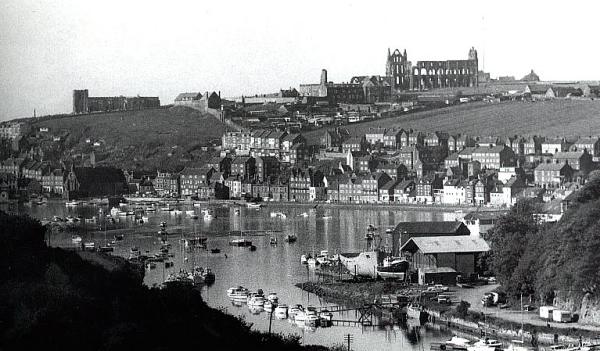 My favourite places: Whitby Abbey.
Whitby Abbey is a ruined Benedictine abbey sited on Whitby's East Cliff in North Yorkshire on the north-east coast of England.
It was founded in 657 AD by the Anglo-Saxon King of Northumbria, Oswy (Oswiu) as Streoneshalh (alternately known as Streoneschalh or Streanshalh or Streonæshalch and the historical name of the town Whitby where the abbey is located). He appointed Lady Hilda, niece of Edwin the first christian king of Northumbria, as Abbess. The name Streoneshalh is thought to signify Fort Bay or Tower Bay in reference to a supposed Roman settlement that previously existed on the site. This contention has never been proven though and alternate theories have been proposed, such as the name meaning Streona's settlement; a reference to Eadric Streona. This is highly unlikely though due to chronological considerations: Streona died in 1017 so the naming of Streoneshalh would have preceded his birth by several hundred years.
The double monastery of Benedictine monks and nuns was also home to the great Saxon poet Caedmon. In 664, the abbey was the site of the Synod of Whitby, at which the Northumbrian Celtic church was reconciled to Rome. In 867, the abbey fell to Viking attack, and was abandoned.
William de Percy ordered that the abbey be refounded (1078) by Regenfrith (Reinferd) a soldier monk, dedicating it to St. Peter and St. Hilda. Later it became Presteby (meaning the habitation of Priests in Old Norse) then Hwytby; next Whiteby, (meaning the "white settlement" in Old Norse, probably from the colour of the houses) and finally Whitby.
The second monastery lasted until it was destroyed by Henry VIII in 1540. The abbey buildings fell into ruins, and were mined for stone, but remained a prominent landmark for sailors and helped inspire Bram Stoker's Dracula.
The above from Wikipedia.
[I always wondered why Bram Stoker chose Whitby Harbour for his dramatic entrance of Dracula. When you’re actually there it seems obvious. There’s something about the harbour with the ruined Abbey on the hill that screams out 'Gothic novel'. The Whitby Harbour area and the imposing Abbey are a ‘must see’ for anyone visiting the area, whether you are a Dracula fan or not. I had a pleasant day there some years ago. It’s certainly haunting and I think would be amazing to see in the fog. You wont regret adding it to the list of places to visit.]
Saturday, September 23, 2006
US public deplores too secular liberals and too dominant religious right
From Ekklesia - 26/08/06
An authoritative annual survey on attitudes to religion in the United States, conducted by the Pew Research Center for the People & the Press and the Pew Forum on Religion & Public Life, has found that 69% of respondents believe that liberals are too secular, while 49% believe that religious conservatives are too assertive. A majority of those polled also expressed concern about religion's declining influence in the USA, and half of those identifying this trend are worried about the perceived decline. Other analysts argue that the religious right, in particular has far too great a shaping role on public policy.
The relationship between religion and politics remains a controversial one, says the Pew Forum. In the summary of its new report it declares: “While the public remains more supportive of religion's role in public life than in the 1960s, Americans are uneasy with the approaches offered by both liberals and conservatives.” The summary continues: “Fully 69% of Americans say that liberals have gone too far in keeping religion out of schools and government. But the proportion who express reservations about attempts by Christian conservatives to impose their religious values has edged up in the past year, with about half the public (49%) now expressing wariness about this.”
It goes on: “The Democratic Party continues to face a serious ‘God problem,’ with just 26% saying the party is friendly to religion. However, the proportion of Americans who say the Republican Party is friendly to religion, while much larger, has fallen from 55% to 47% in the past year, with a particularly sharp decline coming among white evangelical Protestants (14 percentage points).” Thinker and activist the Rev Jim Wallis, of Sojourners/Call to Renewal, has argued in his recent best-selling book God’s Politics that the right has “got it wrong” and the left “doesn’t get it” as far as religion is concerned. He has called for as less sectarian and more open approach by believers.
The national survey by the Pew Research Center for the People & the Press and the Pew Forum on Religion & Public Life, conducted 6-19 July among 2,003 adults, finds that most Americans (59%) continue to say that religion's influence on the country is declining, and most of those who express this view believe that this is a bad thing. However, the public is more divided on the question of whether religion's influence on government is increasing (42%) or decreasing (45%). And in contrast to views of religion's influence on the country, most of those who think that religion is increasing its influence on government leaders and institutions view this as a bad thing.
The survey finds that religious conservatives, and white evangelical Christians specifically, have no equal and opposite group on the religious left. About 7% of the public say they identify with the ‘religious left’ political movement. That is not much smaller than the 11% who identify themselves as members of the ‘religious right,’ but the religious left is considerably less cohesive in its political views than the religious right. The survey traced the spiritual roots of the religious right and left to two broader faith communities. On the right, white evangelical Christians comprise 24% of the population and form a distinct group whose members share core religious beliefs as well as crystallized and consistently conservative political attitudes.
On the left, a larger share of the public (32%) identifies as ‘liberal or progressive Christians.’ But unlike conservative evangelicals, progressive Christians come from different religious traditions and disagree almost as often as they agree on a number of key political and social issues. These differences in the makeup of the religious left and right are an important reason why white evangelicals remain a more politically potent force. On issues ranging from the origins of life to the end of the world, evangelicals express distinctly different views from those held by the rest of the public and also other religious groups.
The religious left has been trying to galvanise and cohere its support base recently, through projects such as Faithful America. The aim is to build alliances with secular groups and to challenge the hegemony of the religious right and its claim to ‘biblical values’. Some radical Christians, including those influenced by the Anabaptist and peace church traditions, argue that the issue of how to engage in political issues is as important as the stances taken. They say that the ‘control’ model of Christendom needs to be challenged, with non-coercive witness, collaboration with non-faith groups on common causes, and the generation of attractive alternatives within the church community being core elements of a new strategy.
In the UK, the Christian think tank Ekklesia has recommended this kind of ‘new approach’ to the faith and politics standoff, suggesting in a recent discussion document and a book on post-Christendom that violent and coercive religion needs to be challenged and ‘redeemed’ from within as well as without, and that public policy towards religion needs to be in the style of ‘interested neutrality’.
From Ekklesia - 26/08/06
An authoritative annual survey on attitudes to religion in the United States, conducted by the Pew Research Center for the People & the Press and the Pew Forum on Religion & Public Life, has found that 69% of respondents believe that liberals are too secular, while 49% believe that religious conservatives are too assertive. A majority of those polled also expressed concern about religion's declining influence in the USA, and half of those identifying this trend are worried about the perceived decline. Other analysts argue that the religious right, in particular has far too great a shaping role on public policy.
The relationship between religion and politics remains a controversial one, says the Pew Forum. In the summary of its new report it declares: “While the public remains more supportive of religion's role in public life than in the 1960s, Americans are uneasy with the approaches offered by both liberals and conservatives.” The summary continues: “Fully 69% of Americans say that liberals have gone too far in keeping religion out of schools and government. But the proportion who express reservations about attempts by Christian conservatives to impose their religious values has edged up in the past year, with about half the public (49%) now expressing wariness about this.”
It goes on: “The Democratic Party continues to face a serious ‘God problem,’ with just 26% saying the party is friendly to religion. However, the proportion of Americans who say the Republican Party is friendly to religion, while much larger, has fallen from 55% to 47% in the past year, with a particularly sharp decline coming among white evangelical Protestants (14 percentage points).” Thinker and activist the Rev Jim Wallis, of Sojourners/Call to Renewal, has argued in his recent best-selling book God’s Politics that the right has “got it wrong” and the left “doesn’t get it” as far as religion is concerned. He has called for as less sectarian and more open approach by believers.
The national survey by the Pew Research Center for the People & the Press and the Pew Forum on Religion & Public Life, conducted 6-19 July among 2,003 adults, finds that most Americans (59%) continue to say that religion's influence on the country is declining, and most of those who express this view believe that this is a bad thing. However, the public is more divided on the question of whether religion's influence on government is increasing (42%) or decreasing (45%). And in contrast to views of religion's influence on the country, most of those who think that religion is increasing its influence on government leaders and institutions view this as a bad thing.
The survey finds that religious conservatives, and white evangelical Christians specifically, have no equal and opposite group on the religious left. About 7% of the public say they identify with the ‘religious left’ political movement. That is not much smaller than the 11% who identify themselves as members of the ‘religious right,’ but the religious left is considerably less cohesive in its political views than the religious right. The survey traced the spiritual roots of the religious right and left to two broader faith communities. On the right, white evangelical Christians comprise 24% of the population and form a distinct group whose members share core religious beliefs as well as crystallized and consistently conservative political attitudes.
On the left, a larger share of the public (32%) identifies as ‘liberal or progressive Christians.’ But unlike conservative evangelicals, progressive Christians come from different religious traditions and disagree almost as often as they agree on a number of key political and social issues. These differences in the makeup of the religious left and right are an important reason why white evangelicals remain a more politically potent force. On issues ranging from the origins of life to the end of the world, evangelicals express distinctly different views from those held by the rest of the public and also other religious groups.
The religious left has been trying to galvanise and cohere its support base recently, through projects such as Faithful America. The aim is to build alliances with secular groups and to challenge the hegemony of the religious right and its claim to ‘biblical values’. Some radical Christians, including those influenced by the Anabaptist and peace church traditions, argue that the issue of how to engage in political issues is as important as the stances taken. They say that the ‘control’ model of Christendom needs to be challenged, with non-coercive witness, collaboration with non-faith groups on common causes, and the generation of attractive alternatives within the church community being core elements of a new strategy.
In the UK, the Christian think tank Ekklesia has recommended this kind of ‘new approach’ to the faith and politics standoff, suggesting in a recent discussion document and a book on post-Christendom that violent and coercive religion needs to be challenged and ‘redeemed’ from within as well as without, and that public policy towards religion needs to be in the style of ‘interested neutrality’.
Friday, September 22, 2006
Thursday, September 21, 2006
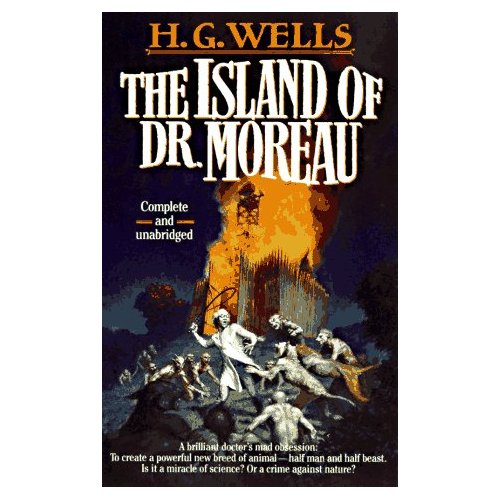 Just Finished Reading: The Island of Doctor Moreau by H G Wells
This is the classic SF horror tale from the author of War of the Worlds and The Time Machine.
Shipwrecked on a remote island the narrator (Edward Prendick) tells of his time spent with the mysterious and obsessed Doctor Moreau – a scientist shunned by the civilised world for his bizarre ideas and experiments on animals. Initially horrified and repulsed by the results of Moreau’s experimentation Prendick slowly acclimatises to his situation until his mind and his views of humanity are changed forever. For Moreau has become a God-like creator of men from the apparently infinitely malleable flesh of wild beasts blurring the line between animal and human. But the unexpected arrival Prendick starts a chain of events that eventually lead to death and destruction. Can he save his sanity and his humanity when all about him is in flux?
I’ve read quite a lot of Well’s work and have enjoyed most of it. The War of the Worlds is amongst my favourite classic novels. Moreau, despite its classic position, didn’t grip me to that extent. Saying that however, this was a finely crafted and thought provoking book. I found the final chapter particularly haunting in a chilling way and the feelings it provoked will stay with me for quite some time. It is easy to imagine how this probably disturbed the calm of its Victorian readership a mere 40 years after the publication of Darwin’s On the Origin of Species. I’m guessing that the displacement of man from God’s creation to that of a ‘supreme ape’ was still very much at the forefront of many minds when Moreau was first published in 1896. Moreau certainly read like a reinterpretation of the Christian Creation myth where an almost careless God, in the shape of the Doctor, fashions men from the beasts of the field only to cast them out as failures into the jungle/wilderness without further thought. A heavy feeling of resentment pervades this book as if the author is blaming God (or Darwin) for the fashioning of such incomplete creatures as ourselves - creatures with great potential but with the ever present taint of the violent slavering beast inside us just waiting to get out.
 TV presenter Raymond Baxter dies
From the BBC.
16 September 2006
Television presenter Raymond Baxter - best known for fronting the BBC's science programme Tomorrow's World - has died at the age of 84. He was with daughter Jenny Douglas and son Dr Graham Baxter when he died at Royal Berkshire Hospital, Reading. He presented Tomorrow's World for its first 12 years, but also commentated on the Queen's coronation, Churchill's funeral and Concorde's first flight.
Former colleagues have been lining up to pay tribute. Tomorrow's World presenter Maggie Philbin said: "He was an absolute gentlemen, such a lovely, lovely man, immense charm and absolutely passionate about technology. I felt very envious of him because the era that he worked on Tomorrow's World was the time that technology was 'white hot'. Raymond showed us the very first hovercraft and he went on the very first flight of Concorde."
Another former Tomorrow's World colleague, Judith Hann, said: "He did not let anything fluster him at all, he would just talk his way through things going wrong. He taught me a great deal." Baxter's family said he was working until the day before he went into hospital. They said in a statement: "He had a love of innovation and challenge both professionally and personally, and he met that challenge right up to the end because he was commentating at Goodwood the day before he was taken into hospital.
"He was a professional through and through in everything he attempted from his days as a pilot, as a broadcaster, and through to his love of sailing." He was a Spitfire pilot during World War II, taking part in raids against V1 and V2 missile sites deep inside occupied Europe. Immediately after the war he joined the British Forces Network and reported on the Berlin airlift. A motorsport enthusiast, he not only covered but also took part in a number of Monte Carlo rallies. David Pickthall, executive producer of the BBC's events department, paid tribute to the veteran presenter. He said: "Raymond Baxter was without doubt a British television pioneer, whose groundbreaking outside broadcast work for the BBC, beginning in the 1950s, set standards for the industry. His distinctive voice provided the viewer with a trusted guide to many television firsts - the first live pictures from America and the first flight of Concorde amongst the best remembered. His iconic presentation of Tomorrow's World was for many their first entry into an understanding and interest in the world of science and technology."
One of the highlights of his time on Tomorrow's World was in 1967, when he interviewed Dr Christian Barnard live by telephone from South Africa, just one hour after he completed the world's first heart transplant. Baxter returned to Tomorrow's World for anniversary editions but was "sad" to see it dropped by the BBC in 2003. Former series deputy editor Phil Dolling said: "Raymond was fearless in front of a live camera - reporting around the world on important moments in history. He possessed authority, intelligence and charisma - and more than that, he was a true gentleman."
[Raymond Baxter and Tomorrows World were probably instrumental in the development of my strong interest in science. I loved his enthusiasm for new ideas, new technologies and new gadgets. He was an icon of my childhood and I’ll miss him. Raymond Baxter – RIP.]
Wednesday, September 20, 2006
A Self-Defeating War
by George Soros for the Wall Street Journal
August 15, 2006
The war on terror is a false metaphor that has led to counterproductive and self-defeating policies. Five years after 9/11, a misleading figure of speech applied literally has unleashed a real war fought on several fronts -- Iraq, Gaza, Lebanon, Afghanistan, Somalia -- a war that has killed thousands of innocent civilians and enraged millions around the world. Yet al Qaeda has not been subdued; a plot that could have claimed more victims than 9/11 has just been foiled by the vigilance of British intelligence.
Unfortunately, the "war on terror" metaphor was uncritically accepted by the American public as the obvious response to 9/11. It is now widely admitted that the invasion of Iraq was a blunder. But the war on terror remains the frame into which American policy has to fit. Most Democratic politicians subscribe to it for fear of being tagged as weak on defense.
What makes the war on terror self-defeating?
First, war by its very nature creates innocent victims. A war waged against terrorists is even more likely to claim innocent victims because terrorists tend to keep their whereabouts hidden. The deaths, injuries and humiliation of civilians generate rage and resentment among their families and communities that in turn serves to build support for terrorists.
Second, terrorism is an abstraction. It lumps together all political movements that use terrorist tactics. Al Qaeda, Hamas, Hezbollah, the Sunni insurrection and the Mahdi army in Iraq are very different forces, but President Bush's global war on terror prevents us from differentiating between them and dealing with them accordingly. It inhibits much-needed negotiations with Iran and Syria because they are states that support terrorist groups.
Third, the war on terror emphasizes military action while most territorial conflicts require political solutions. And, as the British have shown, al Qaeda is best dealt with by good intelligence. The war on terror increases the terrorist threat and makes the task of the intelligence agencies more difficult. Osama bin Laden and Ayman al-Zawahiri are still at large; we need to focus on finding them, and preventing attacks like the one foiled in England.
Fourth, the war on terror drives a wedge between "us" and "them." We are innocent victims. They are perpetrators. But we fail to notice that we also become perpetrators in the process; the rest of the world, however, does notice. That is how such a wide gap has arisen between America and much of the world.
Taken together, these four factors ensure that the war on terror cannot be won. An endless war waged against an unseen enemy is doing great damage to our power and prestige abroad and to our open society at home. It has led to a dangerous extension of executive powers; it has tarnished our adherence to universal human rights; it has inhibited the critical process that is at the heart of an open society; and it has cost a lot of money. Most importantly, it has diverted attention from other urgent tasks that require American leadership, such as finishing the job we so correctly began in Afghanistan, addressing the looming global energy crisis, and dealing with nuclear proliferation.
With American influence at low ebb, the world is in danger of sliding into a vicious circle of escalating violence. We can escape it only if we Americans repudiate the war on terror as a false metaphor. If we persevere on the wrong course, the situation will continue to deteriorate. It is not our will that is being tested, but our understanding of reality. It is painful to admit that our current predicaments are brought about by our own misconceptions. However, not admitting it is bound to prove even more painful in the long run. The strength of an open society lies in its ability to recognize and correct its mistakes. This is the test that confronts us.
by George Soros for the Wall Street Journal
August 15, 2006
The war on terror is a false metaphor that has led to counterproductive and self-defeating policies. Five years after 9/11, a misleading figure of speech applied literally has unleashed a real war fought on several fronts -- Iraq, Gaza, Lebanon, Afghanistan, Somalia -- a war that has killed thousands of innocent civilians and enraged millions around the world. Yet al Qaeda has not been subdued; a plot that could have claimed more victims than 9/11 has just been foiled by the vigilance of British intelligence.
Unfortunately, the "war on terror" metaphor was uncritically accepted by the American public as the obvious response to 9/11. It is now widely admitted that the invasion of Iraq was a blunder. But the war on terror remains the frame into which American policy has to fit. Most Democratic politicians subscribe to it for fear of being tagged as weak on defense.
What makes the war on terror self-defeating?
First, war by its very nature creates innocent victims. A war waged against terrorists is even more likely to claim innocent victims because terrorists tend to keep their whereabouts hidden. The deaths, injuries and humiliation of civilians generate rage and resentment among their families and communities that in turn serves to build support for terrorists.
Second, terrorism is an abstraction. It lumps together all political movements that use terrorist tactics. Al Qaeda, Hamas, Hezbollah, the Sunni insurrection and the Mahdi army in Iraq are very different forces, but President Bush's global war on terror prevents us from differentiating between them and dealing with them accordingly. It inhibits much-needed negotiations with Iran and Syria because they are states that support terrorist groups.
Third, the war on terror emphasizes military action while most territorial conflicts require political solutions. And, as the British have shown, al Qaeda is best dealt with by good intelligence. The war on terror increases the terrorist threat and makes the task of the intelligence agencies more difficult. Osama bin Laden and Ayman al-Zawahiri are still at large; we need to focus on finding them, and preventing attacks like the one foiled in England.
Fourth, the war on terror drives a wedge between "us" and "them." We are innocent victims. They are perpetrators. But we fail to notice that we also become perpetrators in the process; the rest of the world, however, does notice. That is how such a wide gap has arisen between America and much of the world.
Taken together, these four factors ensure that the war on terror cannot be won. An endless war waged against an unseen enemy is doing great damage to our power and prestige abroad and to our open society at home. It has led to a dangerous extension of executive powers; it has tarnished our adherence to universal human rights; it has inhibited the critical process that is at the heart of an open society; and it has cost a lot of money. Most importantly, it has diverted attention from other urgent tasks that require American leadership, such as finishing the job we so correctly began in Afghanistan, addressing the looming global energy crisis, and dealing with nuclear proliferation.
With American influence at low ebb, the world is in danger of sliding into a vicious circle of escalating violence. We can escape it only if we Americans repudiate the war on terror as a false metaphor. If we persevere on the wrong course, the situation will continue to deteriorate. It is not our will that is being tested, but our understanding of reality. It is painful to admit that our current predicaments are brought about by our own misconceptions. However, not admitting it is bound to prove even more painful in the long run. The strength of an open society lies in its ability to recognize and correct its mistakes. This is the test that confronts us.
Tuesday, September 19, 2006
Anglican schools 'will face resentment' whilst they select on the basis of faith
From Ekklesia -14/03/06
An associate of the religious thinktank Ekklesia has today said that whilst Anglican schools continue to use selection on the basis of religious faith or parental church attendance they will continue to be widely resented. The comments follow today's release by the Church of England of a poll conducted in early November, to gauge attitudes toward the church and specifically church schools.
The poll was conducted by researchers ORB and released today by the Church of England's Communication's Office to coincide with a major conference on Church schools at which the Archbishop of Canterbury is giving a keynote address. Ekklesia associate Theo Hobson said; "There is something desperate about the Church producing its own statistics to ‘prove’ the popularity of its schools”.
"Over the last five years there has been a rising tide of hostility to faith schools, partly due to their collusion in social selection, and partly due to fears of religious separatism. While Anglican schools continue to use selection on the basis of parental church attendance they will continue to be widely resented – by those who cannot attend a high-performing local school, by those who refuse to fake a church commitment, by those who fear religious separatism. The Church ought to be careful: an established Church cannot afford to seem a self-serving subculture that puts its own members before the common good”.
"The only solution is for the Church to decide to open its schools to all those who want to attend, irrespective of religious commitment. This would be a ‘kenotic’ action – a gift to the wider culture. It is an urgent issue for the Church, for in many places the education issue is changing the nature of churchgoing, associating it with educational ambition. Anglican leaders may defensively deny this, but a growing sector of society knows it to be true."
From Ekklesia -14/03/06
An associate of the religious thinktank Ekklesia has today said that whilst Anglican schools continue to use selection on the basis of religious faith or parental church attendance they will continue to be widely resented. The comments follow today's release by the Church of England of a poll conducted in early November, to gauge attitudes toward the church and specifically church schools.
The poll was conducted by researchers ORB and released today by the Church of England's Communication's Office to coincide with a major conference on Church schools at which the Archbishop of Canterbury is giving a keynote address. Ekklesia associate Theo Hobson said; "There is something desperate about the Church producing its own statistics to ‘prove’ the popularity of its schools”.
"Over the last five years there has been a rising tide of hostility to faith schools, partly due to their collusion in social selection, and partly due to fears of religious separatism. While Anglican schools continue to use selection on the basis of parental church attendance they will continue to be widely resented – by those who cannot attend a high-performing local school, by those who refuse to fake a church commitment, by those who fear religious separatism. The Church ought to be careful: an established Church cannot afford to seem a self-serving subculture that puts its own members before the common good”.
"The only solution is for the Church to decide to open its schools to all those who want to attend, irrespective of religious commitment. This would be a ‘kenotic’ action – a gift to the wider culture. It is an urgent issue for the Church, for in many places the education issue is changing the nature of churchgoing, associating it with educational ambition. Anglican leaders may defensively deny this, but a growing sector of society knows it to be true."
Monday, September 18, 2006
Mobile phone users warned of dangers in 'spy' software
David Smith for The Observer
Sunday September 3, 2006
Would you spy on your spouse? A company is urging consumers to buy 'secret' mobile phone software so they can read their partner's text messages. Yet it denies encouraging infringement of privacy laws. FlexiSpy is billed as the 'world's most powerful spy software for mobile phones', which enables a buyer to 'secretly record every SMS [text] message, view their call history, and more!' Its website even has a 'testimony' from a customer. 'Thanks to FlexiSpy, I finally figured out my wife was cheating on me with my brother,' he claims. 'My life is so much better.'
The potential for mobile phone monitoring was highlighted last week by Symantec, the information security company. It warned mobile phones are potentially vulnerable to spyware, software that covertly gathers a user's information without their knowledge. These could enable snoopers to remotely activate a mobile phone's microphone, take pictures with its camera or record conversations without the user's knowledge. Such technology might prove tempting to bosses who want to keep track of their employees or journalists hunting stories about celebrities, though the Data Protection Act states a person must not 'knowingly or recklessly' and without consent obtain or disclose personal data.
But Vervata, the company behind FlexiSpy, denied it was doing anything illegal. The software has to be installed manually on the 'spied upon' handset, making it difficult to do without the owner's knowledge. 'It's true you could wrap up something like this and transmit it virally, but that's not the business we're in,' admitted Atir Raihan, Vervata's managing director. 'There are other companies doing this, but we're not.' Asked why the company's website promotes spying on a spouse, which could be deemed unlawful, Raihan said: 'It's to make people smile. People have their own reasons for buying all sorts of things - they don't all buy cars to rob banks.'
Industry experts warned that the increasing complexity of phones has its downsides. Richard Starnes said: 'As mobile phones progress, they are becoming the de facto computers of 10 years ago. With these capabilities come vulnerabilities: security is inversely proportionate to functionality. It will definitely be an increasing threat in the coming years.'
[Yup. It’s just what we need - the ability and encouragement to spy on each other!]
David Smith for The Observer
Sunday September 3, 2006
Would you spy on your spouse? A company is urging consumers to buy 'secret' mobile phone software so they can read their partner's text messages. Yet it denies encouraging infringement of privacy laws. FlexiSpy is billed as the 'world's most powerful spy software for mobile phones', which enables a buyer to 'secretly record every SMS [text] message, view their call history, and more!' Its website even has a 'testimony' from a customer. 'Thanks to FlexiSpy, I finally figured out my wife was cheating on me with my brother,' he claims. 'My life is so much better.'
The potential for mobile phone monitoring was highlighted last week by Symantec, the information security company. It warned mobile phones are potentially vulnerable to spyware, software that covertly gathers a user's information without their knowledge. These could enable snoopers to remotely activate a mobile phone's microphone, take pictures with its camera or record conversations without the user's knowledge. Such technology might prove tempting to bosses who want to keep track of their employees or journalists hunting stories about celebrities, though the Data Protection Act states a person must not 'knowingly or recklessly' and without consent obtain or disclose personal data.
But Vervata, the company behind FlexiSpy, denied it was doing anything illegal. The software has to be installed manually on the 'spied upon' handset, making it difficult to do without the owner's knowledge. 'It's true you could wrap up something like this and transmit it virally, but that's not the business we're in,' admitted Atir Raihan, Vervata's managing director. 'There are other companies doing this, but we're not.' Asked why the company's website promotes spying on a spouse, which could be deemed unlawful, Raihan said: 'It's to make people smile. People have their own reasons for buying all sorts of things - they don't all buy cars to rob banks.'
Industry experts warned that the increasing complexity of phones has its downsides. Richard Starnes said: 'As mobile phones progress, they are becoming the de facto computers of 10 years ago. With these capabilities come vulnerabilities: security is inversely proportionate to functionality. It will definitely be an increasing threat in the coming years.'
[Yup. It’s just what we need - the ability and encouragement to spy on each other!]
Sunday, September 17, 2006
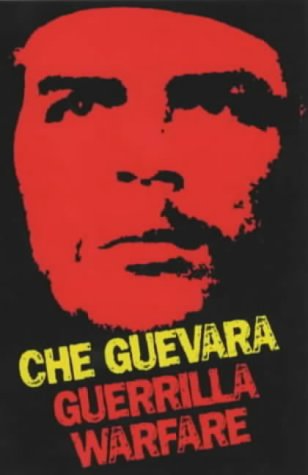 Just Finished Reading: Guerrilla Warfare by Che Guevara
Originally published in 1961 this extended essay encapsulates Guevara’s experiences during the Cuban revolution. In it he gives advice on just about every aspect of fighting a guerrilla jungle war you could possibly imagine. The essay is, however, fairly short on detail and more interested in getting a prospective guerrilla force into the right frame of mind for an expected long and bloody conflict against a much better armed , though hopefully less motivated, force. In addition to the original essay the book contained a further shorter essay Guerrilla Warfare: A method (written in 1963) and Message to the Tricontinental (written in 1967) which outlined a Marxist interpretation of the world’s political and revolutionary status at that time.
All in all this was a fairly interesting historical text. Although I certainly wouldn’t recommend it as the only book you worked from if you were setting up a revolutionary movement in the hills it does make an effort to explain the ‘why’ of revolution and not simply the ‘how’. It was actually quite weird reading Che’s words and then seeing them played out daily in Iraq and Afghanistan. I couldn’t help thinking to myself that the ‘insurgents’ might well have read this very book and adapted Guevara’s ideas from the jungle to the desert & the city street. Certainly if you want to start some kind of understanding of modern guerrilla warfare this is not a bad place to start. Whilst it’s not exactly a page turner, nor is it a ‘Revolutions for Dummies’, it is a moderately absorbing piece of history written by a cultural icon.
Friday, September 15, 2006
The Trouble with Bush's 'Islamofascism'
By Katha Pollitt, for The Nation.
August 26, 2006.
If you control the language, you control the debate. As the Bush Administration's Middle Eastern policy sinks ever deeper into bloody incoherence, the "war on terror" has been getting a quiet linguistic makeover. It's becoming the "war on Islamic fascism." The term has been around for a while -- Nexis takes it back to 1990, when the writer and historian Malise Ruthven used "Islamo-fascism" in the London Independent to describe the authoritarian governments of the Muslim world; after 9/11 it was picked up by neocons and prowar pundits, including Stephen Schwartz in the Spectator and Christopher Hitchens in this magazine, to describe a broad swath of Muslim bad guys from Osama to the mullahs of Iran.
But the term moved into the mainstream this August when Bush referred to the recently thwarted Britain-based suicide attack plot on airplanes as "a stark reminder that this nation is at war with Islamic fascists." Joe Lieberman compares Iraq to "the Spanish Civil War, which was the harbinger of what was to come." The move away from "war on terrorism" arrives not a moment too soon for language fussbudgets who had problems with the idea of making war on a tactic. To say nothing of those who wondered why, if terrorism was the problem, invading Iraq was the solution. (From the President's August 21 press conference: Q: "But what did Iraq have to do with September 11?" A: "Nothing." Now he tells us!)What's wrong with "Islamo-fascism"? For starters, it's a terrible historical analogy. Italian Fascism, German Nazism and other European fascist movements of the 1920s and '30s were nationalist and secular, closely allied with international capital and aimed at creating powerful, up-to-date, all-encompassing states. Some of the trappings might have been anti-modernist -- Mussolini looked back to ancient Rome, the Nazis were fascinated by Nordic mythology and other Wagnerian folderol -- but the basic thrust was modern, bureaucratic and rational. You wouldn't find a fascist leader consulting the Bible to figure out how to organize the banking system or the penal code or the women's fashion industry. Even its anti-Semitism was "scientific": The problem was the Jews' genetic inferiority and otherness, which countless biologists, anthropologists and medical researchers were called upon to prove -- not that the Jews killed Christ and refused to accept the true faith.
Call me pedantic, but if only to remind us that the worst barbarities of the modern era were committed by the most modern people, I think it is worth preserving "fascism" as a term with specific historical content. Second, and more important, "Islamo-fascism" conflates a wide variety of disparate states, movements and organizations as if, like the fascists, they all want similar things and are working together to achieve them. Neocons have called Saddam Hussein and the Baathists of Syria Islamo-fascists, but these relatively secular nationalist tyrants have nothing in common with shadowy, stateless, fundamentalist Al Qaeda -- as even Bush now acknowledges -- or with the Taliban, who want to return Afghanistan to the seventh century; and the Taliban aren't much like Iran, which is different from (and somewhat less repressive than) Saudi Arabia -- whoops, our big ally in the Middle East! Who are the "Islamo-fascists" in Saudi Arabia -- the current regime or its religious-fanatical opponents? It was under the actually existing US-supported government that female students were forced back into their burning school rather than be allowed to escape unveiled. Under that government people are lashed and beheaded, women can't vote or drive, non-Muslim worship is forbidden, a religious dress code is enforced by the state through violence and Wahhabism -- the "Islamo-fascist" denomination--is exported around the globe.
"Islamo-fascism" looks like an analytic term, but really it's an emotional one, intended to get us to think less and fear more. It presents the bewildering politics of the Muslim world as a simple matter of Us versus Them, with war to the end the only answer, as with Hitler. If you doubt that every other British Muslim under the age of 30 is ready to blow himself up for Allah, or that shredding the Constitution is the way to protect ourselves from suicide bombers, if you think that Hamas might be less popular if Palestinians were less miserable, you get cast as Neville Chamberlain, while Bush plays FDR. "Islamo-fascism" rescues the neocons from harsh verdicts on the invasion of Iraq ("cakewalk... roses... sweetmeats... Chalabi") by reframing that ongoing debacle as a minor chapter in a much larger story of evil madmen who want to fly the green flag of Islam over the capitals of the West. Suddenly it's just a detail that Saddam wasn't connected with 9/11, had no WMDs, was not poised to attack the United States or Israel -- he hated freedom, and that was enough. It doesn't matter, either, that Iraqi Sunnis and Shiites seem less interested in uniting the umma than in murdering one another. With luck we'll be so scared we won't ask why anyone should listen to another word from people who were spectacularly wrong about the biggest politico-military initiative of the past thirty years, and their balding heads will continue to glow on our TV screens for many nights to come. On to Tehran!
It remains to be seen if "Islamo-fascism" will win back the socially liberal "security moms" who voted for Bush in 2004 but have recently been moving toward the Democrats. But the word is already getting a big reaction in the Muslim world. As I write the New York Times is carrying a full page "open letter" to Bush from the Al Kharafi Group, the mammoth Kuwaiti construction company, featuring photos of dead and wounded Lebanese civilians. "We think there is a misunderstanding in determining: "'Who deserves to be accused of being a fascist'!!!!"
"Islamo-fascism" enrages to no purpose the dwindling number of Muslims who don't already hate us. At the same time, it clouds with ideology a range of situations -- Lebanon, Palestine, airplane and subway bombings, Afghanistan, Iraq -- we need to see clearly and distinctly and deal with in a focused way. No wonder the people who brought us the disaster in Iraq are so fond of it.
By Katha Pollitt, for The Nation.
August 26, 2006.
If you control the language, you control the debate. As the Bush Administration's Middle Eastern policy sinks ever deeper into bloody incoherence, the "war on terror" has been getting a quiet linguistic makeover. It's becoming the "war on Islamic fascism." The term has been around for a while -- Nexis takes it back to 1990, when the writer and historian Malise Ruthven used "Islamo-fascism" in the London Independent to describe the authoritarian governments of the Muslim world; after 9/11 it was picked up by neocons and prowar pundits, including Stephen Schwartz in the Spectator and Christopher Hitchens in this magazine, to describe a broad swath of Muslim bad guys from Osama to the mullahs of Iran.
But the term moved into the mainstream this August when Bush referred to the recently thwarted Britain-based suicide attack plot on airplanes as "a stark reminder that this nation is at war with Islamic fascists." Joe Lieberman compares Iraq to "the Spanish Civil War, which was the harbinger of what was to come." The move away from "war on terrorism" arrives not a moment too soon for language fussbudgets who had problems with the idea of making war on a tactic. To say nothing of those who wondered why, if terrorism was the problem, invading Iraq was the solution. (From the President's August 21 press conference: Q: "But what did Iraq have to do with September 11?" A: "Nothing." Now he tells us!)What's wrong with "Islamo-fascism"? For starters, it's a terrible historical analogy. Italian Fascism, German Nazism and other European fascist movements of the 1920s and '30s were nationalist and secular, closely allied with international capital and aimed at creating powerful, up-to-date, all-encompassing states. Some of the trappings might have been anti-modernist -- Mussolini looked back to ancient Rome, the Nazis were fascinated by Nordic mythology and other Wagnerian folderol -- but the basic thrust was modern, bureaucratic and rational. You wouldn't find a fascist leader consulting the Bible to figure out how to organize the banking system or the penal code or the women's fashion industry. Even its anti-Semitism was "scientific": The problem was the Jews' genetic inferiority and otherness, which countless biologists, anthropologists and medical researchers were called upon to prove -- not that the Jews killed Christ and refused to accept the true faith.
Call me pedantic, but if only to remind us that the worst barbarities of the modern era were committed by the most modern people, I think it is worth preserving "fascism" as a term with specific historical content. Second, and more important, "Islamo-fascism" conflates a wide variety of disparate states, movements and organizations as if, like the fascists, they all want similar things and are working together to achieve them. Neocons have called Saddam Hussein and the Baathists of Syria Islamo-fascists, but these relatively secular nationalist tyrants have nothing in common with shadowy, stateless, fundamentalist Al Qaeda -- as even Bush now acknowledges -- or with the Taliban, who want to return Afghanistan to the seventh century; and the Taliban aren't much like Iran, which is different from (and somewhat less repressive than) Saudi Arabia -- whoops, our big ally in the Middle East! Who are the "Islamo-fascists" in Saudi Arabia -- the current regime or its religious-fanatical opponents? It was under the actually existing US-supported government that female students were forced back into their burning school rather than be allowed to escape unveiled. Under that government people are lashed and beheaded, women can't vote or drive, non-Muslim worship is forbidden, a religious dress code is enforced by the state through violence and Wahhabism -- the "Islamo-fascist" denomination--is exported around the globe.
"Islamo-fascism" looks like an analytic term, but really it's an emotional one, intended to get us to think less and fear more. It presents the bewildering politics of the Muslim world as a simple matter of Us versus Them, with war to the end the only answer, as with Hitler. If you doubt that every other British Muslim under the age of 30 is ready to blow himself up for Allah, or that shredding the Constitution is the way to protect ourselves from suicide bombers, if you think that Hamas might be less popular if Palestinians were less miserable, you get cast as Neville Chamberlain, while Bush plays FDR. "Islamo-fascism" rescues the neocons from harsh verdicts on the invasion of Iraq ("cakewalk... roses... sweetmeats... Chalabi") by reframing that ongoing debacle as a minor chapter in a much larger story of evil madmen who want to fly the green flag of Islam over the capitals of the West. Suddenly it's just a detail that Saddam wasn't connected with 9/11, had no WMDs, was not poised to attack the United States or Israel -- he hated freedom, and that was enough. It doesn't matter, either, that Iraqi Sunnis and Shiites seem less interested in uniting the umma than in murdering one another. With luck we'll be so scared we won't ask why anyone should listen to another word from people who were spectacularly wrong about the biggest politico-military initiative of the past thirty years, and their balding heads will continue to glow on our TV screens for many nights to come. On to Tehran!
It remains to be seen if "Islamo-fascism" will win back the socially liberal "security moms" who voted for Bush in 2004 but have recently been moving toward the Democrats. But the word is already getting a big reaction in the Muslim world. As I write the New York Times is carrying a full page "open letter" to Bush from the Al Kharafi Group, the mammoth Kuwaiti construction company, featuring photos of dead and wounded Lebanese civilians. "We think there is a misunderstanding in determining: "'Who deserves to be accused of being a fascist'!!!!"
"Islamo-fascism" enrages to no purpose the dwindling number of Muslims who don't already hate us. At the same time, it clouds with ideology a range of situations -- Lebanon, Palestine, airplane and subway bombings, Afghanistan, Iraq -- we need to see clearly and distinctly and deal with in a focused way. No wonder the people who brought us the disaster in Iraq are so fond of it.
Thursday, September 14, 2006
Subscribe to:
Posts (Atom)